The Pérussis Altarpiece by http://www.wikidata.org/.well-known/genid/d894d3840e40407ba4401096c95acb06
View the artwork: The Pérussis Altarpiece →
The Pérussis Altarpiece is a small private devotional triptych painted around 1480 by an anonymous French master, now held at the Metropolitan Museum of Art. It packs one of the densest symbolic programs of any altarpiece its size: nearly every visible object carries a precise theological meaning that a 15th-century viewer could read fluently.
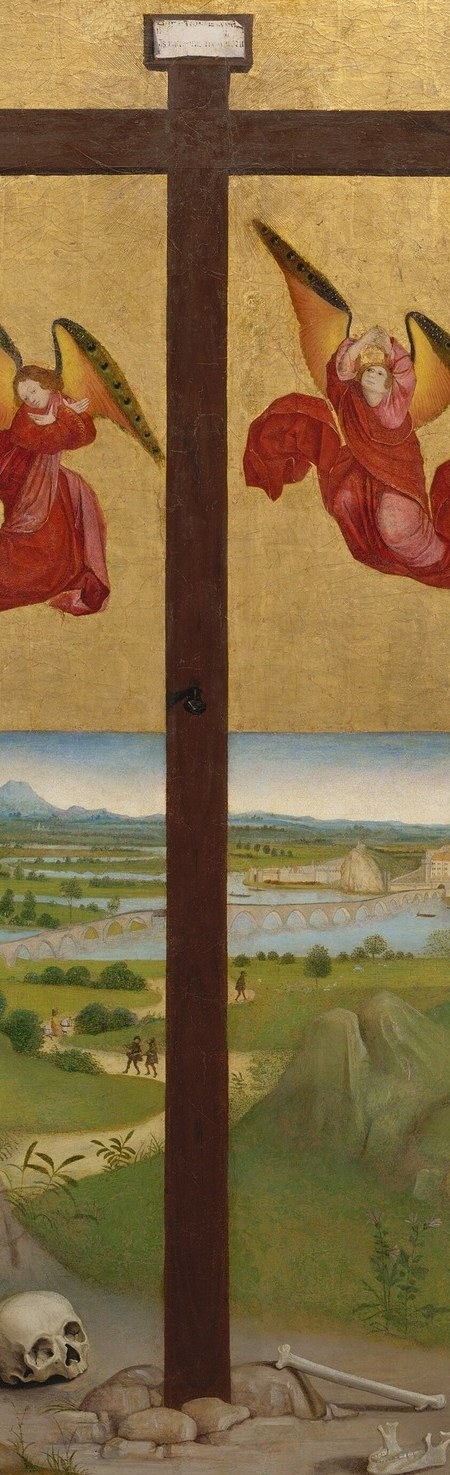
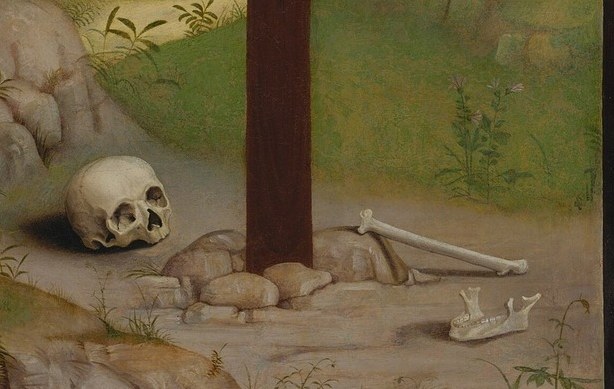
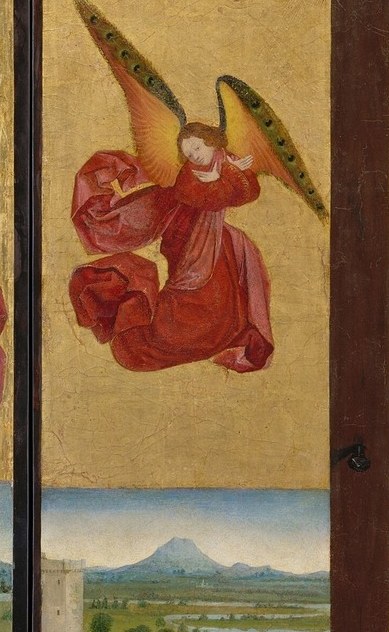
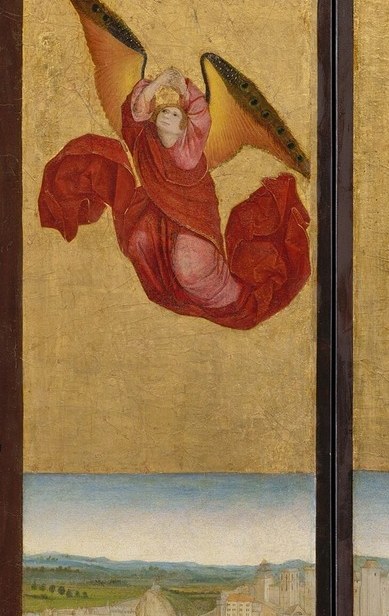
Look first at the foot of the cross. The skull and scattered bones are not merely a memento mori, they belong to Adam, the first man, whose grave medieval tradition located at Golgotha. The painter shows Christ's cross planted directly above him, making visible the doctrine that the Passion redeems humanity's original sin at its very source. The two angels wear crimson wings, an unusual choice that signals seraphic rank, the order of angels that burns closest to God.
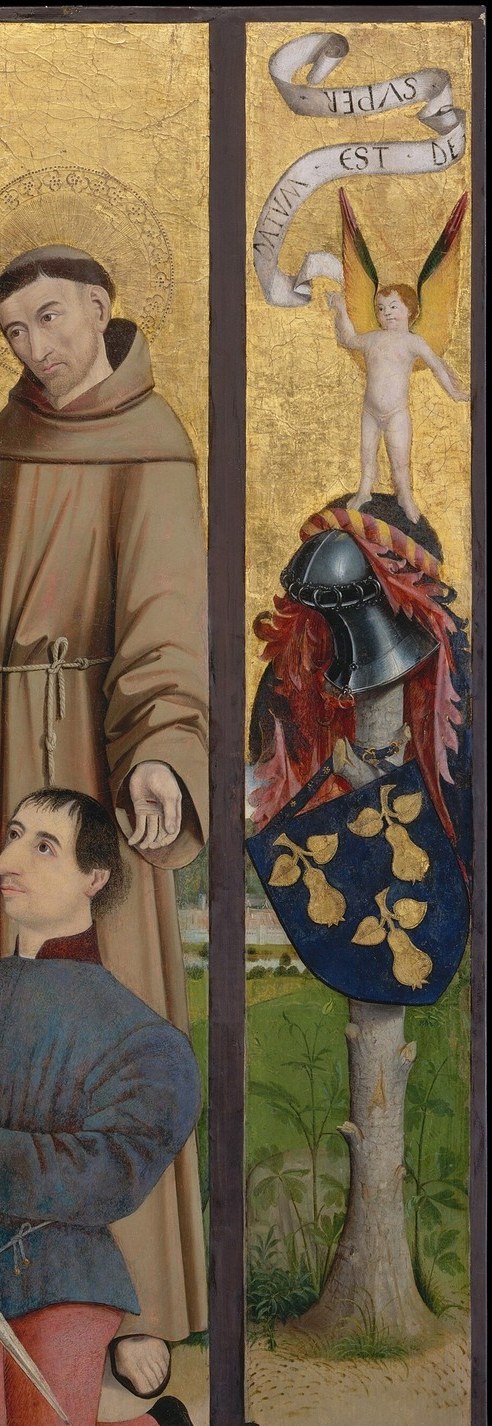
The altarpiece is built on a deliberate collision of realms. The outer panels shimmer with gold leaf, the standard signal of sacred, eternal space. But the central landscape is a recognizable Flemish scene: gentle hills, a lake, distant buildings. This is not the Middle East, it is northern Europe, and the painter means the viewer to understand that the Passion is not a remote historical event. It happened here, in your world. The kneeling donors on the side panels, small before the saints who intercede for them, are the Pérussis family themselves, recorded in permanent prayer.
#arthistory #renaissance #altarpiece
Details
Transcript
A skull, picked clean, rests at the foot of a cross. Medieval viewers would know this instantly: the skull of Adam. Christ's blood, falling, redeems the first man's death. The angels flanking him wear crimson, not the usual white or blue. Red wings mark them as seraphim, the order closest to divine fire. The gold ground places this moment in sacred, eternal space. But the landscape is Flemish, hills, a lake, real buildings. The altarpiece insists the Passion happened in the viewer's own world.