Cows Crossing a Ford by Jules Dupré
View the artwork: Cows Crossing a Ford →
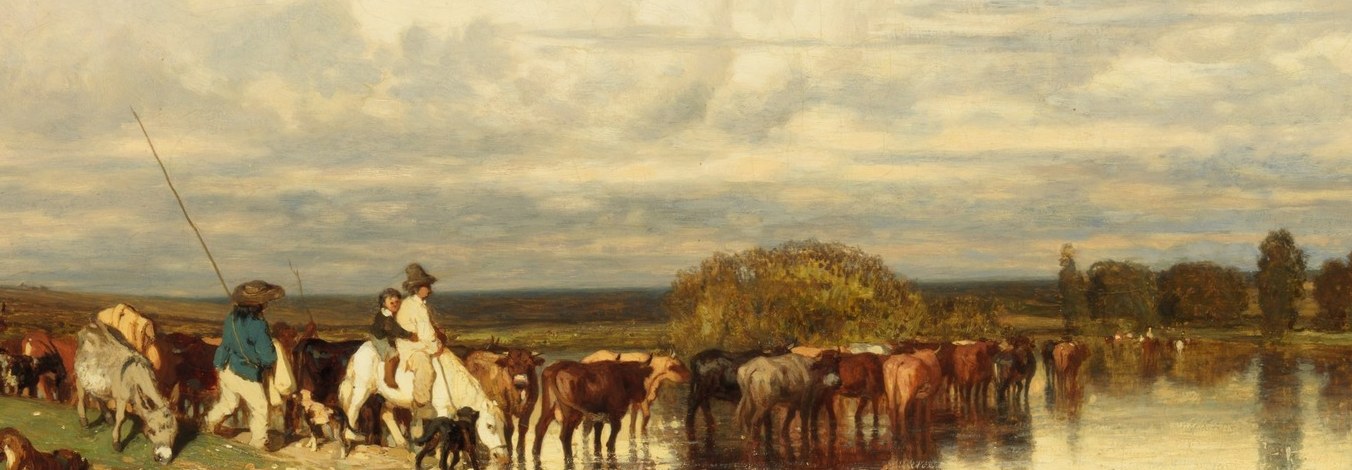
Jules Dupré painted *Cows Crossing a Ford* in 1836, and the scene it records, drovers walking cattle across a shallow river in the Limousin region of central France, was a working reality that the coming railway age would soon erase. The painting is now in the collection of the Metropolitan Museum of Art in New York.
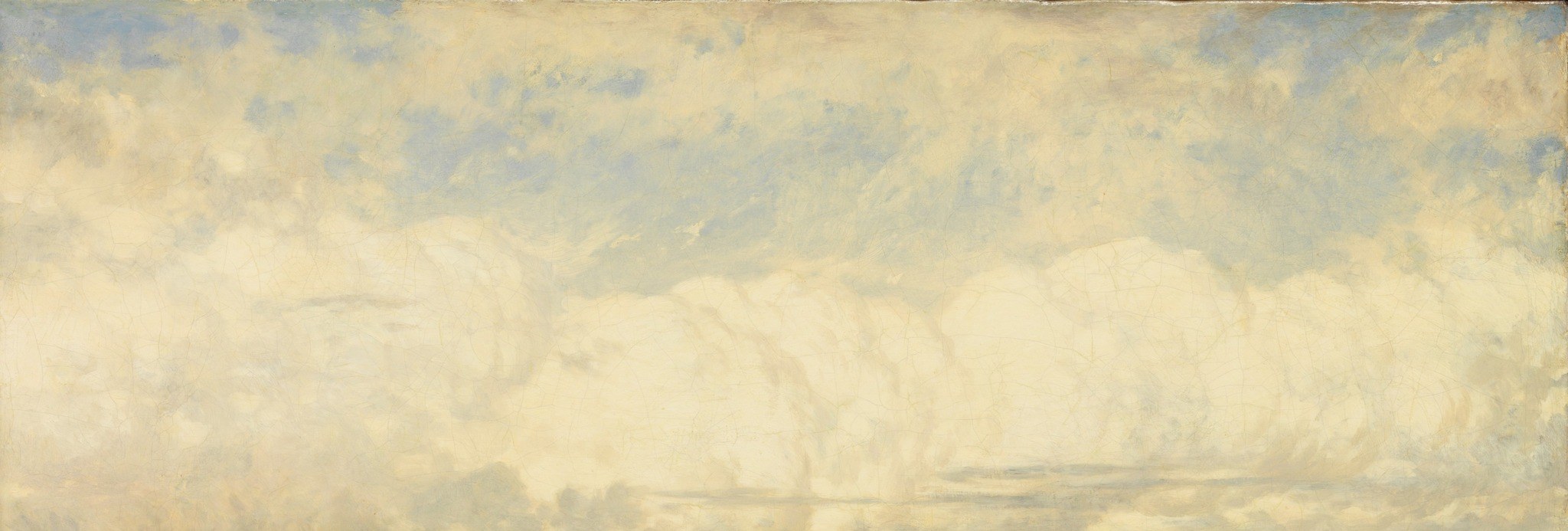
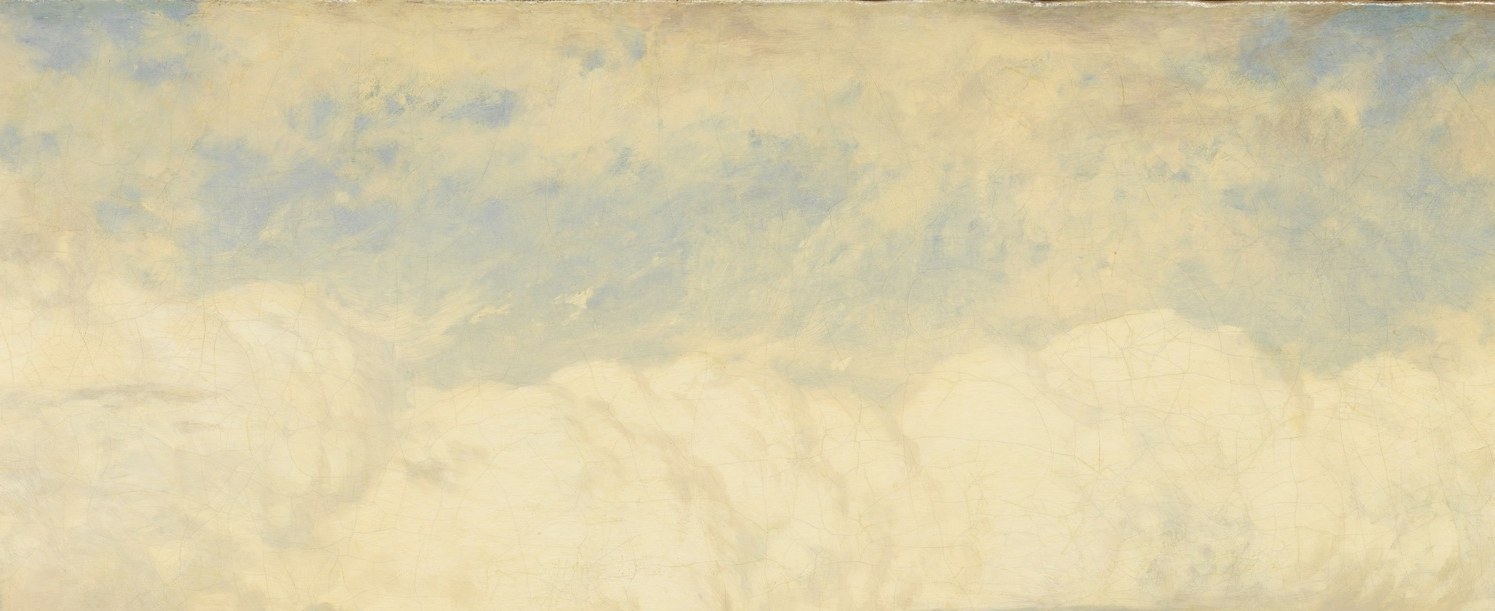
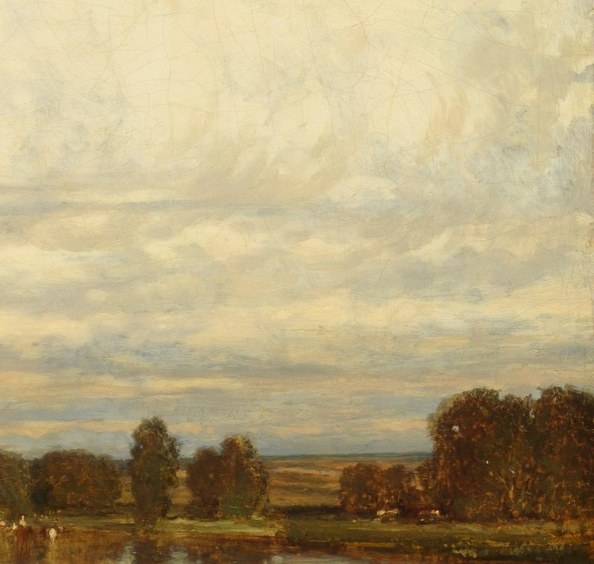
Look at the white cow standing broadside in the centre of the ford. Her flank catches the sky's warmth against the dark, churned water, and the whole composition pivots around her stillness. On the left, a drover walks on foot. Further in, another figure on horseback keeps the herd together. The low horizon line, a deliberate gesture, gives more than half the canvas to the sky, a move Dupré learned from the British Romantics, particularly John Constable.
Dupré was a core member of the Barbizon school, a group of French painters who left their studios to work directly from nature. This painting was made early in his career, when he was absorbing the lessons of Constable and Richard Parkes Bonington, who had exhibited in Paris and provoked a minor revolution in French landscape thinking. The low horizon, the clouds built as architecture, and the refusal to idealize the mud underfoot all come from that encounter.
The drove is gone. The Limousin fords are quiet now. What Dupré gave us is a clear-eyed record of a working landscape, not yet romantic, not yet lost, just true.
#arthistory #barbizonschool #19thcenturyart
Details

Transcript
Before railways, before trucks, meat walked. This is a cattle drove, crossing a ford in central France. A single drover walks at the herd's edge. A mounted herdsman keeps the animals from straying. The year is 1836. This whole way of life is about to vanish. Dupré painted this not as nostalgia, but as a working present. He learned this sky from the English, Constable, Bonington. This white cow anchors the whole scene with her calm weight.