Italian Woman (La Morieri) by Corot, Jean-Baptiste-Camille
View the artwork: Italian Woman (La Morieri) →
Jean-Baptiste-Camille Corot's 'Italian Woman (La Morieri)' was painted around 1872, when the artist was 76 years old and had long been a giant of French landscape painting. The painting hangs today as a quiet masterwork of late-career intimacy; a portrait that borrows the soft, silvery light of his landscapes and trains it on a single, unknown woman.
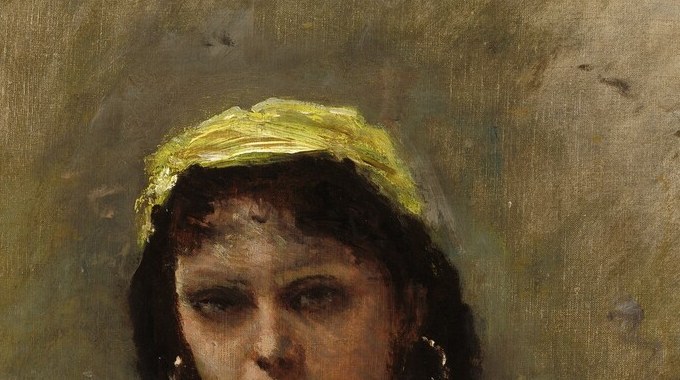
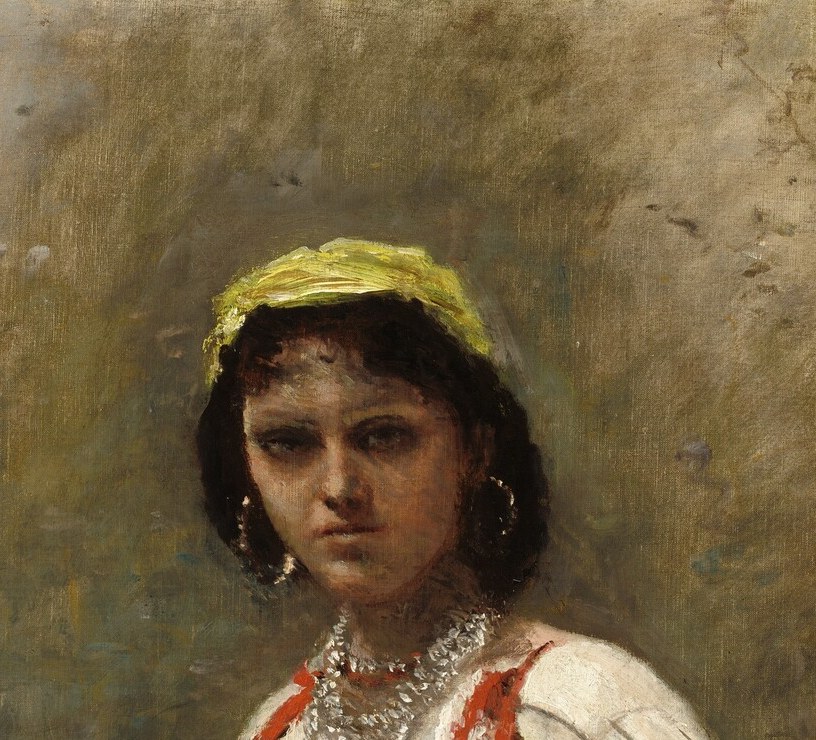
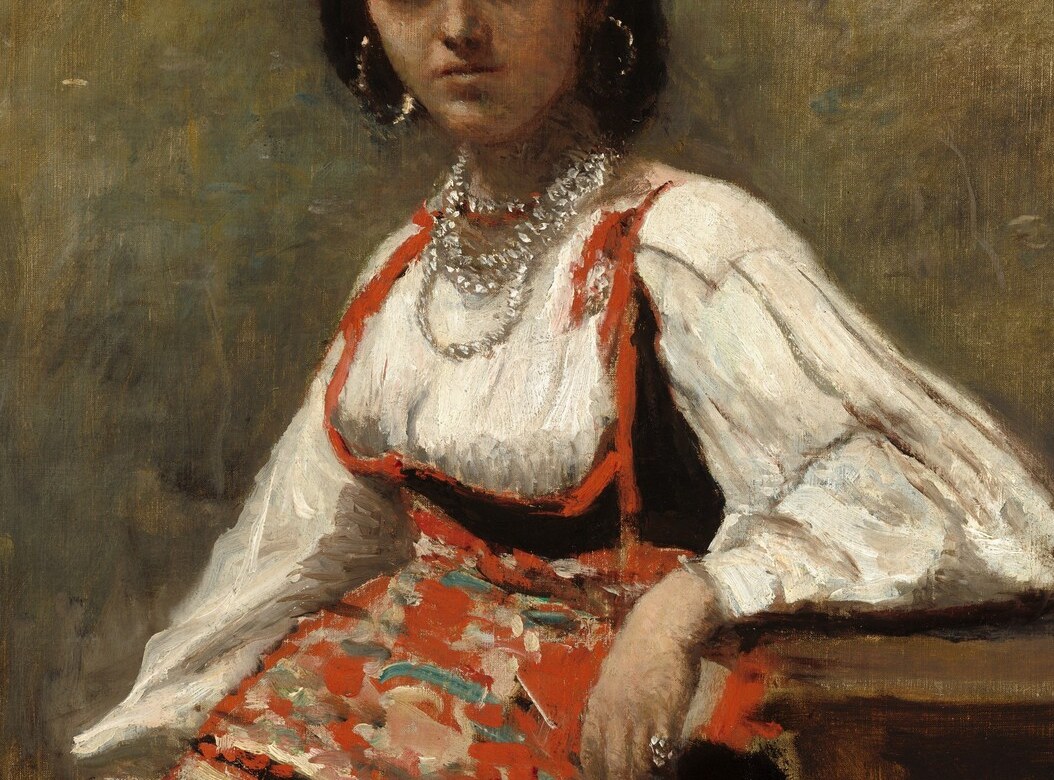
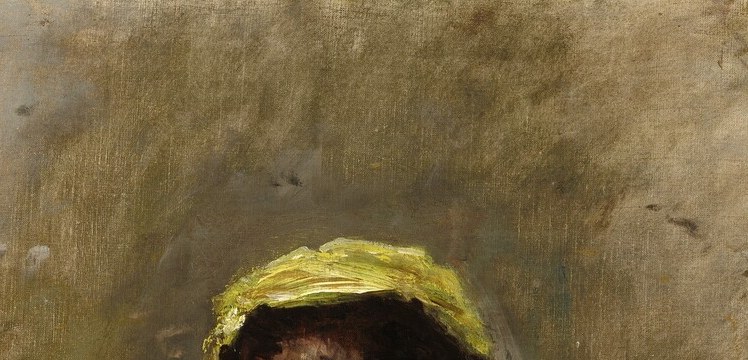
The first thing that holds you is her gaze. Corot's figures rarely lock eyes with the viewer this frankly, but here she meets you with a composed, unflinching expression. That directness creates the tension of the whole work: she is present, but withheld. Under the white blouse and bright yellow headscarf, her identity is a blank, allowing the painting to become a study in looking itself.
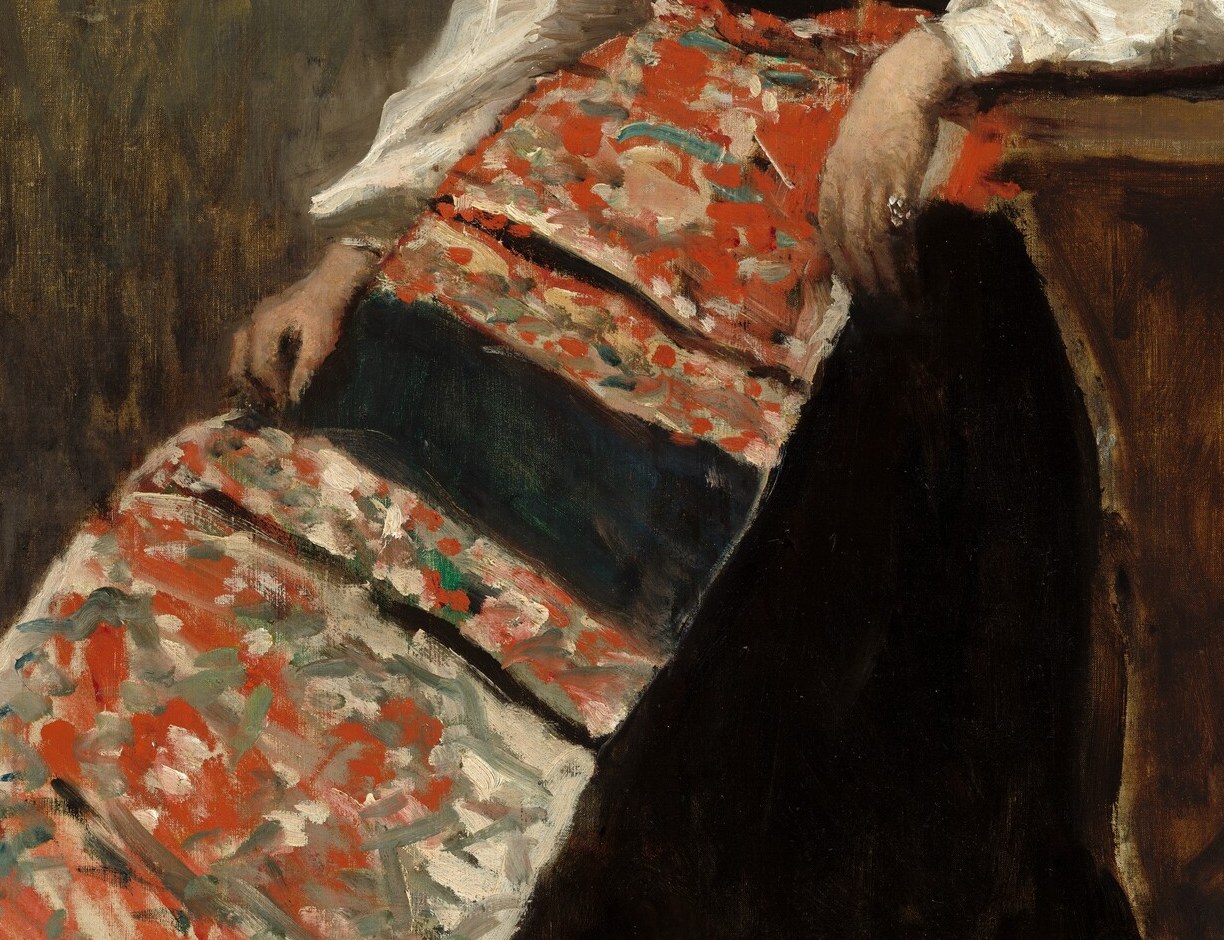
The costume is a reward for close inspection. The red-and-white patterned apron across her lap is the most detailed textile passage in the painting, with each bloom rendered distinctly despite loose, painterly brushwork. The red trim at her collar and the layered pearl necklace are flashes of status against an otherwise humble dress, inviting questions about who she really was.
Corot traveled to Italy repeatedly, fascinated by the light and the people. This portrait is not a formal commission but a personal study, likely painted back in France from sketches and memory. It captures what he loved about Italian subjects: dignity without theatricality. What do you think she is thinking?
#arthistory #corot #19thcenturyart
Details
Transcript
He was 76. The most beloved landscape painter in France. And he painted her like he painted his trees. Soft. Light. But here, everything changes in the eyes. Corot rarely gave a sitter this kind of direct, frank stare. It is an intimacy he normally reserved for the trees and the sky. Look at the apron. Every bloom is distinct. He is painting her authentic Italian dress for a Parisian audience. A quiet, working woman who insists on being seen.