The Card Players by Paul Cézanne
View the artwork: The Card Players →
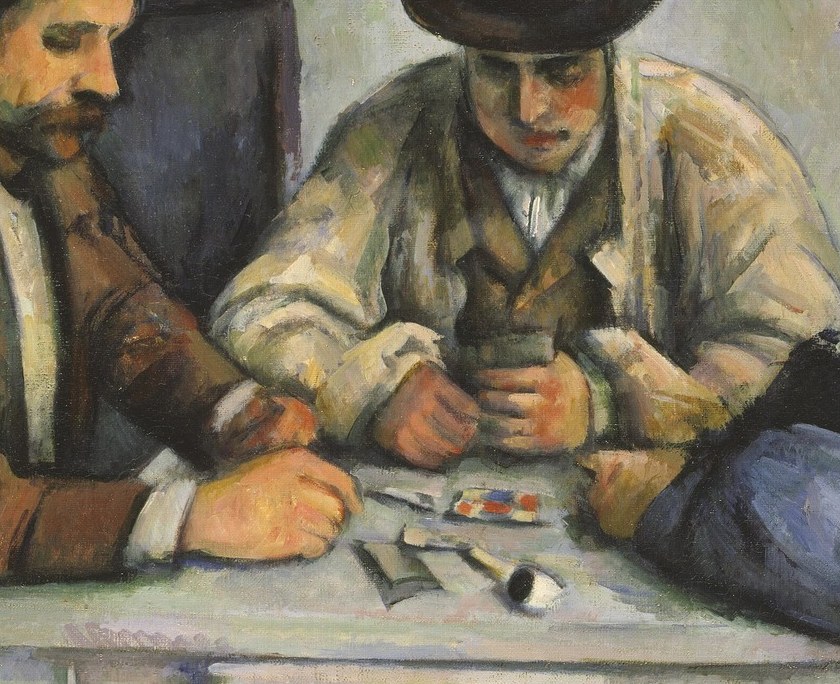
Paul Cézanne's 'The Card Players' is not one painting but a series of five large oil paintings made over several years in the 1890s. This version, from 1891, is among the most celebrated, not because of any visible action, but because of the tremendous visual weight Cézanne gives to absolute stillness.
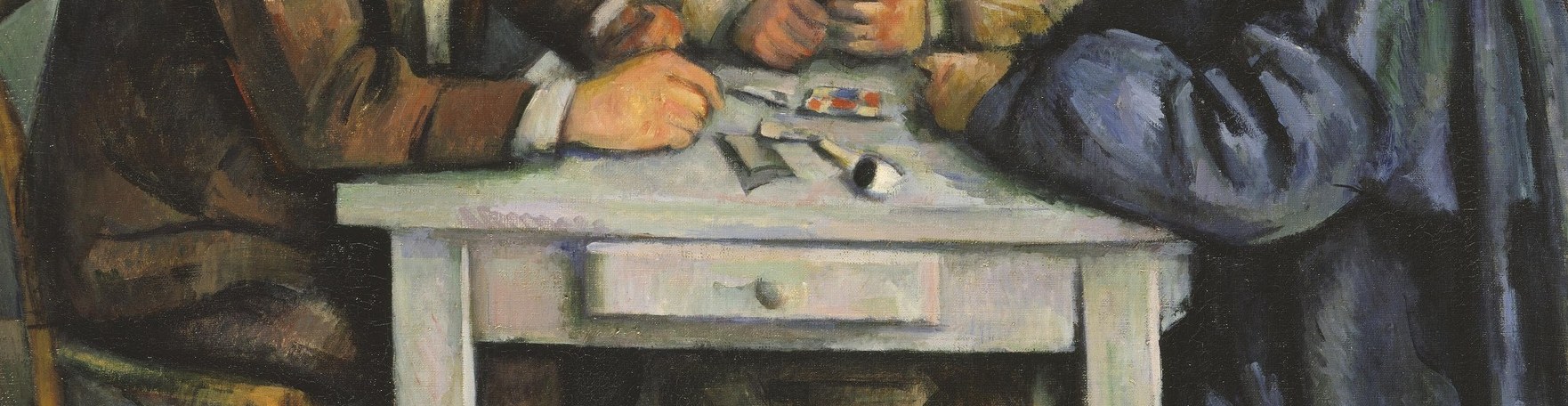
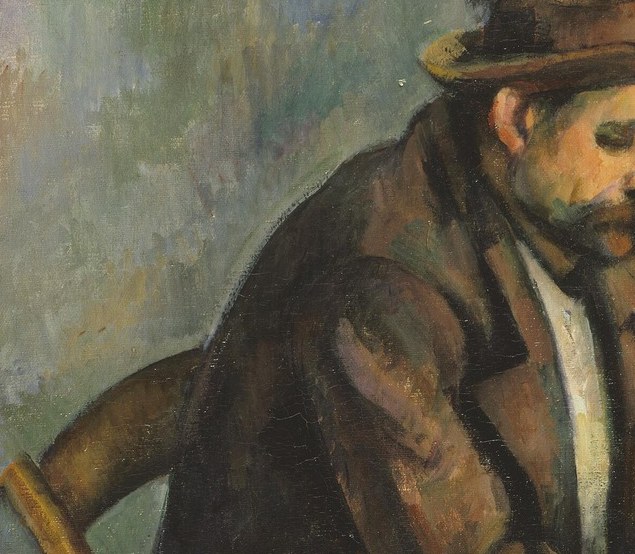
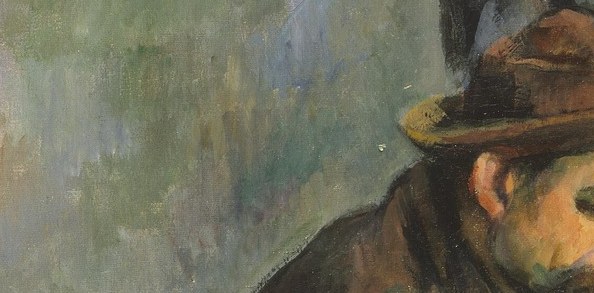
The men in the painting were farmhands from the area around Aix-en-Provence. Cézanne paid them to sit, often for hours, in complete silence. You can see that patience in the painting, in the heavy, sculptural hands holding the cards, in the shadowed faces built from blocks of blue and ochre rather than drawn outlines.
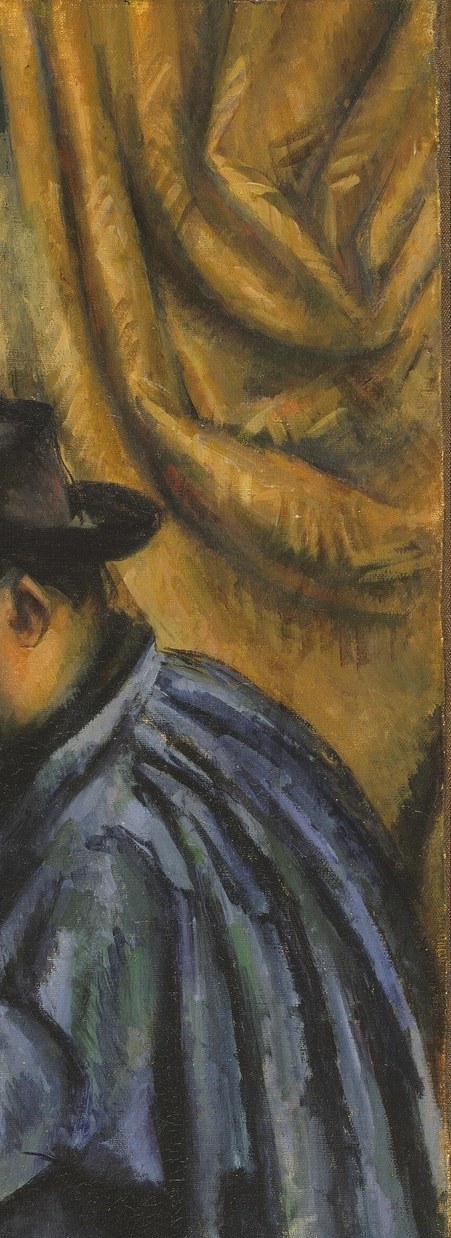
Cézanne once said he wanted to 'make of Impressionism something solid and durable, like the art of the museums.' These card players, gathered around a white table in a bare room, are treated with the solemnity of Dutch genre paintings from centuries before. The curtain on the right, the wine bottle dividing the space, they are old-master devices, but the paint handling is obstinately modern, all broken planes and structured brushwork.
This painting changed things. The way Cézanne built his forms, with parallel strokes of color rather than perspective or contour, opened a door that led straight to Cubism. But for the men at this table, none of that mattered. They were simply being looked at, carefully, by someone who thought their quiet lives deserved a monument.
#arthistory #paulcezanne #postimpressionism
Details
Transcript
Five men playing cards is nothing special, but Cézanne spent years on this. He painted it over and over, five large canvases. This one is from 1891. These are farmhands from Aix-en-Provence. He paid them to sit, hour after hour. He built their faces not with lines, but with blocks of color. Look at his hands. Large, heavy, the hands of a man who worked the land. Cézanne didn't want drama. He wanted weight. A permanent stillness. He once said he wanted to make Impressionism solid, like the art in museums. So he gave these quiet men the gravity of old masters.