The Northern Whale Fishery: The "Swan" and "Isabella" by Ward of Hull, John
View the artwork: The Northern Whale Fishery: The "Swan" and "Isabella" →
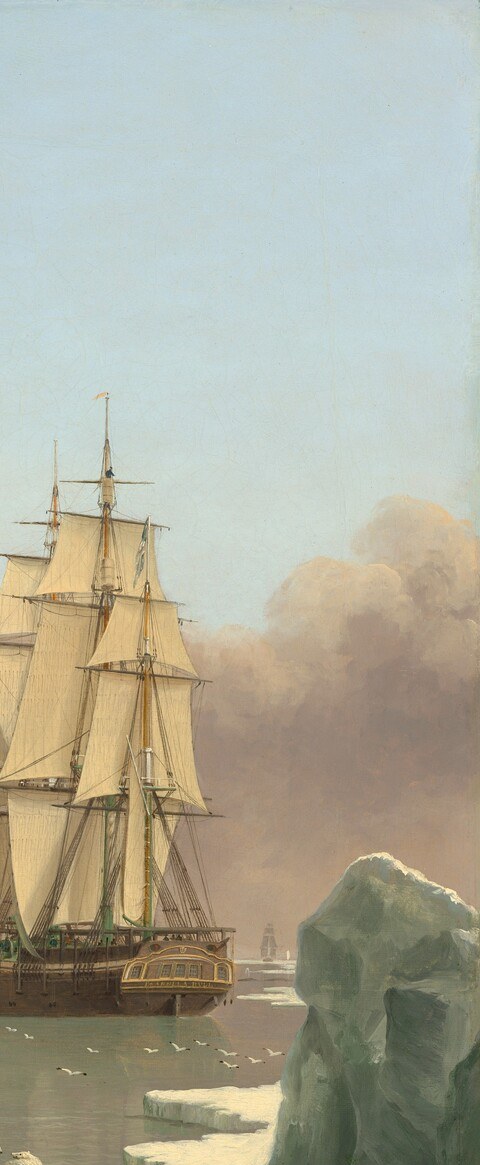
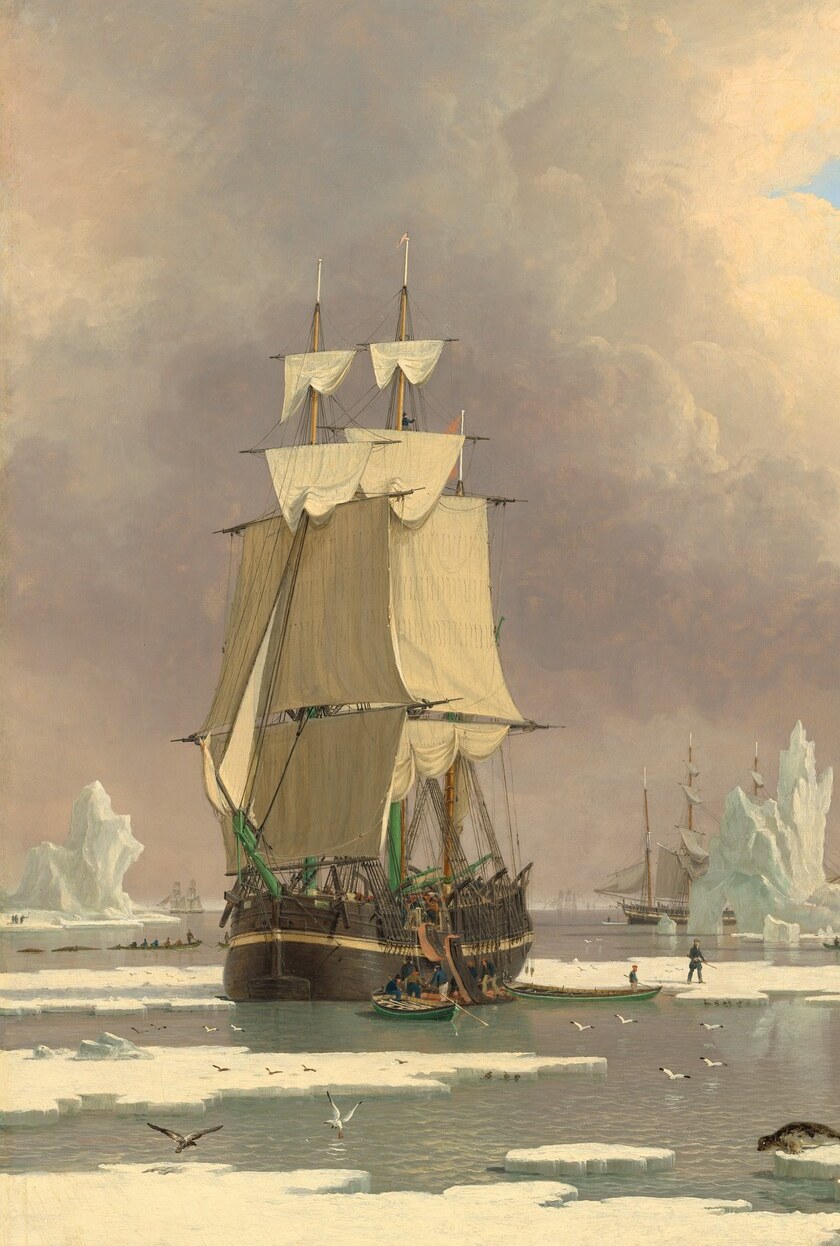
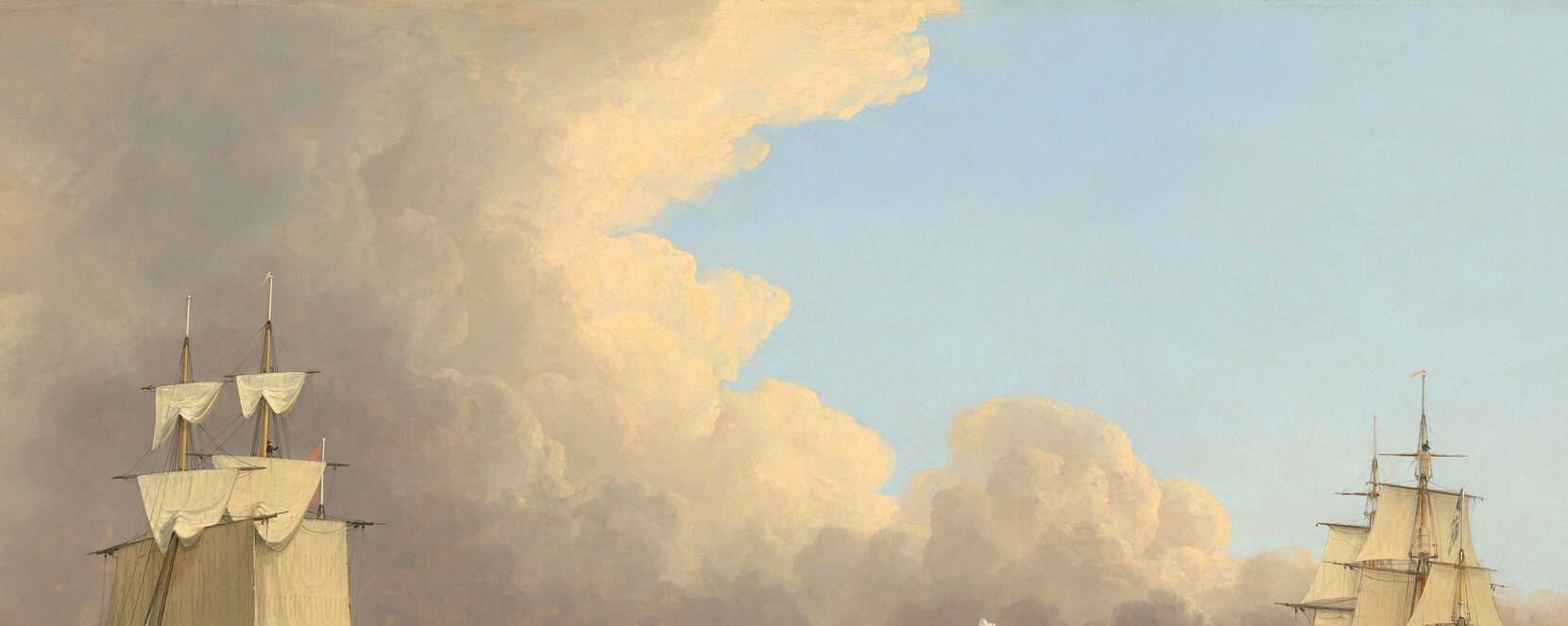
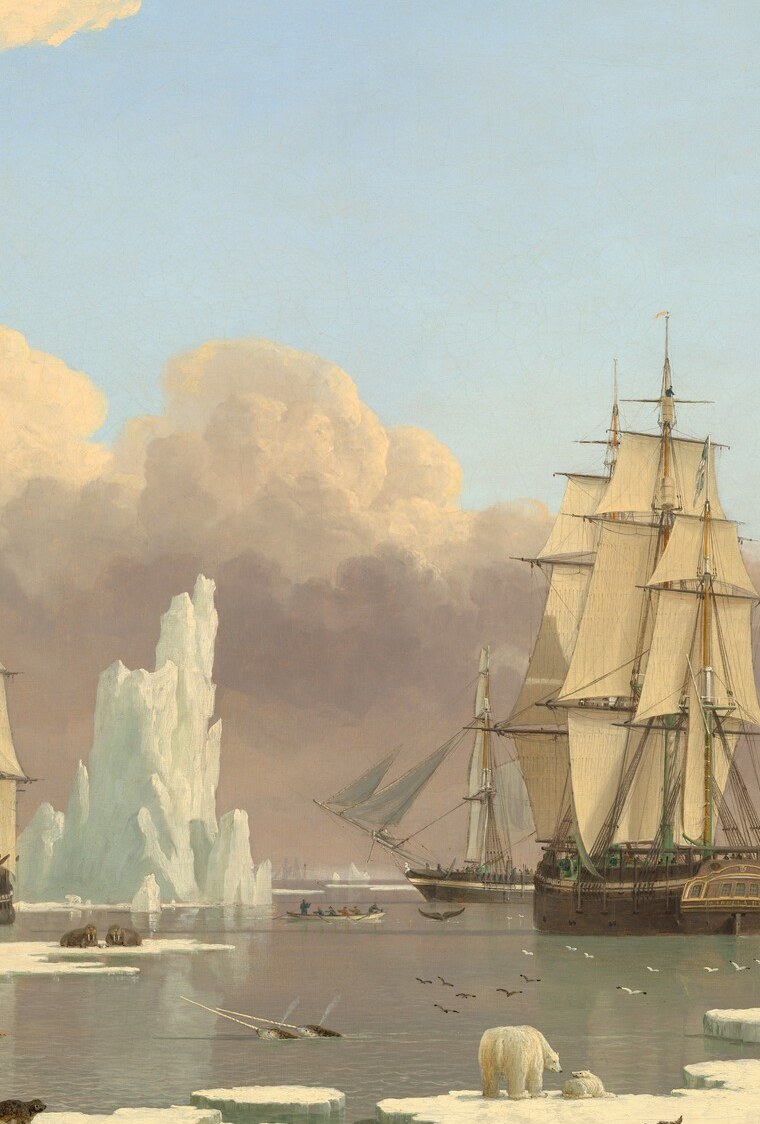
The Northern Whale Fishery: The "Swan" and "Isabella" by John Ward of Hull, painted around 1840, is a documentary record of a specific Arctic voyage. John Ward lived his whole life in Hull, a major whaling port, and his paintings are the most precise visual records we have of the British Arctic whaling industry at its peak.
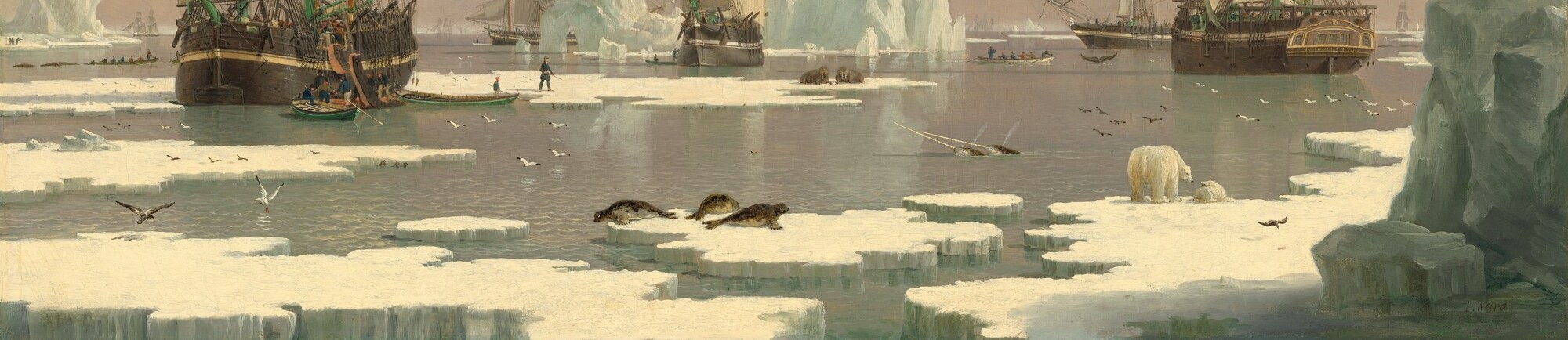
Most viewers stop at the ships. The Swan and Isabella are beautiful, complex machines, every rope and spar rendered with the precision of a ship portraitist who knew the hardware intimately. But the real reward is in the bottom third of the canvas. Ward dotted the foreground ice with seals: dark shapes that are easy to scroll past but impossible to forget once you see them. And tucked into the deep shadow of the towering iceberg on the far right, a polar bear stands at the margin of the frame.
These animals are not decorative. They are the ecosystem that the entire whale fishery depended on. The Arctic was not an empty void in 1840; it was a living world. Ward knew that, and he painted it not as backdrop but as subject. The ice, the light, the wildlife, and the ships all share equal billing, because in the actual fishery, they all shared equal consequence.
What else might be hiding in the rigging?
#arthistory #maritimeart #johnward
Details
Transcript
This is a portrait of the Arctic at its most dangerous. Two whaling ships, miles from help, threading through pack ice. Named the Swan and Isabella. An actual voyage, painted around 1840. But the reason for it all is hiding down here. Seals. The Arctic ecosystem was the engine of the whale fishery. And follow the shadow of the iceberg all the way to the right edge. A polar bear. The artist made sure we saw the world these ships entered.