Lamentation by Palma il Giovane, Jacopo
View the artwork: Lamentation →
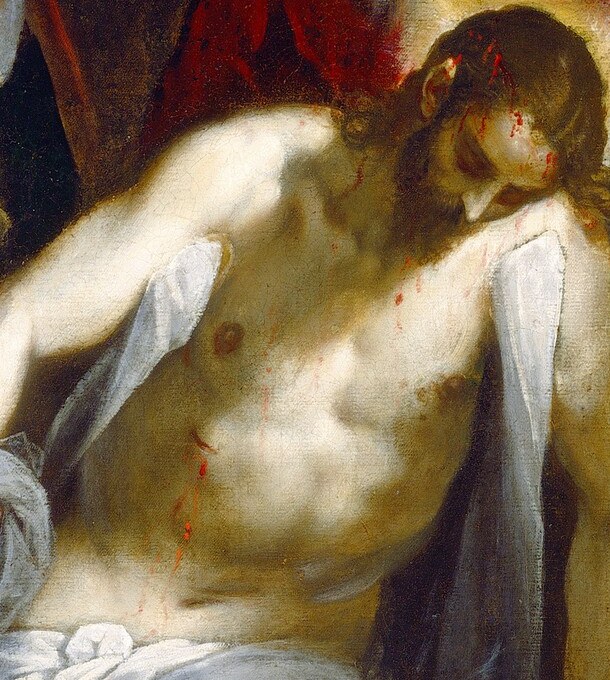
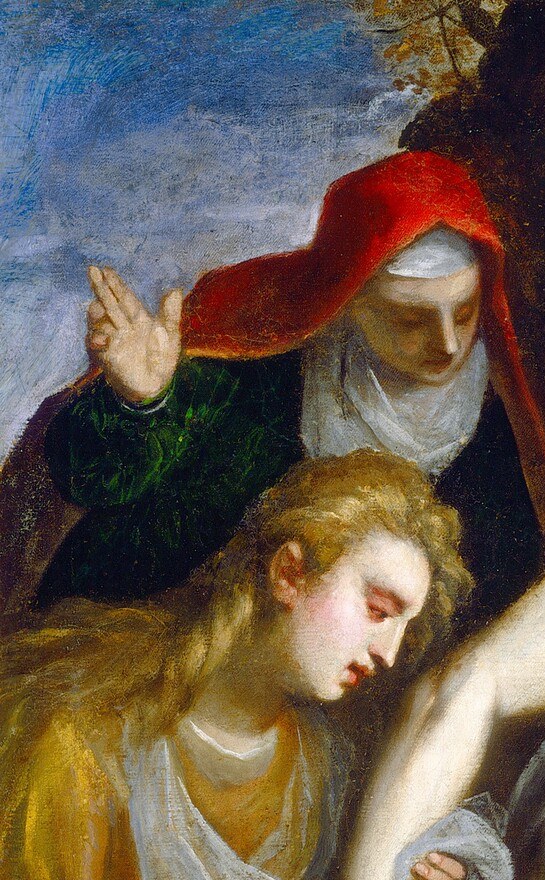
This is Jacopo Palma il Giovane's Lamentation, painted around 1620. Palma was the last great master of the Venetian Renaissance, working in the shadow of Titian and Tintoretto. By the time he painted this, he was nearly seventy and had outlived most of his contemporaries. The old man at the upper left is likely Nicodemus, the Pharisee who visited Jesus by night to ask how a man could be born again. The Gospels say he helped Joseph of Arimathea take the body down from the cross.
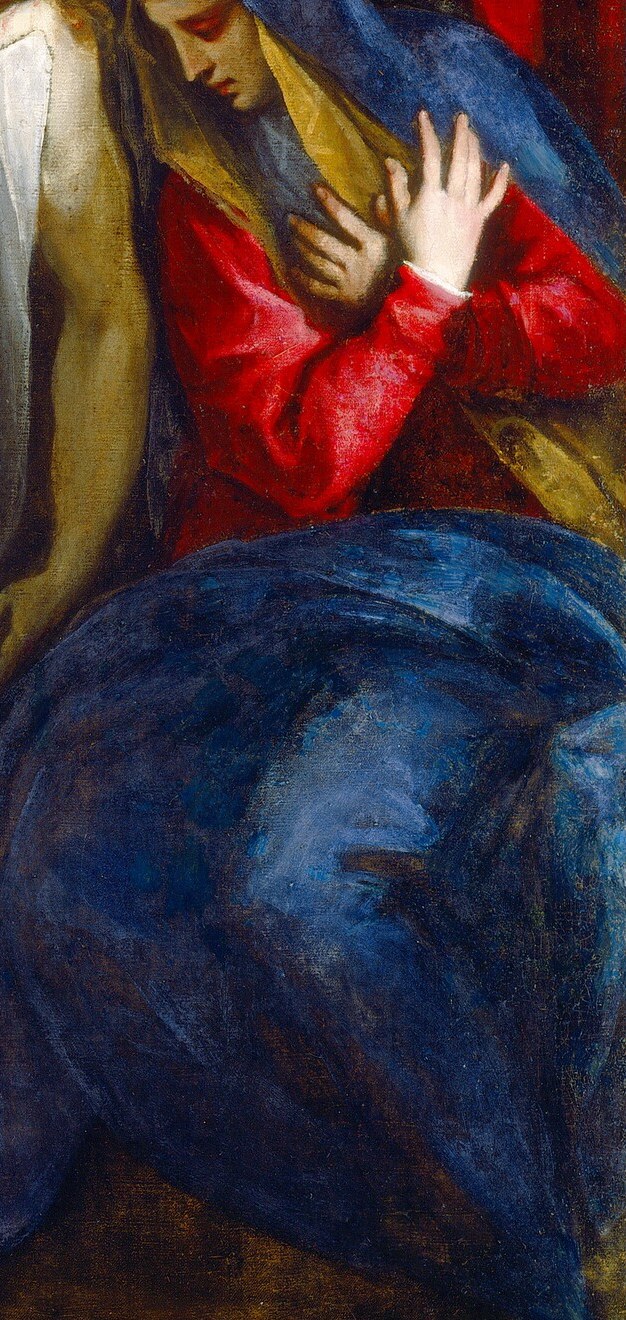
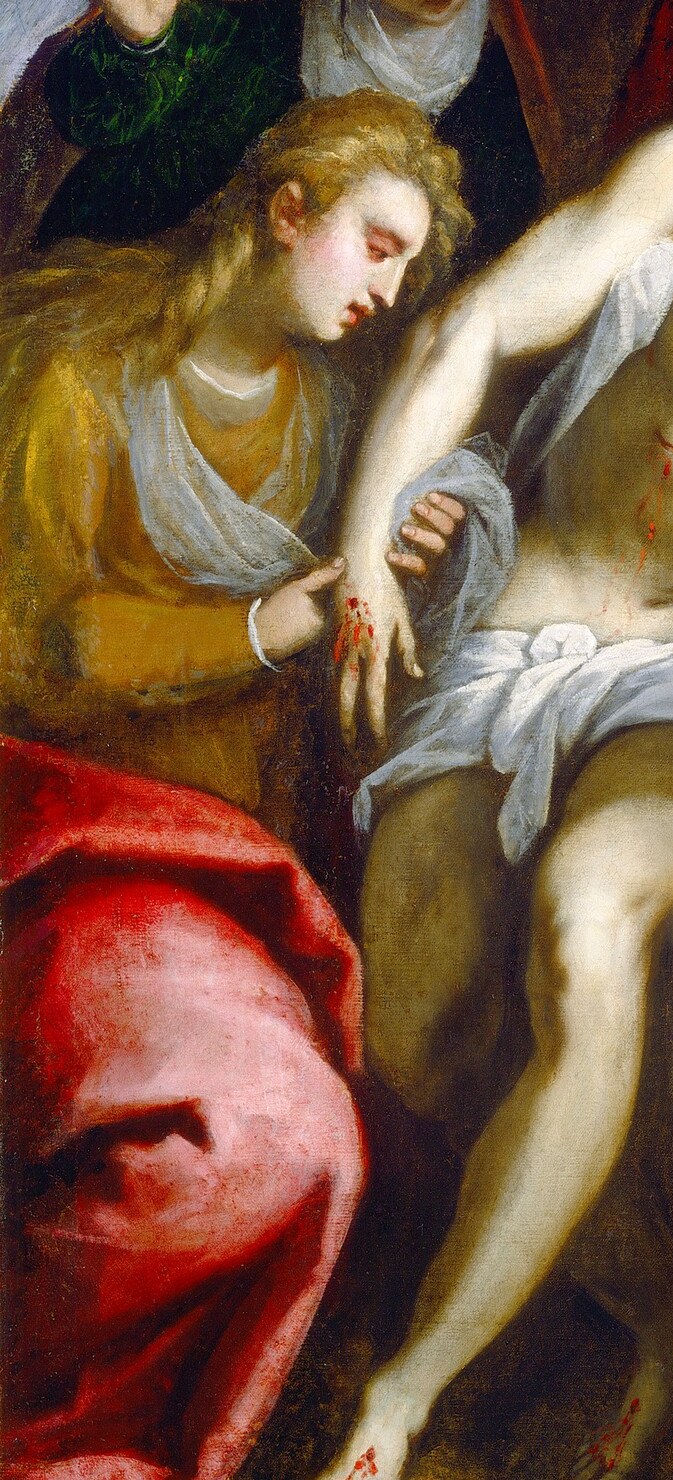
Palma gives each mourner a distinct grief. Nicodemus's aged face carries the weight of witnessing. The figure in red pulls Christ's body close, as if physical embrace could reverse what happened. And the Virgin Mary's raised hands hover between prayer and a helpless appeal she knows will not be answered yet.
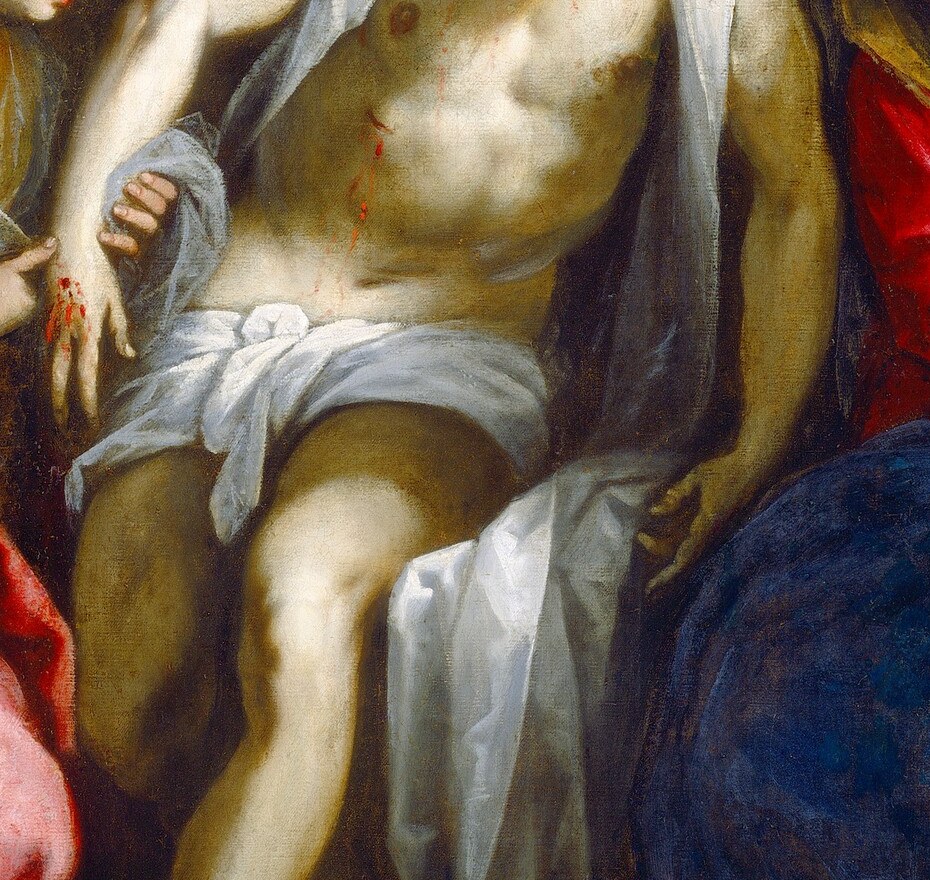
In the late 1610s, Palma's Venice was in decline. The plague of 1576 had killed Titian. The city's political power was fading. The artist himself had begun painting darker, more emotionally direct religious works, stripped of the decorative richness of his earlier career. This Lamentation, with its bruised sky echoing the darkness at Calvary described in Mark's Gospel, belongs to that late period. The body of Christ anchors the composition, pale flesh radiating against the dark ground in the Venetian chiaroscuro tradition Palma inherited.
Every figure here is looking at the same thing but processing it alone. That is what grief actually looks like. The painting is now in a museum collection, still drawing viewers into a story that has not changed in two thousand years.
#arthistory #venetianpainting #lamentation
Details
Transcript
The sky went dark. The Gospels say so. This man was likely there. Nicodemus. He came to Jesus by night, with questions. Now he cradles the body he helped take down. And the mother raises her hands. Prayer and helplessness are the same gesture. Look at the hand. The wound is a single, neat hole. Palma was nearly seventy when he painted this. He knew something about loss.