Christ at the Sea of Galilee by Magnasco, Alessandro
View the artwork: Christ at the Sea of Galilee →
This is Alessandro Magnasco's Christ at the Sea of Galilee, painted around 1740 and now in a private collection. Magnasco was an Italian late-Baroque painter working between Milan and Genoa, but looking at the frantic, almost violent brushwork here you would be forgiven for thinking you had stumbled on a lost Expressionist canvas from 1910.
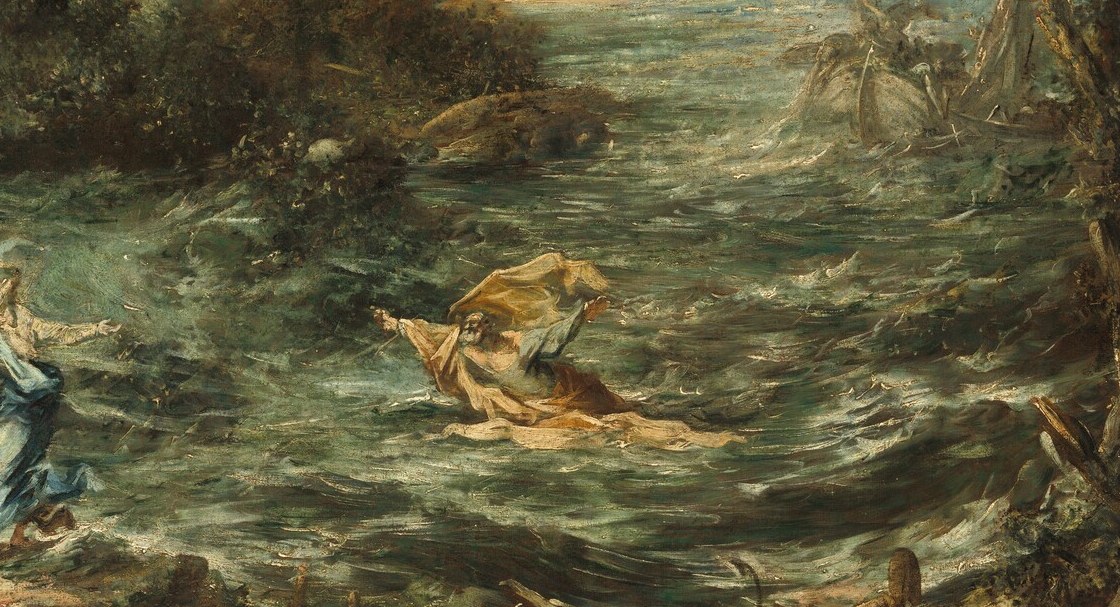
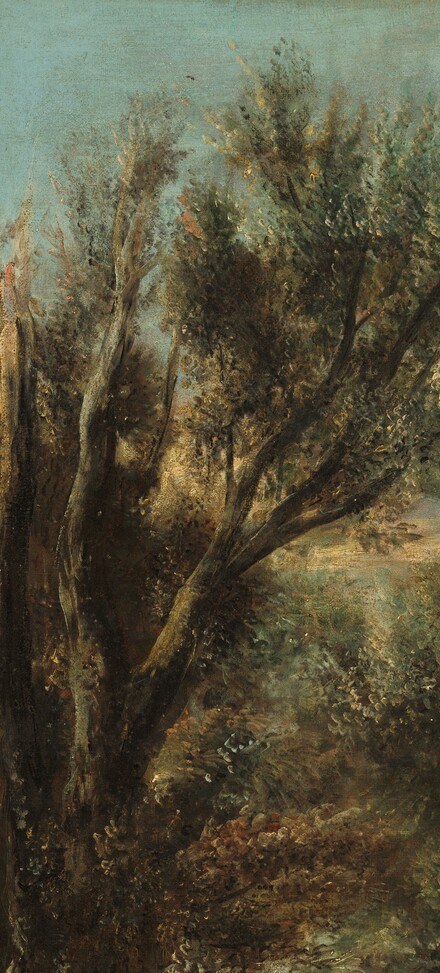
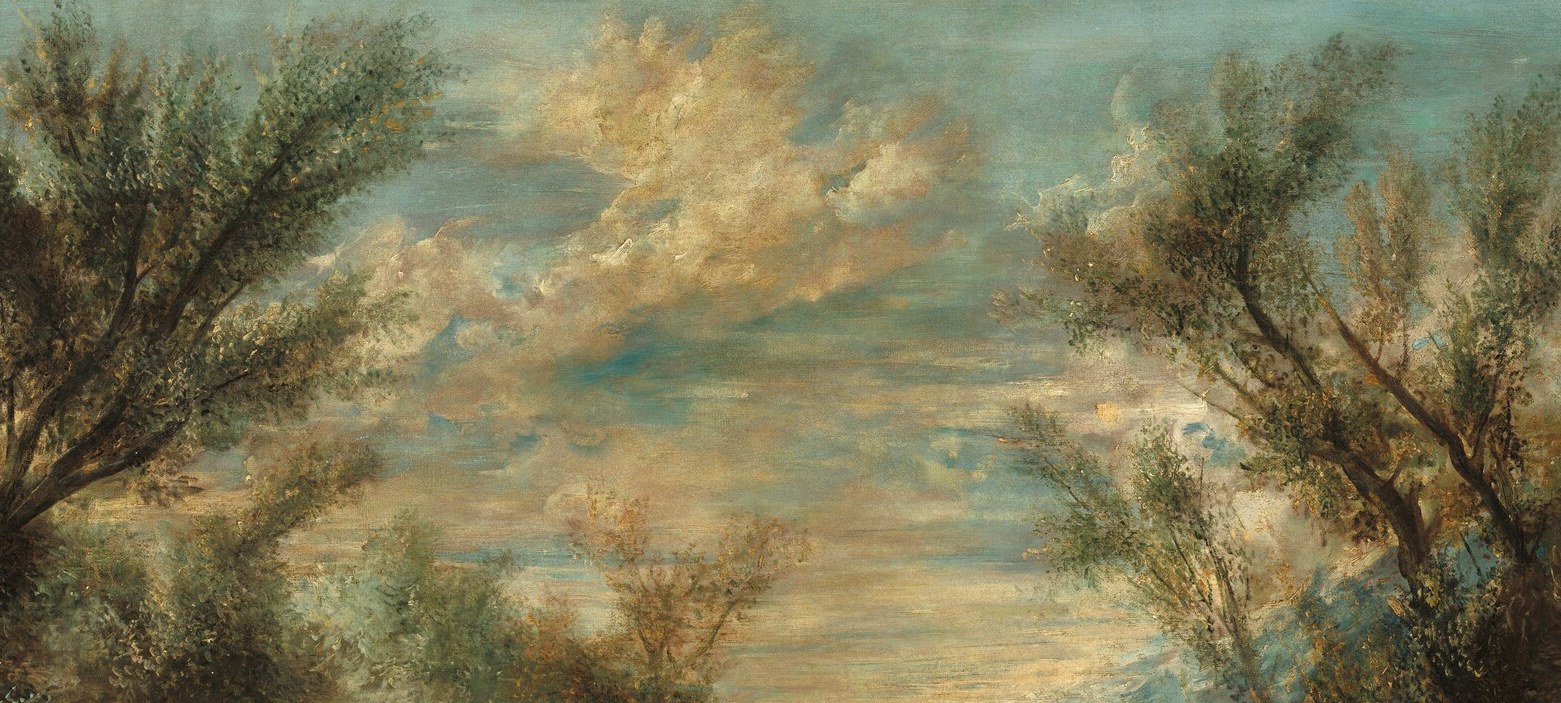
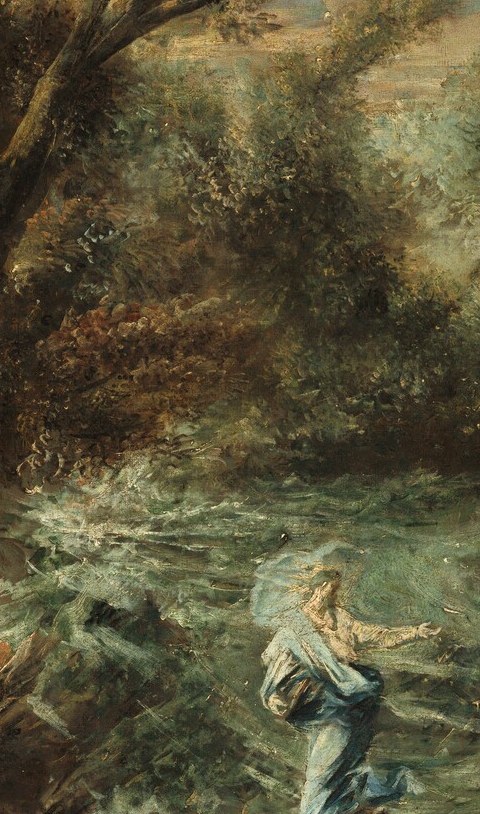
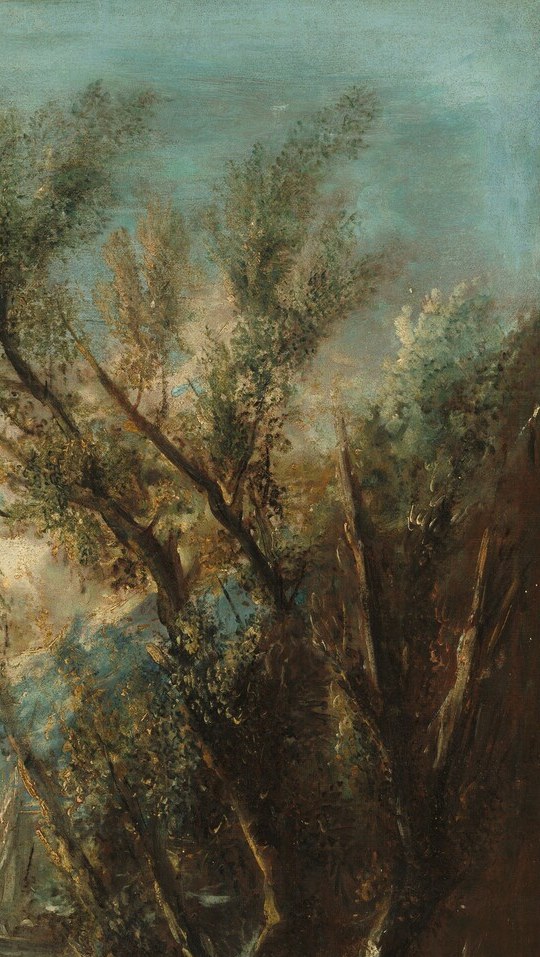
The first thing to see is the water itself. Find the white foam crests near the boat, those are not careful depictions of sea spray. They are thick, dragged smears of lead white oil paint, loaded unevenly onto a dry brush and pulled across the canvas in a single urgent gesture. The brushstrokes are faster than the wave they describe. Then look at the trees on the left. They have no outlines, no filled-in volumes. They are dark slashes bent sideways, as though the wind is attacking the painter mid-stroke. Christ, by total contrast, is a vertical column of still blue-white, the only calm mark in a canvas of panic.
Magnasco was called "il Lissandrino" and spent his career refining this jittery, phantasmagoric style. His contemporaries painted storms with studied drama. Magnasco painted them as if the canvas itself was in the squall. Art historians sometimes describe his figures as "flickering" or "fragmentary". Here, the sea flickers hardest. The technique, nervous, staccato impasto, forms dissolving into gesture, wouldn't be seen again as a deliberate artistic language until the early twentieth century.
The painting asks a quiet question: if faith is stillness, can you find any calm in the brushwork itself, or only in the figure?
#arthistory #alessandromagnasco #baroque
Details
Transcript
This is a miracle painted at the speed of panic. Christ stands still. Everything else is losing its mind. Look at the water. It isn't painted, it's attacked. Magnasco loaded the brush unevenly and dragged it fast. The foam is a smear of pure oil paint, still wet-looking after 280 years. Those trees weren't drawn and filled in. They were slashed. A hundred and fifty years before Expressionism, Magnasco painted nerve.