The Loge by Cassatt, Mary
Mary Cassatt's "The Loge," painted around 1878 to 1880, hangs in the National Gallery of Art. It is a masterclass in economic brushwork, where a few confident strokes of white and warm grey build a complete world of silk, light, and social observation. Cassatt, an American in Paris, earned her place among the French Impressionists through sheer technical nerve, and this painting is one of the best arguments for why.
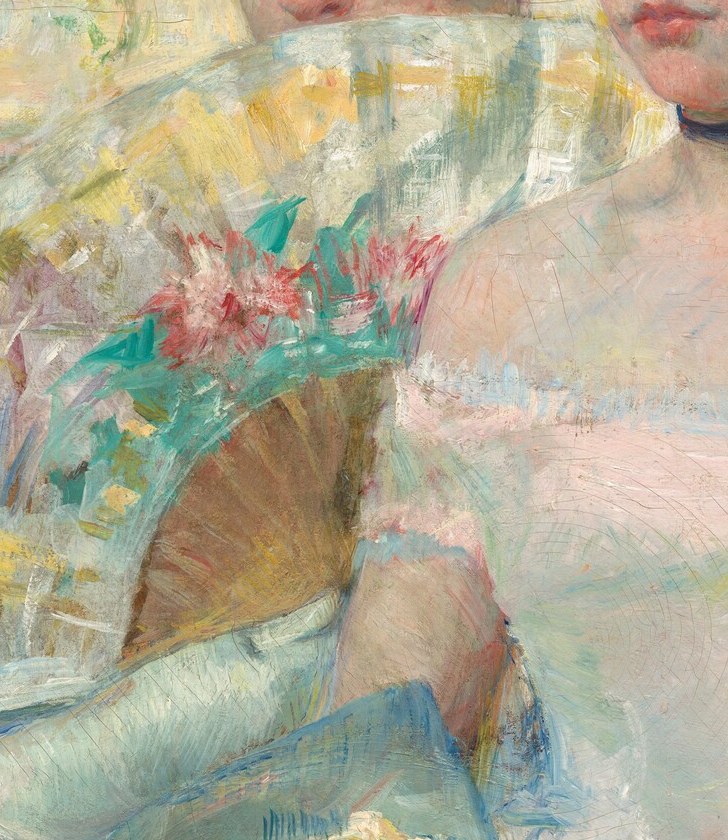
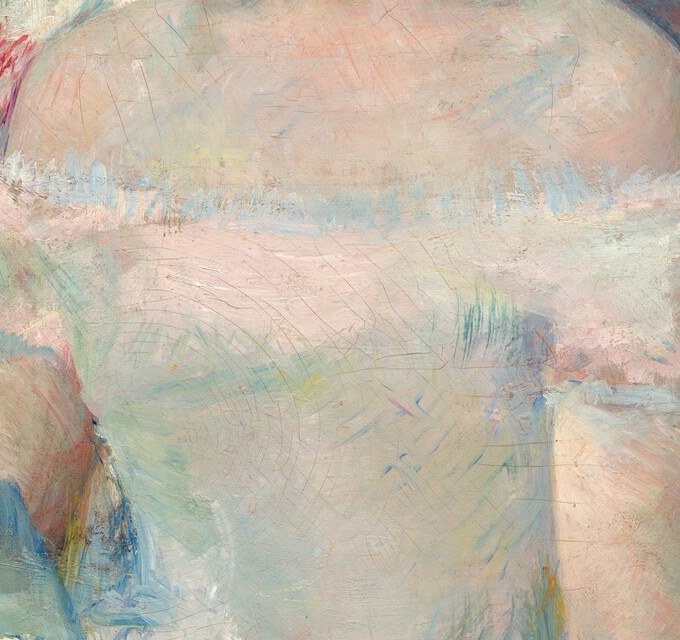
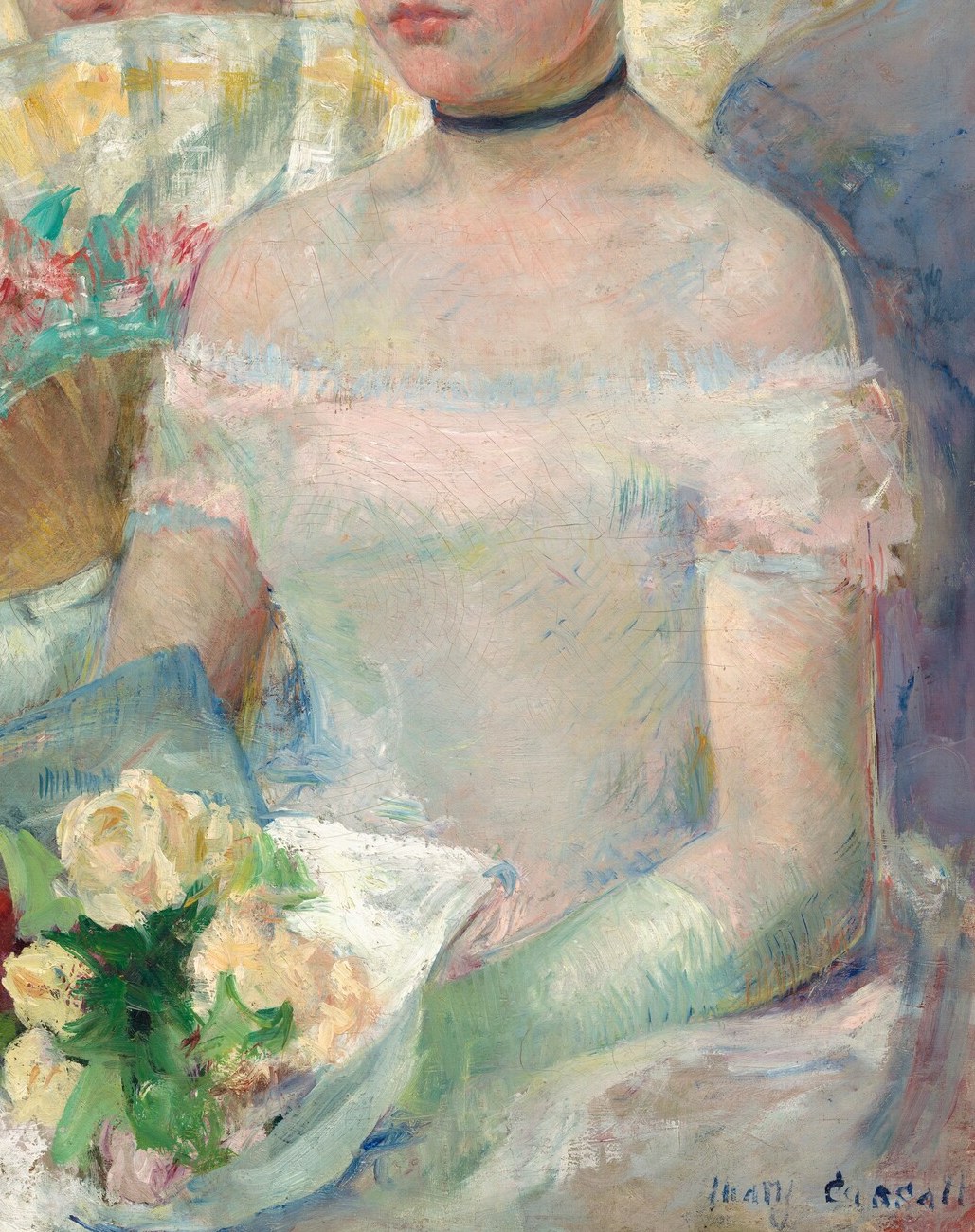
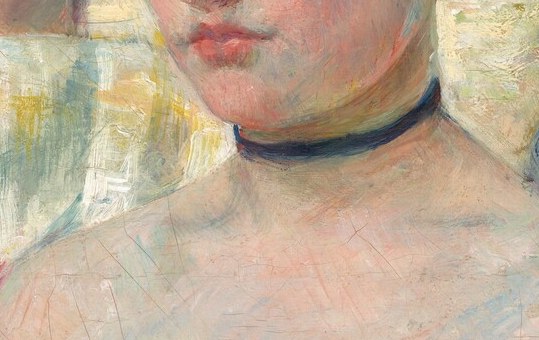
The real trick is the white evening gown. Paint a white dress under a chandelier's warm glow and it risks turning muddy or flat. Cassatt solved this by refusing to over-describe it. Look at the bare shoulder: a single stroke of warm ochre defines the bone, and she stops. The long opera gloves are three shades of white laid side by side with no blending. Up close, it barely looks like a glove; step back, and your eye reads glossy satin catching light from above.
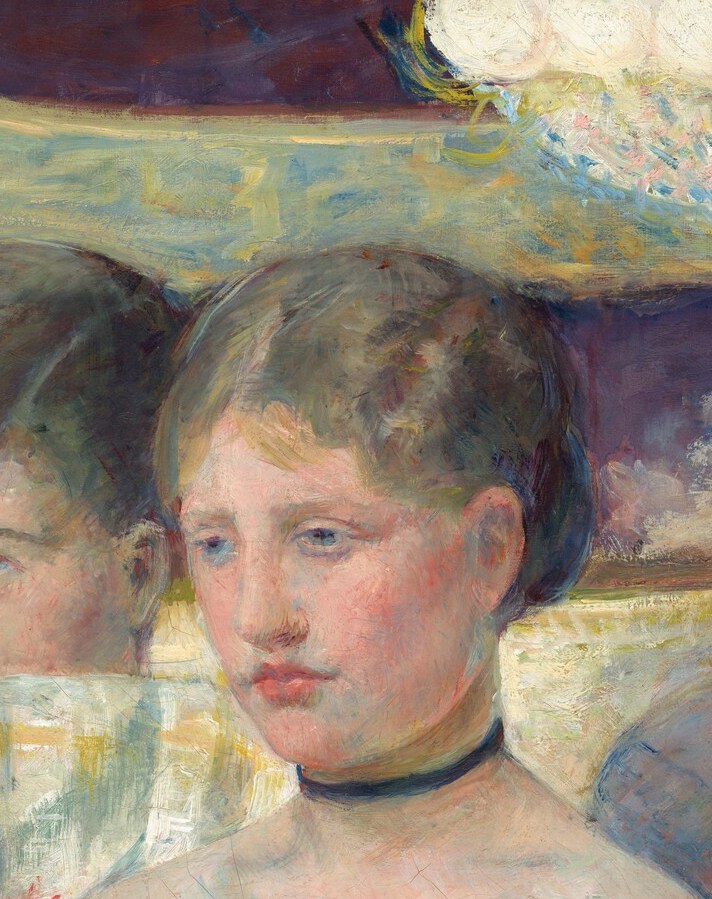
The face works differently. After this extreme abbreviation of the dress, Cassatt gives the face solid form and a direct, unapologetic gaze. That contrast is the point of the painting. The body is fashion, ephemeral, suggested, but the woman is present, steady, and fully aware she is being looked at. In a Parisian theatre box, looking and being looked at were the whole evening's sport, and Cassatt made the viewer a participant.
This was Cassatt's first major painting shown with the group, and it remains one of the clearest demonstrations of what Impressionism actually was: not just light, but intelligence about what the eye really registers. The next time you see a white dress painted with total economy, you will recognize her hand.
#arthistory #marycassatt #impressionism
Details
Transcript
White satin under gaslight. No painter should try it. A single warm stroke turns into a shoulder. The gown is almost no detail at all. Just the idea of silk. She made opera gloves from three shades of white. Cassatt was the only American the Impressionists let in. Look at the face now. The dress is a sketch. The gaze is not.