Calling the Cows Home by Jean François Millet
View the artwork: Calling the Cows Home →
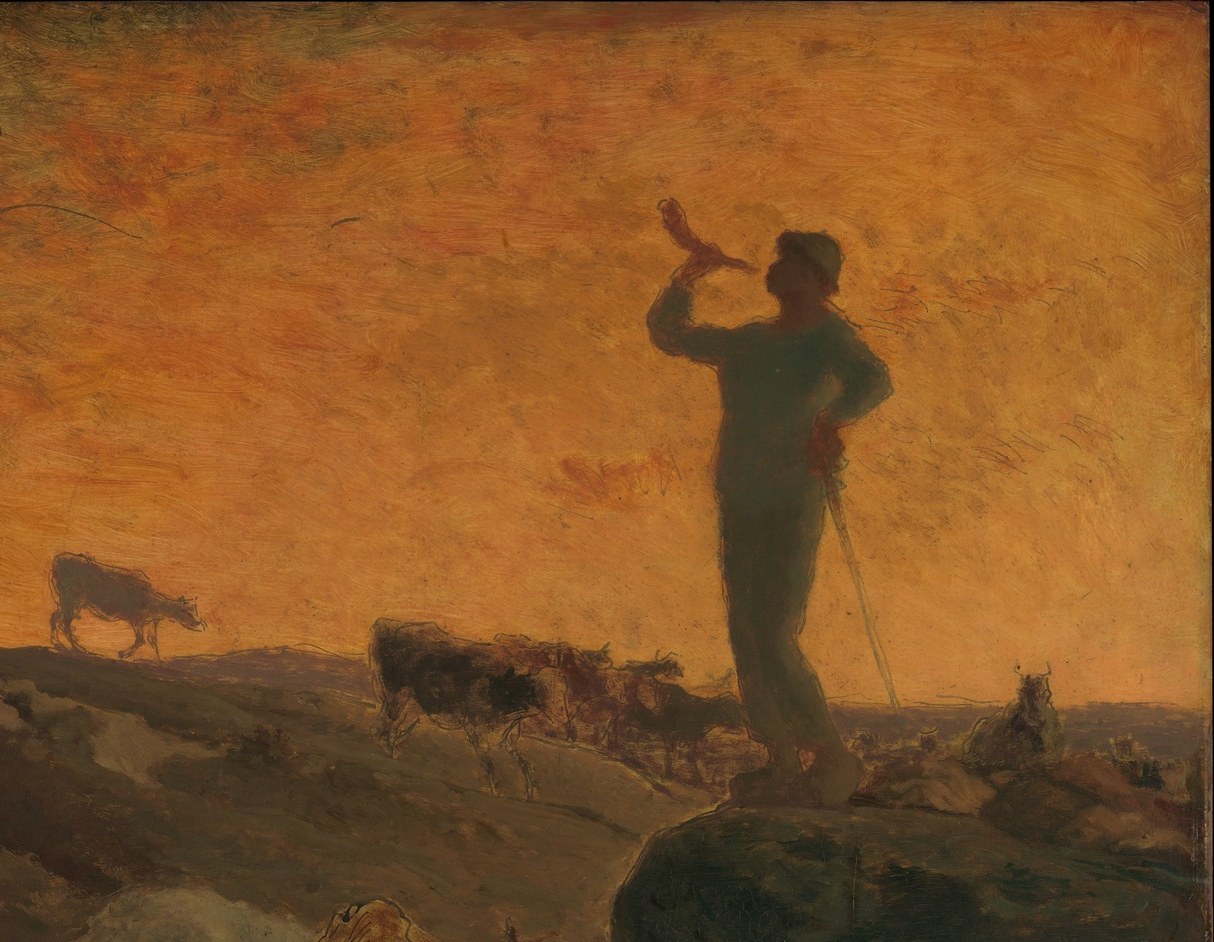
This is Calling the Cows Home, painted by Jean-François Millet in 1872. Millet called it hardly anything but a sketch. It is now in the Metropolitan Museum of Art, and it is his final and most powerful treatment of a subject he returned to for over fifteen years.
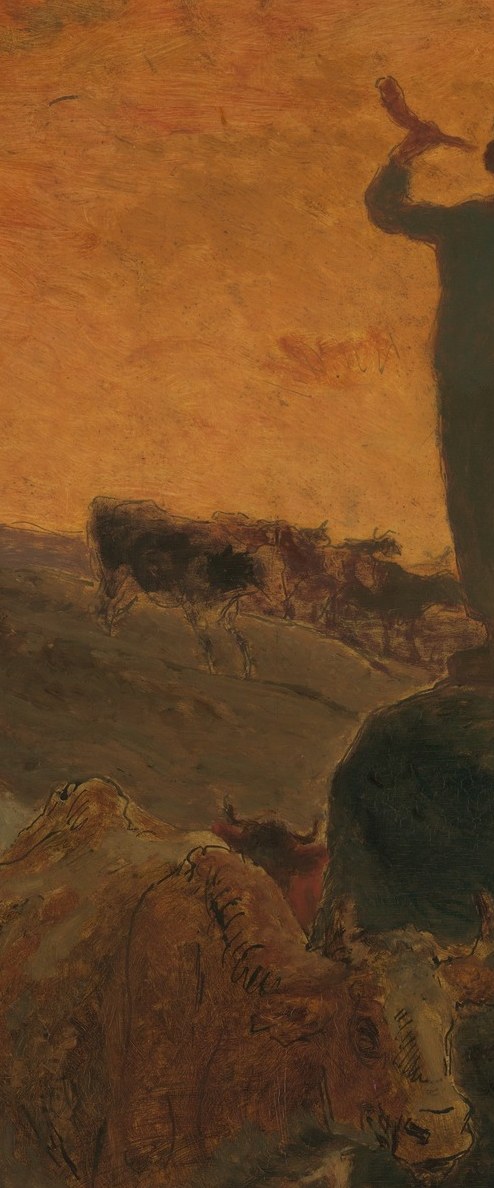
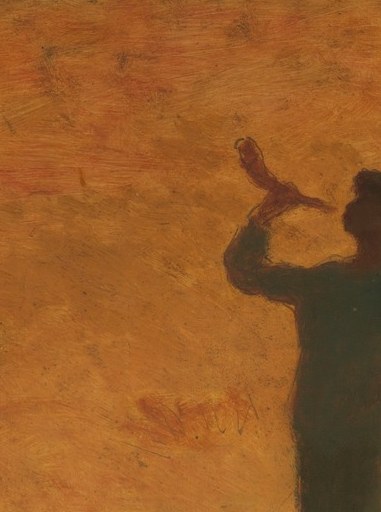
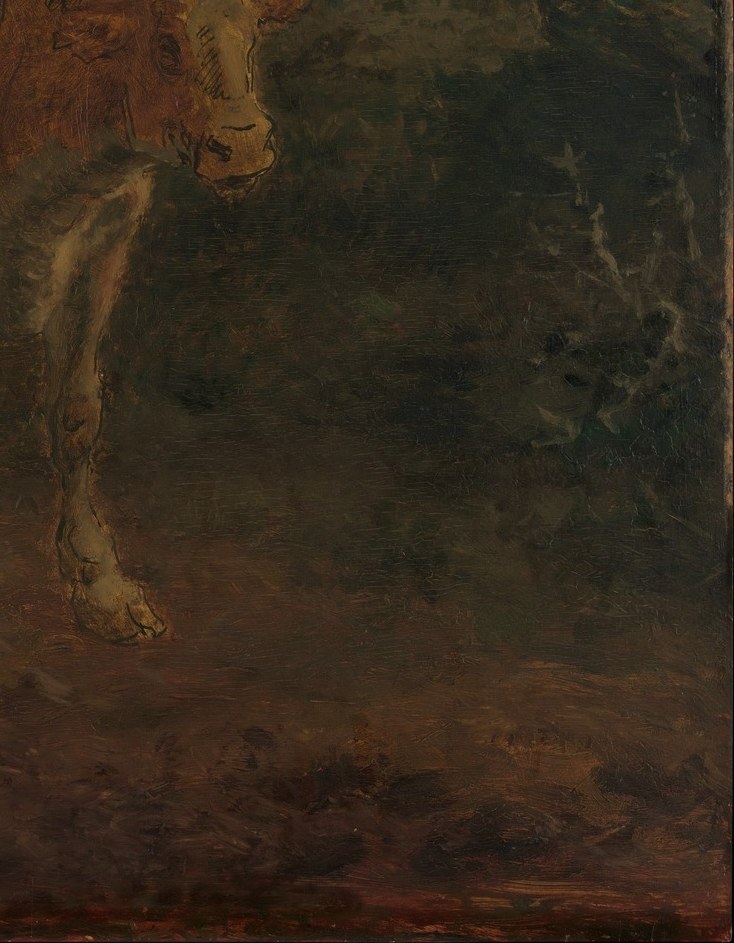
The cowherd is nearly a silhouette, his face dissolved into the warm dusk. Millet did not paint a specific person; he painted a ritual. The cattle are already clustering at his feet, their curved horns catching the last orange light. Watch how everything in the painting gathers toward the sound of that horn.
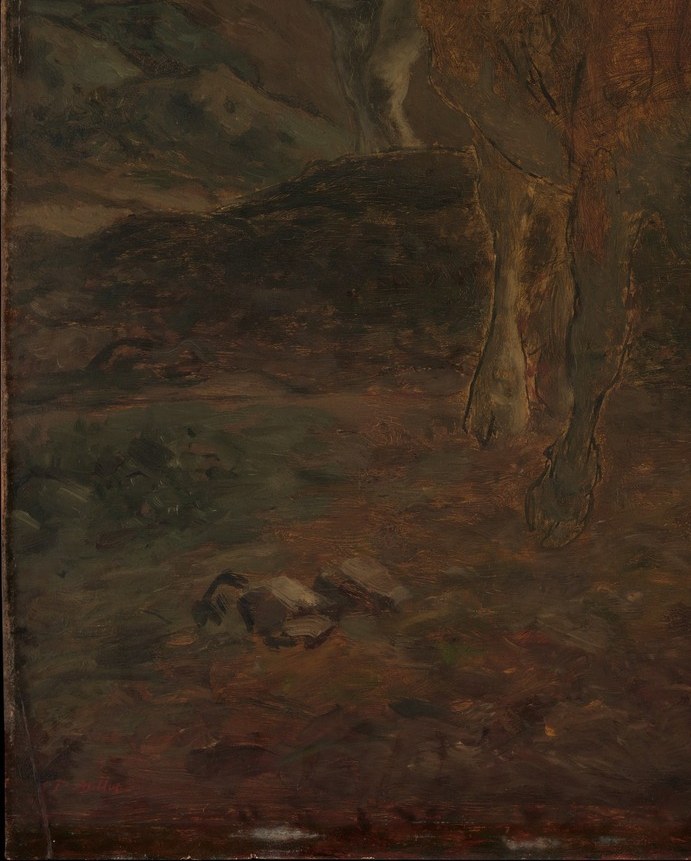
Millet lived and worked in Barbizon, a village on the edge of the Fontainebleau forest. By 1872, the agrarian world he had painted all his life was beginning to recede. This painting is not social realism like his earlier Gleaners; it is something quieter. The visible charcoal hatch marks and the thin orange ground layer glowing through the sky show an artist who had stopped trying to hide his process.
The painting came to the Met in 1950 as a gift from Mrs. Arthur Whitney. It hangs in Gallery 802, still radiating the light of a particular evening on a plain that is no longer farmland.
#arthistory #jeanfrancoismillet #barbizonschool
Details
Transcript
1872. The Barbizon plain, twilight. A cowherd calls the herd home. His face is barely there. Millet made him universal. The cattle are already turning towards the sound. Look at the horn tips catching the last light. The orange sky is the very first layer of paint, glowing through. Millet told a friend he'd produced hardly anything but a sketch. He was wrong. This is his final word on this vanishing world.