Count Giacomo Durazzo in the Guise of a Huntsman with His Wife by Martin van Meytens
View the artwork: Count Giacomo Durazzo in the Guise of a Huntsman with His Wife →
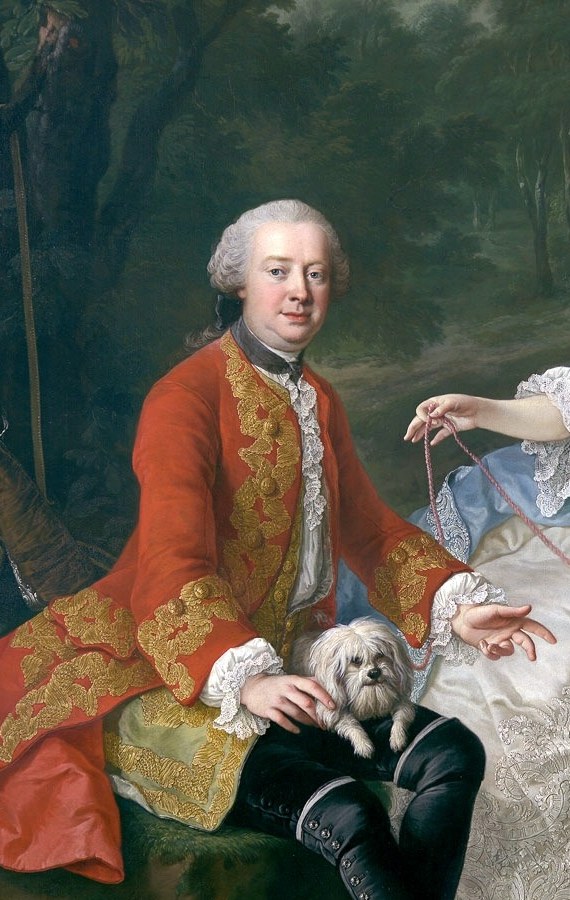
Count Giacomo Durazzo in the Guise of a Huntsman with His Wife, painted by Martin van Meytens around 1760, is a double portrait where costume and career intertwine. Durazzo was no mere aristocrat playing dress-up. Born into Genoese nobility, he became the director of the imperial theaters in Vienna, essentially the man who shaped what opera meant to the Habsburg court. That theatrical red coat he wears is a knowing wink at his backstage life.
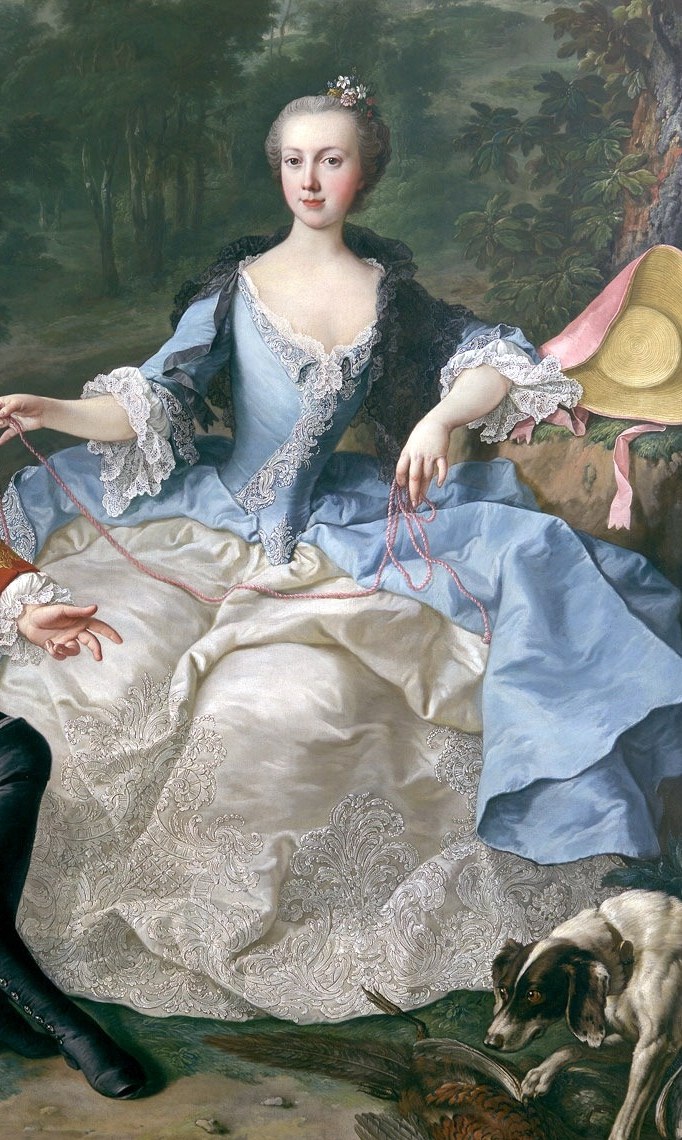
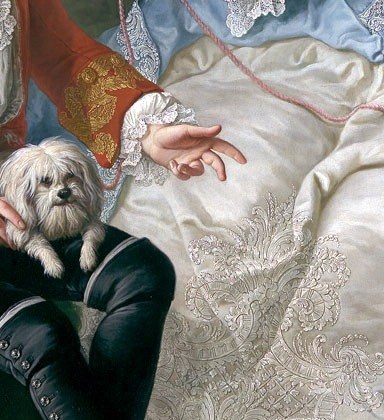
Look closely at the Countess's pale blue gown. Van Meytens was known for a near-obsessive rendering of silk and lace, a skill that made him the most sought-after portraitist in Vienna. The cascading folds of the dress are a technical flex, showing why an entire empire wanted to own his talent. The small white dog on a red leash is a coded signal of fidelity, but the leash itself is a clever chromatic trick, visually tying the Countess across the canvas to her husband's scarlet coat.
The real stakes here were geopolitical wealth. Van Meytens was born in Stockholm but became the Austrian court painter. The Habsburgs paid him salaries and bonuses so lavish that it was an explicit strategy to prevent him from being poached by rival courts, particularly Versailles. A portrait like this one was a transaction in a soft-power bidding war. To own the painter was to own the image of power itself, and Vienna paid a king's ransom to keep that image exclusive.
The next time you see an exceptionally fine rendering of fabric in an 18th-century portrait, consider whose treasury might have been emptied to ensure the artist never left the building.
#arthistory #martinvanmeytens #rococoportrait
Details

Transcript
Count Durazzo paid for this portrait with more than money. He was the man who brought opera to Vienna. His red coat is a stage costume, not hunting gear. The painter, Martin van Meytens, was Sweden's gift to the Austrian court. Austria paid him a fortune to keep him out of France's hands. This silk is his salary made visible.