Christ among the Doctors by http://www.wikidata.org/.well-known/genid/70b73cbfff85ed05e7e490cb57f23670
View the artwork: Christ among the Doctors →
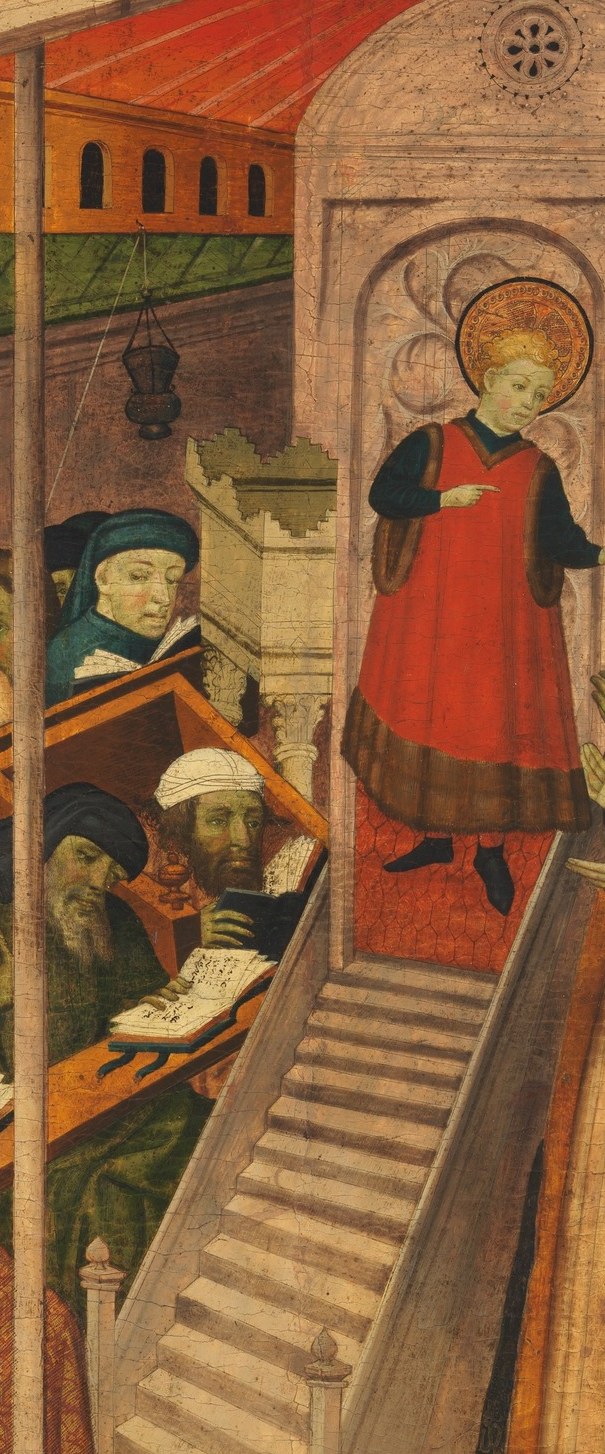
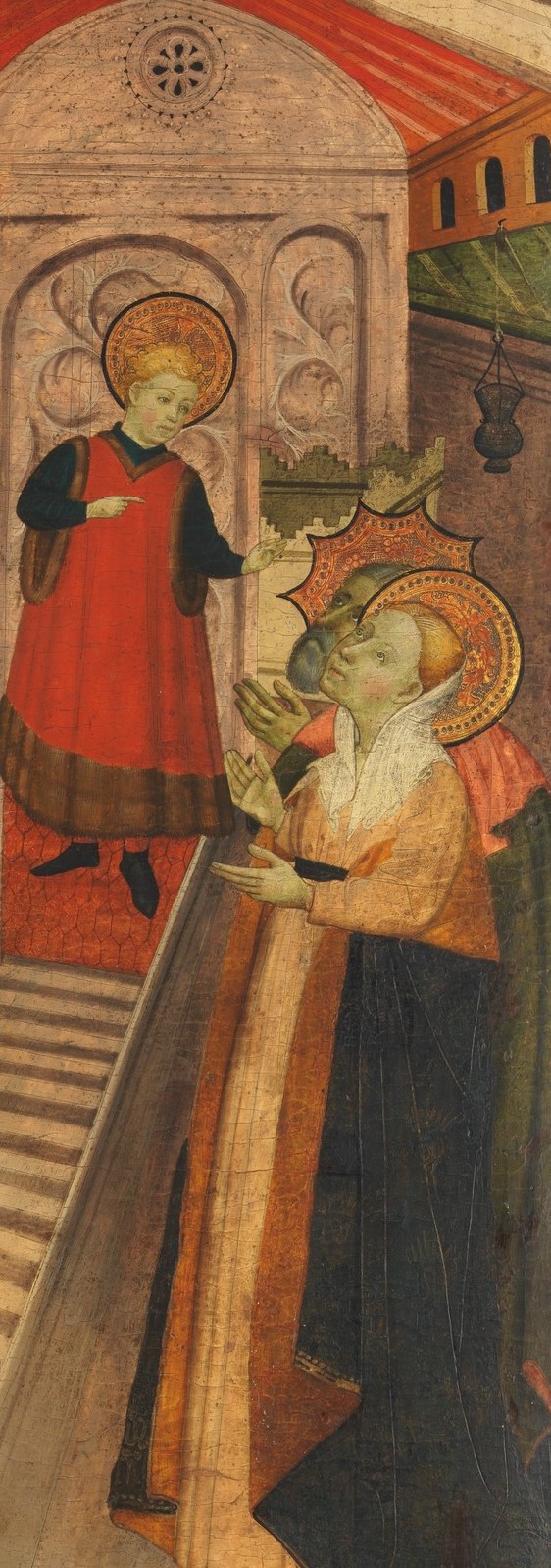
This is Christ among the Doctors, painted around 1500 by an artist known only as the Master of the Youth of Saint John. It tells the story from Luke's Gospel where the twelve-year-old Jesus, missing for three days, is found in the Temple at Jerusalem, astonishing the learned elders with his understanding. The painting lives in the Museo del Prado.
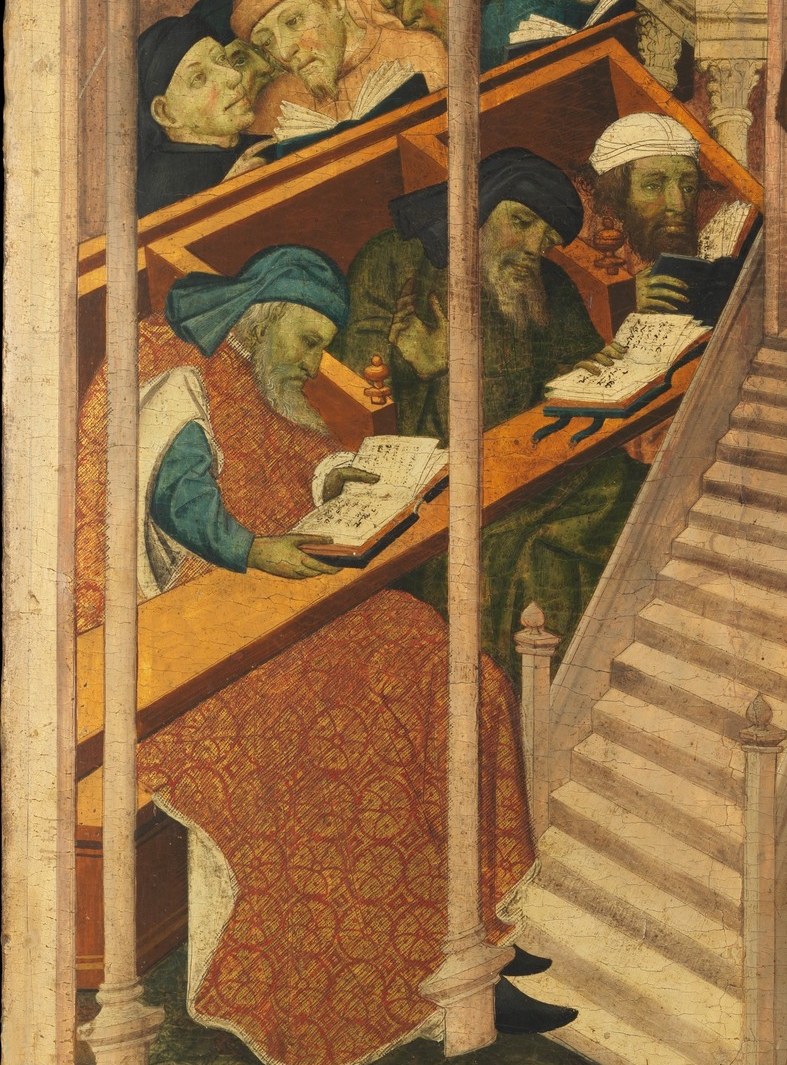
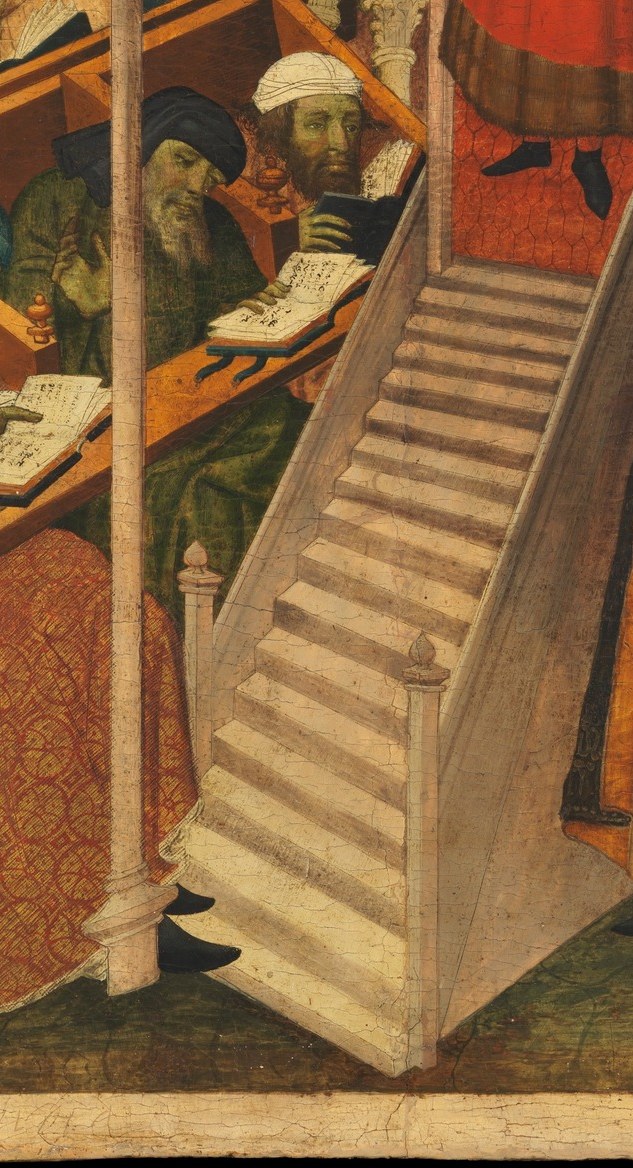
Look at the composition. The child in red stands elevated on a stone staircase, his hand raised in a teaching gesture. Below him, in an enclosed balcony, four hooded scholars bend over open manuscripts. Their faces are downturned, absorbed. Not one meets the child's eyes. But on the staircase itself, one figure has abandoned his study and dropped to his knees.
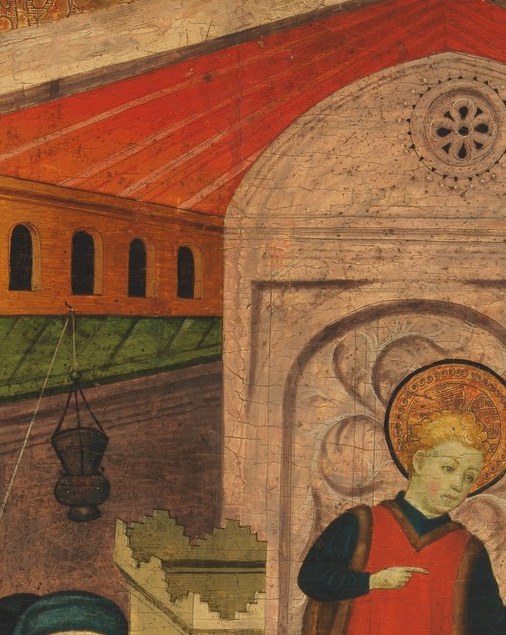
The painter was working in early-16th-century Spain, part of a workshop that translated biblical Jerusalem into familiar vernacular architecture: the red timber roof, the rounded arches. This was sacred history made local, so the viewer would recognize the temple as a place like their own. The kneeling figure is the bridge between the two realms, the moment intellect yields to revelation.
A child stands above the doctors of the law. The painting asks a question it never says aloud: who in this scene actually sees?
#arthistory #renaissance #museodelprado
Details
Transcript
In the Gospel of Luke, a child goes missing for three days. His parents find him here, in the temple, teaching the elders. Four learned men, absorbed in their texts. Not one of them looks up at the boy. But one figure has closed his book and knelt. He is the only one who sees past the written law. The painter makes us choose where wisdom really lives.