Family Group in a Landscape by Jacques d'Arthois
View the artwork: Family Group in a Landscape →
This is Jacques d'Arthois's "Family Group in a Landscape," painted around 1645 and now in the collection of the Metropolitan Museum of Art. It is one of the few works by the leading Brussels landscapist accessible in an American public collection, and it operates like a coded message in oil paint.
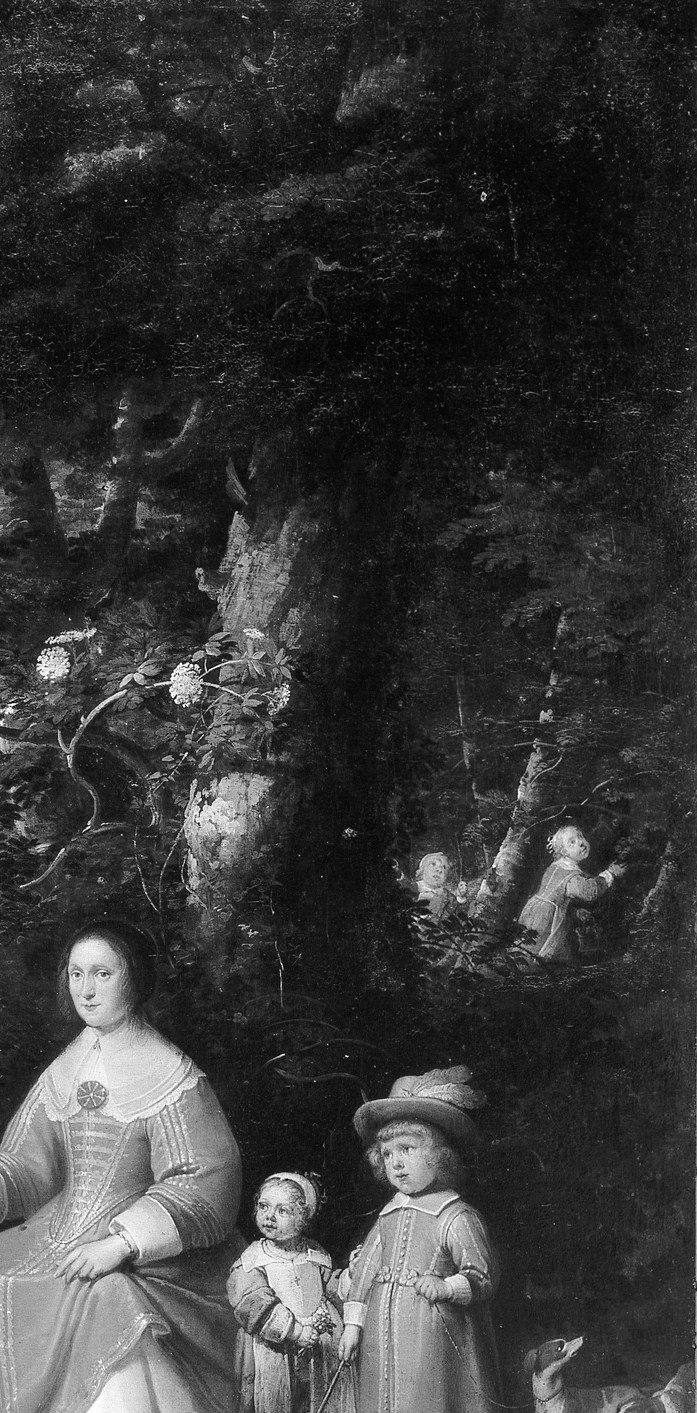
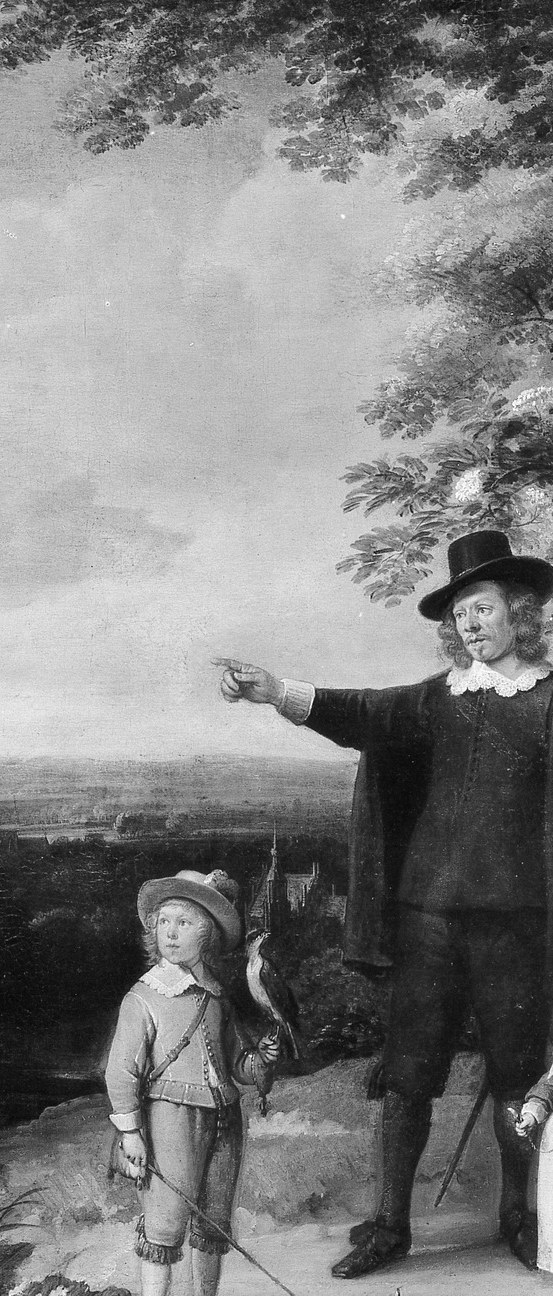
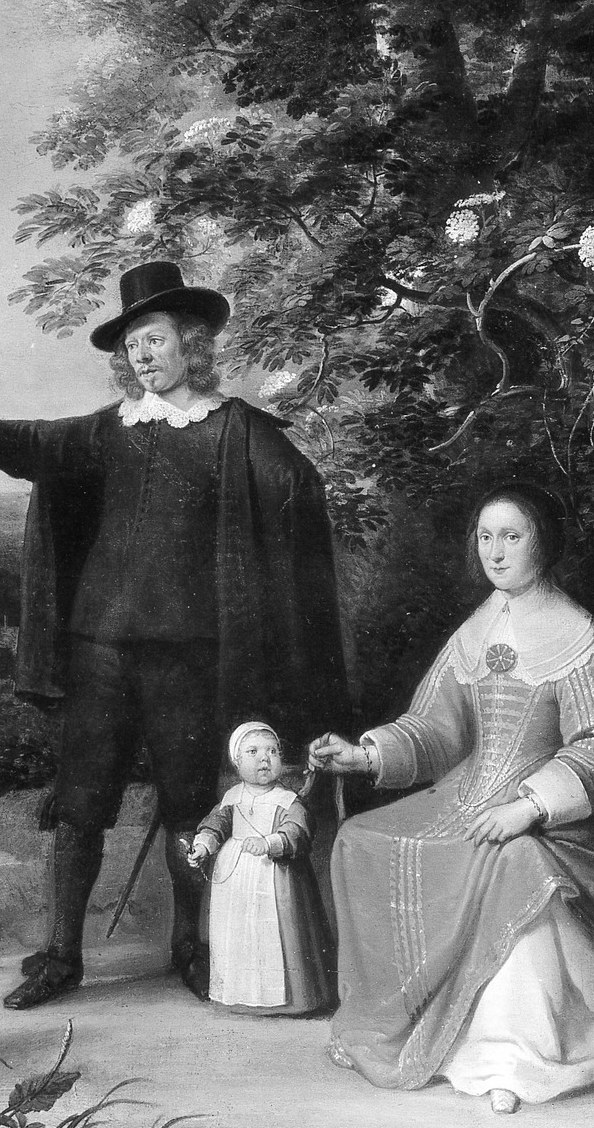
Look first at the patriarch. His hand does not rest, it points directly into the distant vista on the left, where a town silhouette is visible through the trees. The message is literal: this land belongs to us. Below him, a young boy releases a hawk, a stock emblem of nobility in Flemish portraiture. Scanning right, the mother's white lace collar quietly signals mercantile wealth, while the toddler placed at the exact compositional center between the two adults declares the family's dynastic future.
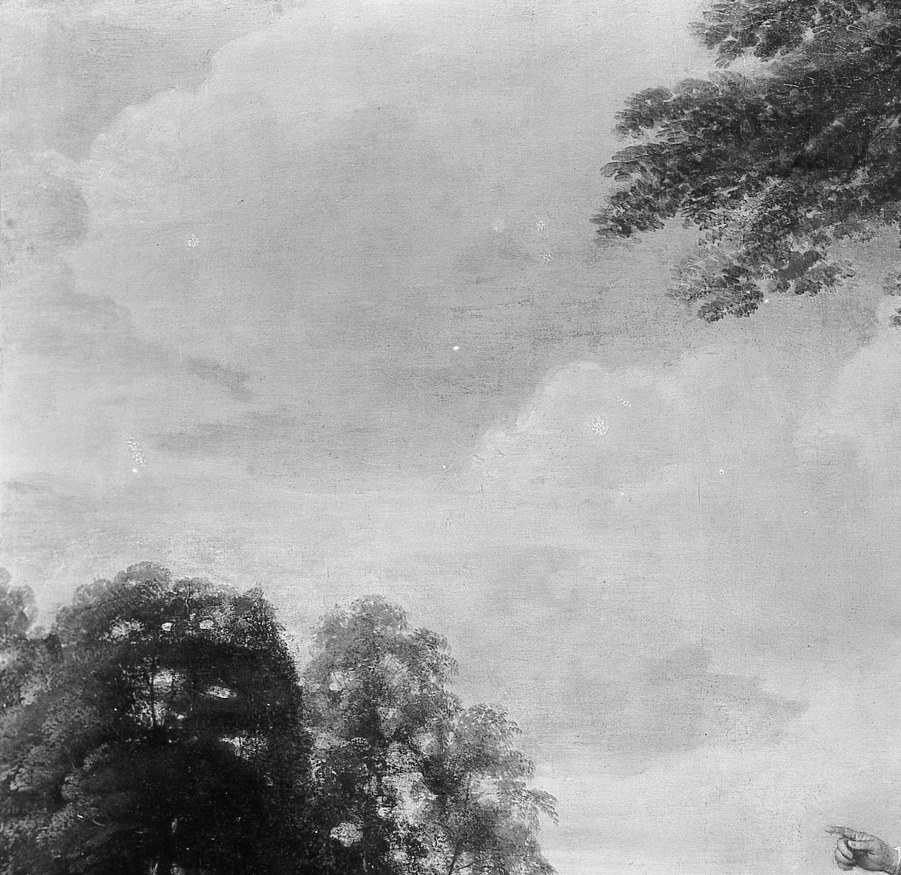
The painting is a studio collaboration, which was standard practice in 17th-century Brussels. D'Arthois, a master in the Guild of Saint Luke and a specialist in the Sonian Forest's dappled light, painted the monumental trees and the luminous canopy opening above the figures. An unidentified figure painter, routinely enlisted for such work, added the family. It passed through the collection of Theodore M. Davis before being bequeathed to the Met in 1915.
Nothing in this portrait is accidental. The hawk, the pointing arm, the ordered children, the claimed vista: together they are a visual contract of lineage and dominion. What coded object in a family portrait would you want pointed out next?
#arthistory #flemishart #jacquesdarthois
Details
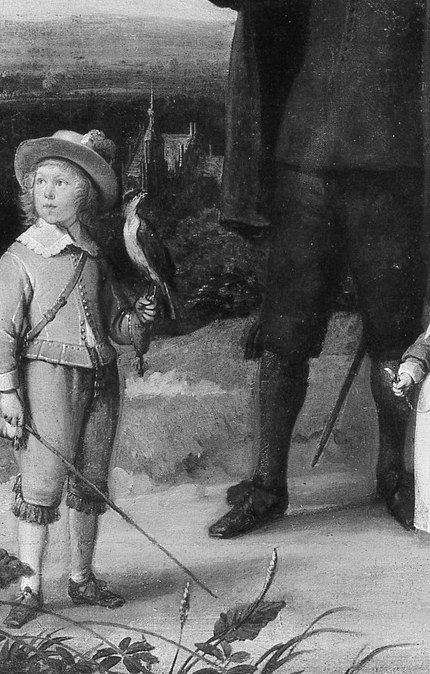
Transcript
A family poses in the Sonian Forest, around 1645. The father stands tallest, anchoring the group. His outstretched arm claims the land beyond them. A town rises in the distance, proof of property. The boy on the left trains a hawk, an emblem of noble birth. A toddler stands dead center, linking husband and wife. Dynastic continuity, painted for a family that wanted it seen.