Pitched It Sheer into the River . . . Where It Still Is Seen in the Summer by Frederic Remington
View the artwork: Pitched It Sheer into the River . . . Where It Still Is Seen in the Summer →
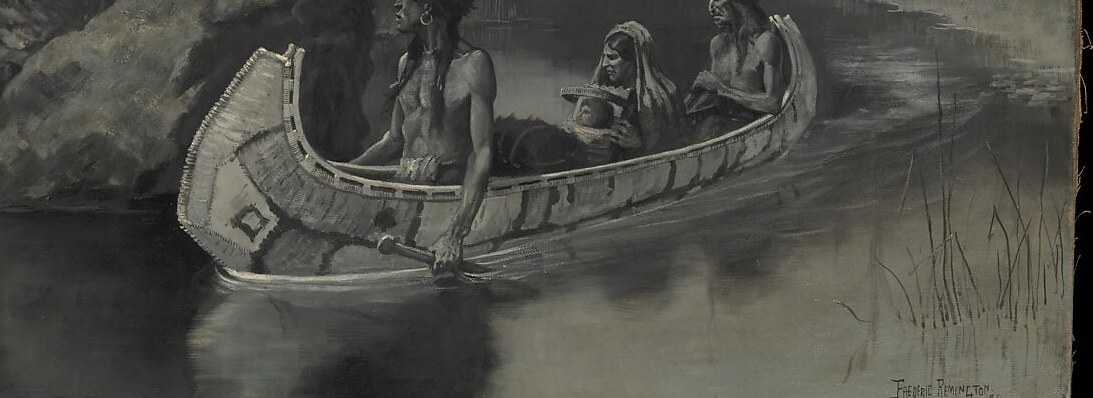
Frederic Remington’s 1889 painting "Pitched It Sheer into the River . . . Where It Still Is Seen in the Summer" at the Amon Carter Museum of American Art does something extraordinary: it uses its own title as evidence. The words are painted directly across the top edge of the canvas, turning the image into a captioned confession.
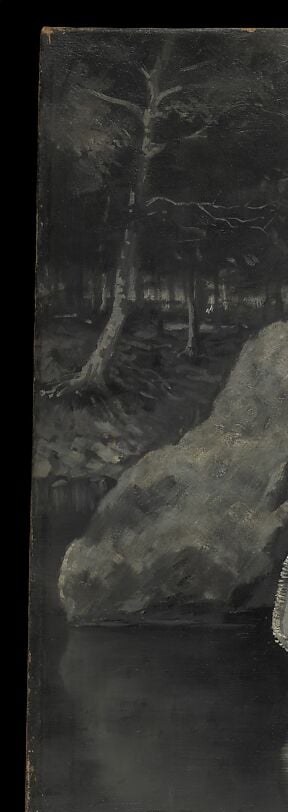
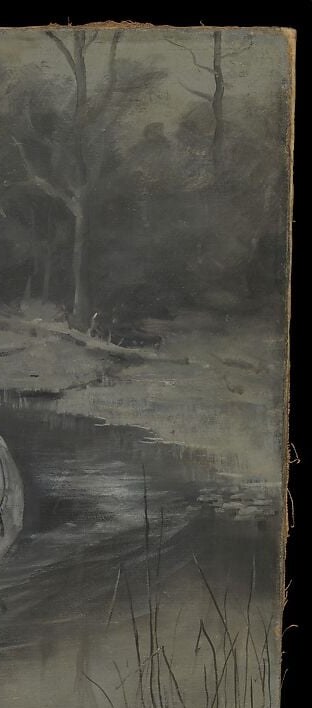
Look at the man in the red shirt. His body is the kinetic center of the painting, he heaves a heavy, dark object over the bow, and the ripples at the canoe's edge are the only trace of what just happened. Behind him, two women watch; one clutches her shawl in what reads unmistakably as anxiety. Remington wraps the scene in walls of shadow on both riverbanks, isolating the three figures so completely that the landscape itself feels complicit.
The story came to Remington from Montana, where he heard of a man who hid stolen goods by sinking them in a river, and where, for years afterward, the objects remained visible through the water every summer, glinting just beneath the surface. The painting captures the exact moment the object goes in, but refuses to show us what it is. We see only weight and darkness.
That is the argument of the piece: rivers keep secrets quickly, and keep them a long time. But not forever. In summer, the light finds them.
#arthistory #fredericremington #americanart
Details


Transcript
Three people. A canoe. And the weight of a secret. He strains over the bow. This takes effort. Remington heard this story in frontier Montana. A man sank stolen goods deep in a river. For years, every summer, you could still see them glinting below. Now look up. He wrote the entire confession right on the canvas.