Christ Bearing the Cross by http://www.wikidata.org/.well-known/genid/5f7db2afe9ae78eec65ed09803e03961
View the artwork: Christ Bearing the Cross →
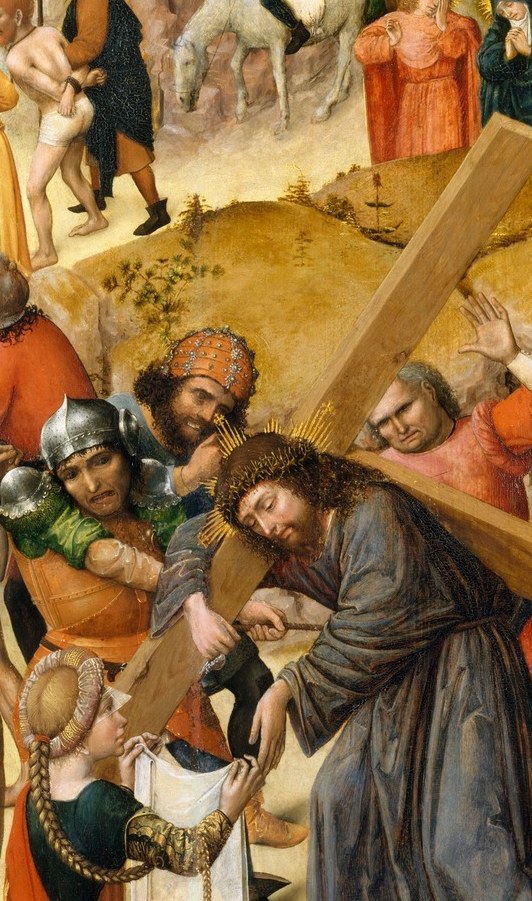
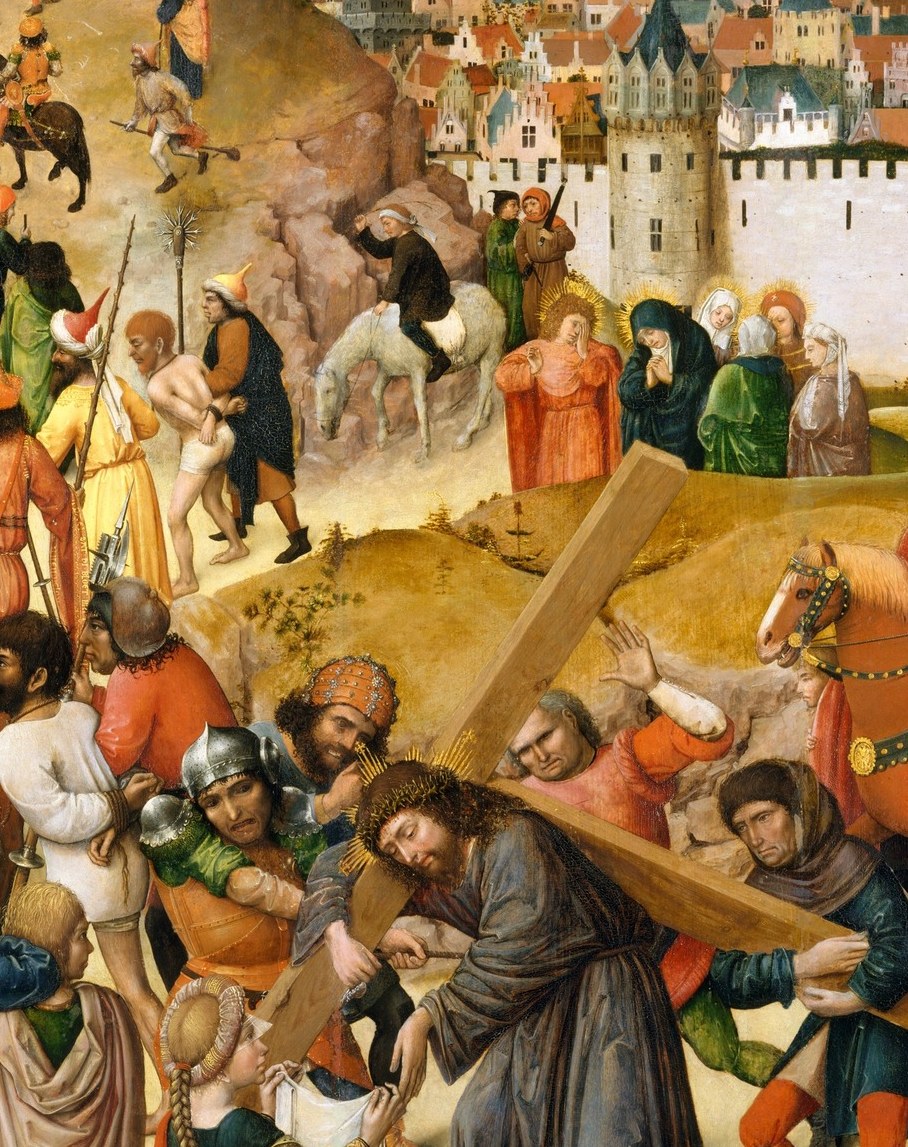
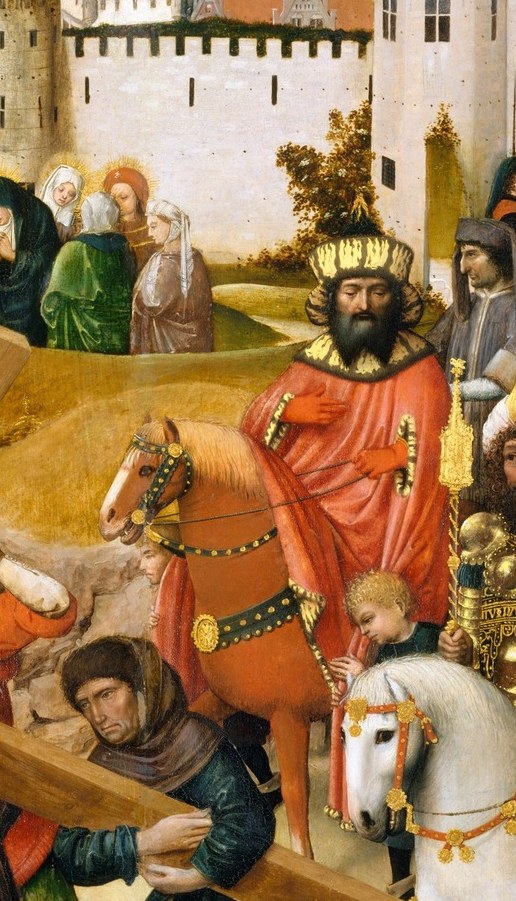
This is "Christ Bearing the Cross," painted around 1500 by an unknown follower of Hieronymus Bosch. The crowd scene depicts the moment Simon of Cyrene was pulled from the street to help a collapsing Christ carry his cross to Calvary. The painting hangs in a public collection, and its true strangeness is easy to miss in a quick scroll.
Look first at the man in blue on the far left. His robe is ultramarine, a pigment made from crushed lapis lazuli imported from Afghanistan. It was, ounce for ounce, more expensive than gold leaf. In Flemish painting, an ordinary passerby would never wear it. That sumptuous blue signals a patron portrait: a real person, likely the man who paid for the painting, inserted into the biblical story as an act of devotion. He becomes Simon of Cyrene, the compelled helper.
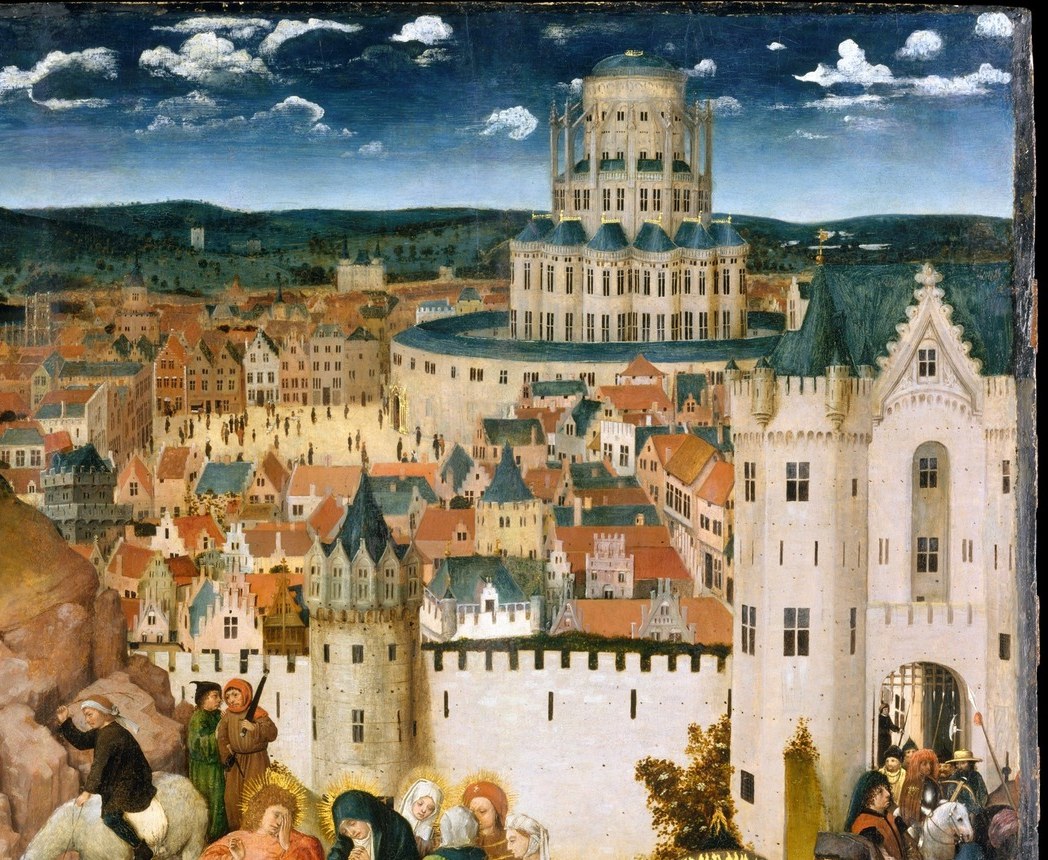
Now look to the upper left. A tiny procession climbs the hill road toward a domed building. That is the end of the journey, already visible at the start. The artist gives us the whole arc of the story in one frame: the collapse, the reluctant helper, and the destination waiting on the skyline, all happening at once.
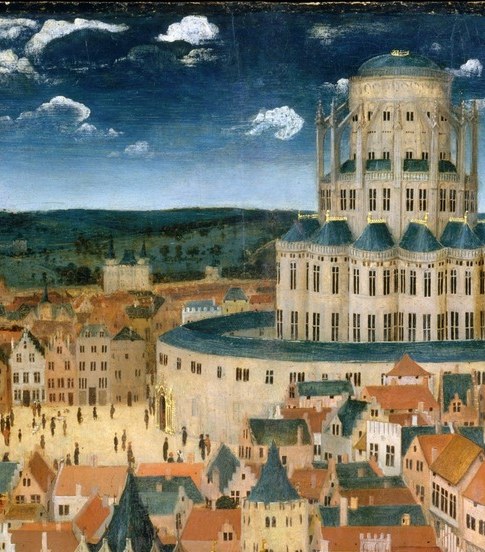
The city behind them is not first-century Jerusalem. It is a Northern European town of towers and spires, painted so the viewer would feel the Passion unfolding in their own streets. The armored soldier on the right wears contemporary plate, not Roman mail. The story is happening now, to you.
What other hidden hands or faces can you find in this crowd?
#arthistory #hieronymusbosch #northernrenaissance
Details
Transcript
A crowd presses in. The cross cuts through them all. This was painted around 1500. Oil paint, still new, made the world gleam. Now find the man in blue, alone, far left. That color is ultramarine, ground from lapis lazuli. It cost more than gold. Such expense was usually reserved for a painting's patron. He is Simon of Cyrene. The Gospels say he was pulled from the crowd to carry the cross. And up on the hill, the grim procession is already nearing Calvary.