Departure of the Amazons by Claude Deruet

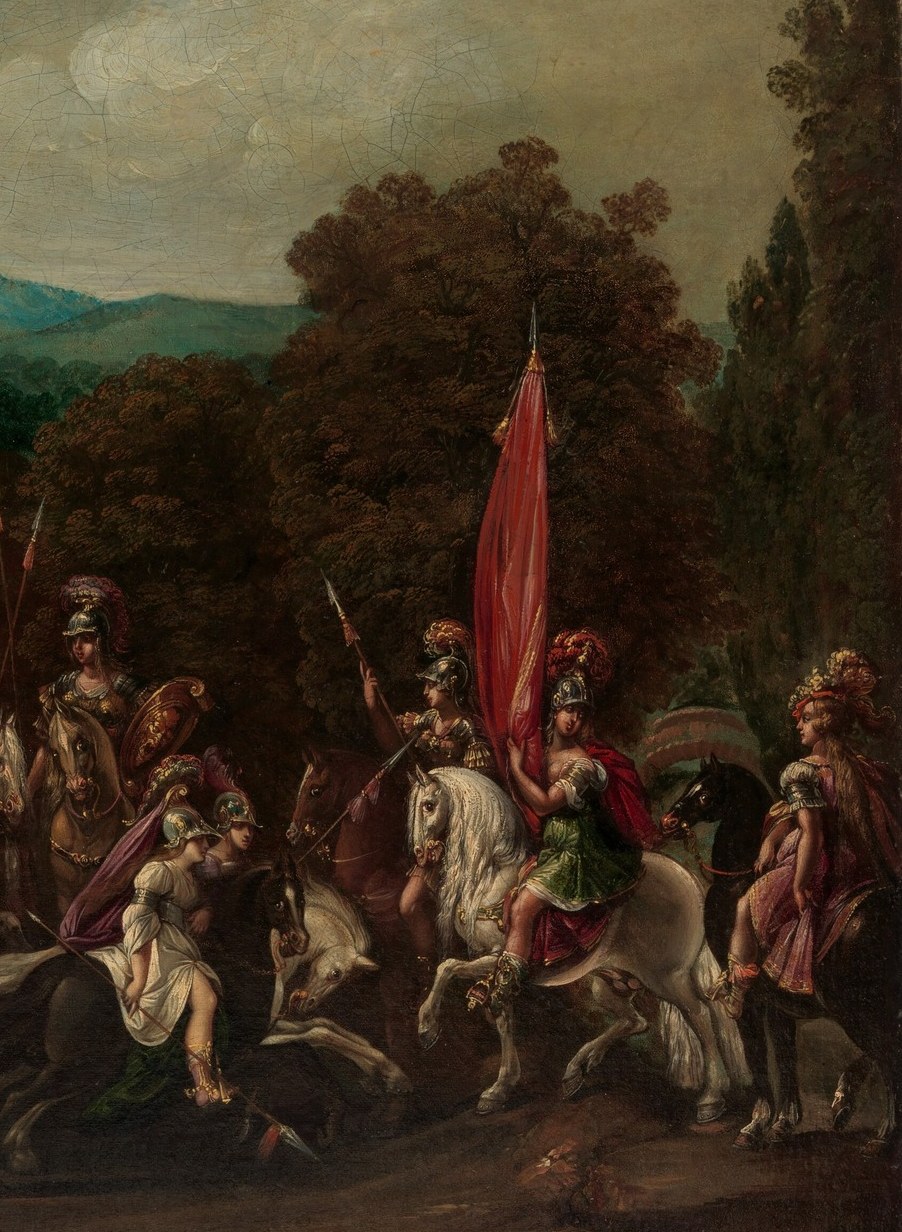
This is Claude Deruet's 'Departure of the Amazons,' painted in 1620. It hangs in the Louvre, but it began as a political fantasy for one of the most powerful women in French history: Marie de' Medici.

At first glance it is a classical myth. A company of female warriors rides through a muted landscape. Notice the commander on the white horse, her polished breastplate catching the light. Her authority anchors the scene, while a helmeted figure on the left turns toward her, as if awaiting an order. The red banner slices upward, a signal of collective identity.

Marie de' Medici, the widow of King Henry IV, commissioned this painting after a period of bitter exile. Her own son, Louis XIII, had banished her from court. Deruet's Amazons are not just mythology; they are an allegorical portrait of the Queen Mother herself, depicted as a disciplined and loyal general whose troops would never abandon her. The army stretching beyond the frame is a statement of power she wished she still held.

It is a painting about longing for a loyalty that had already fractured. A ruler, isolated, commissioning a world where she was still followed.

#arthistory #baroque #womeninarthistory

Details
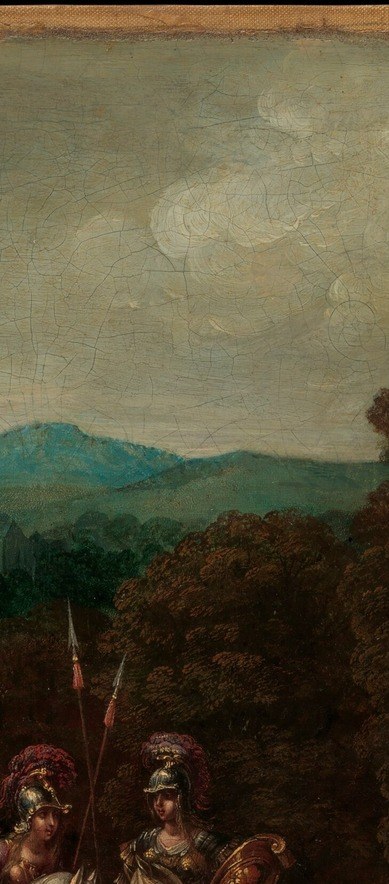
The most saturated color in the painting; the red flag slices vertically through the horizontal procession and signals organized martial identity, Amazon heraldry made visible.
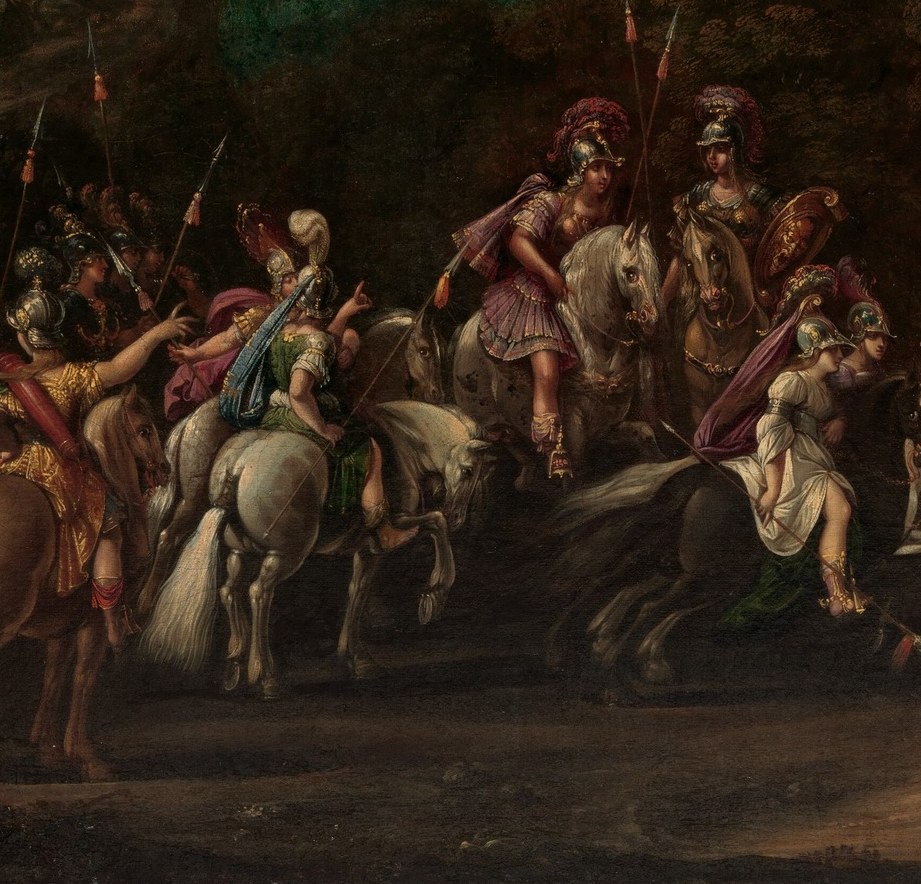
The mass of overlapping figures establishes an army rather than a pair of warriors; overlapping silhouettes convey depth, numbers, and collective resolve that contrasts with the singular commander.
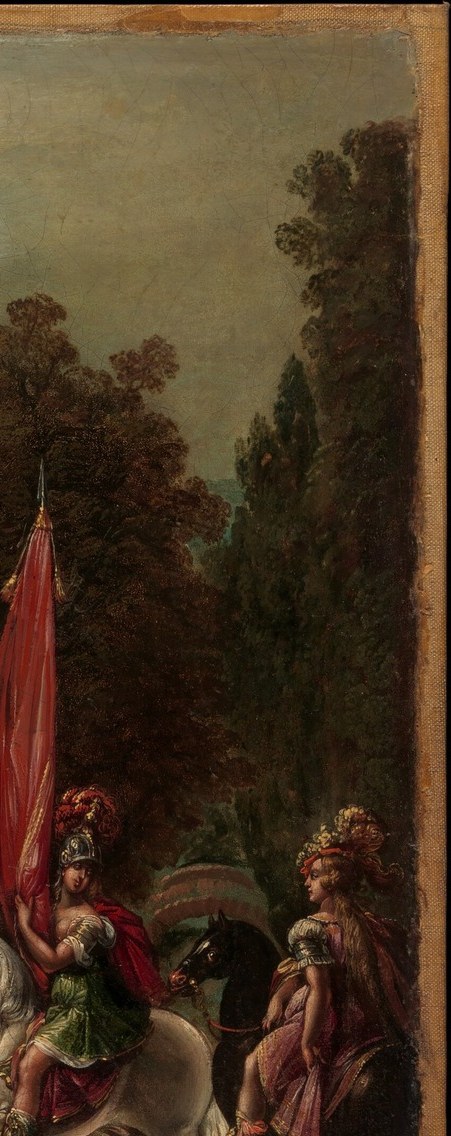
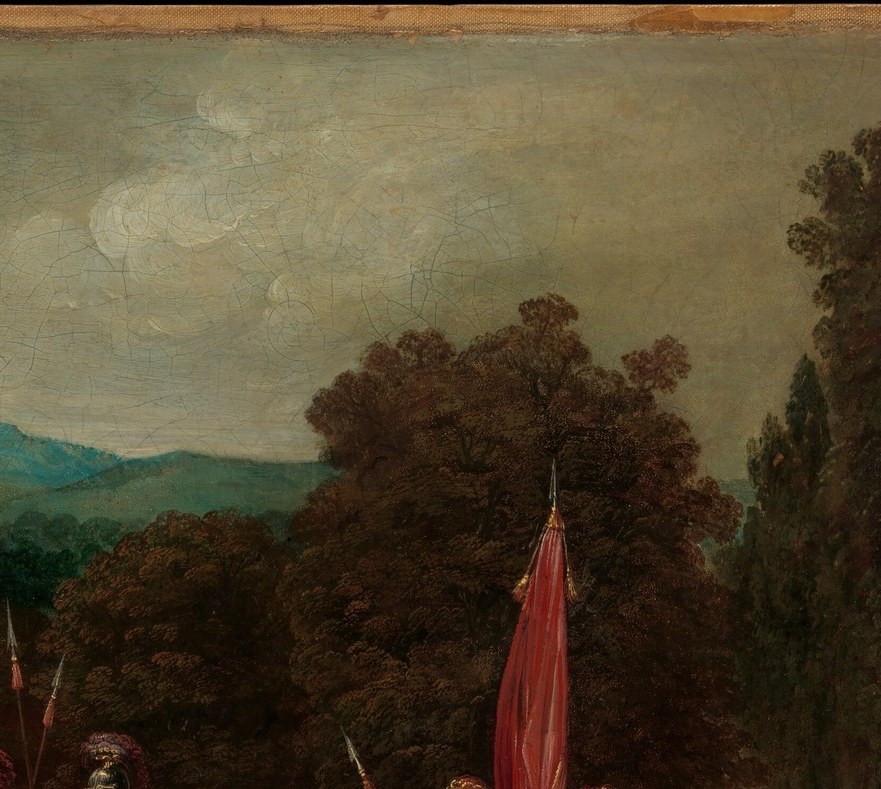
Classic Baroque repoussoir device: dark foliage pushes the eye inward and creates theatrical stage-like depth; compresses the army toward the viewer rather than letting it recede.
A forest of upright weapons creating rhythmic vertical pattern; each tip is a repeating motif the camera can drift across, reading collective power through repetition rather than single heroic gesture.
The white horse is a classical symbol of leadership and nobility; its brightness anchors the center and pulls the eye through the darker mass of the crowd, functioning as a compositional anchor.
Transcript

A queen leads her army through a strange, quiet land. Claude Deruet painted this in 1620 for Marie de' Medici. She was the Queen Mother of France, and a formidable power. The painting is an allegory. She is the Amazon queen. Look past the spears. One soldier turns to receive her command. Marie de' Medici had been exiled by her own son, the King. She commissioned this upon her return, a fantasy of loyal forces.