Venice: The Dogana and San Giorgio Maggiore by Turner, Joseph Mallord William
View the artwork: Venice: The Dogana and San Giorgio Maggiore →
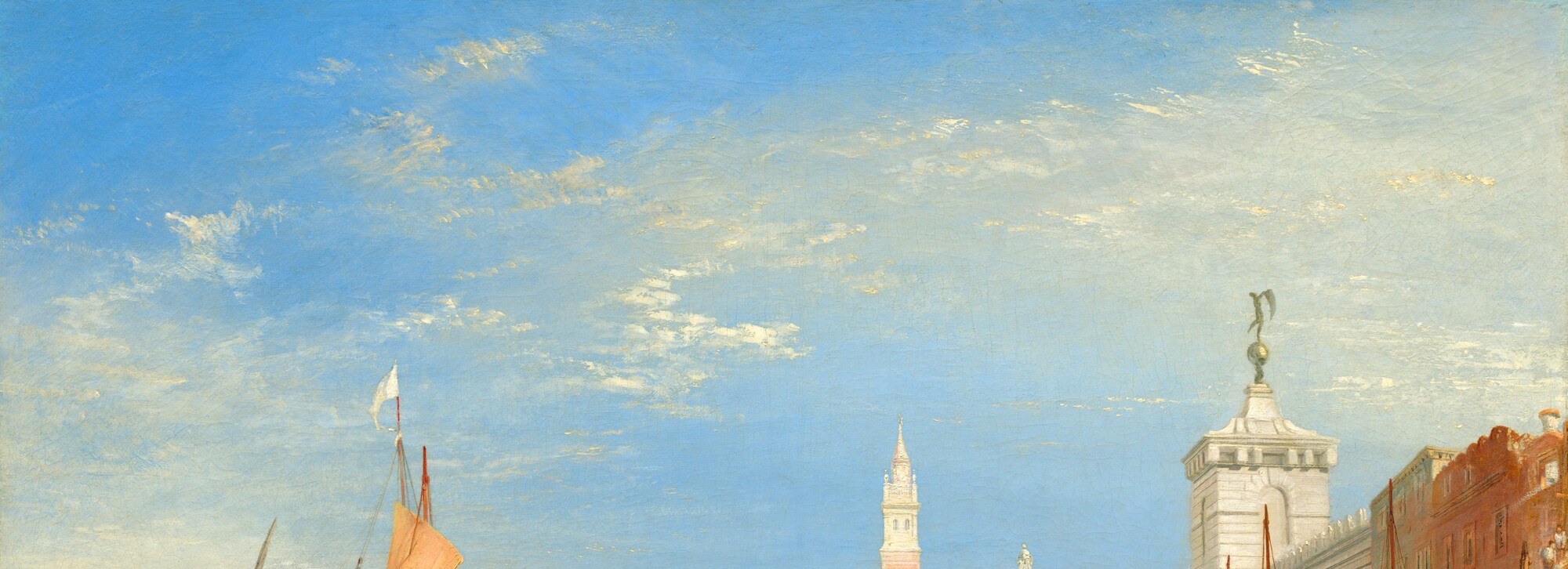
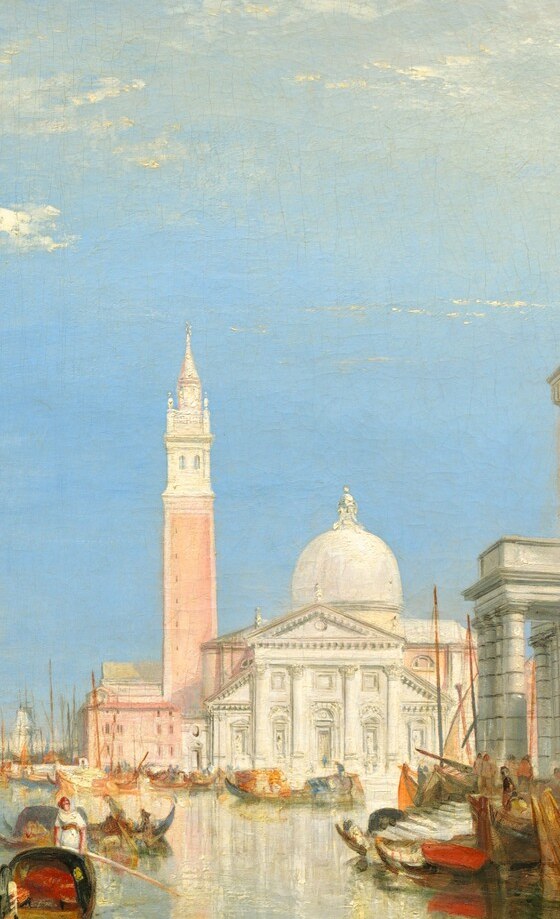
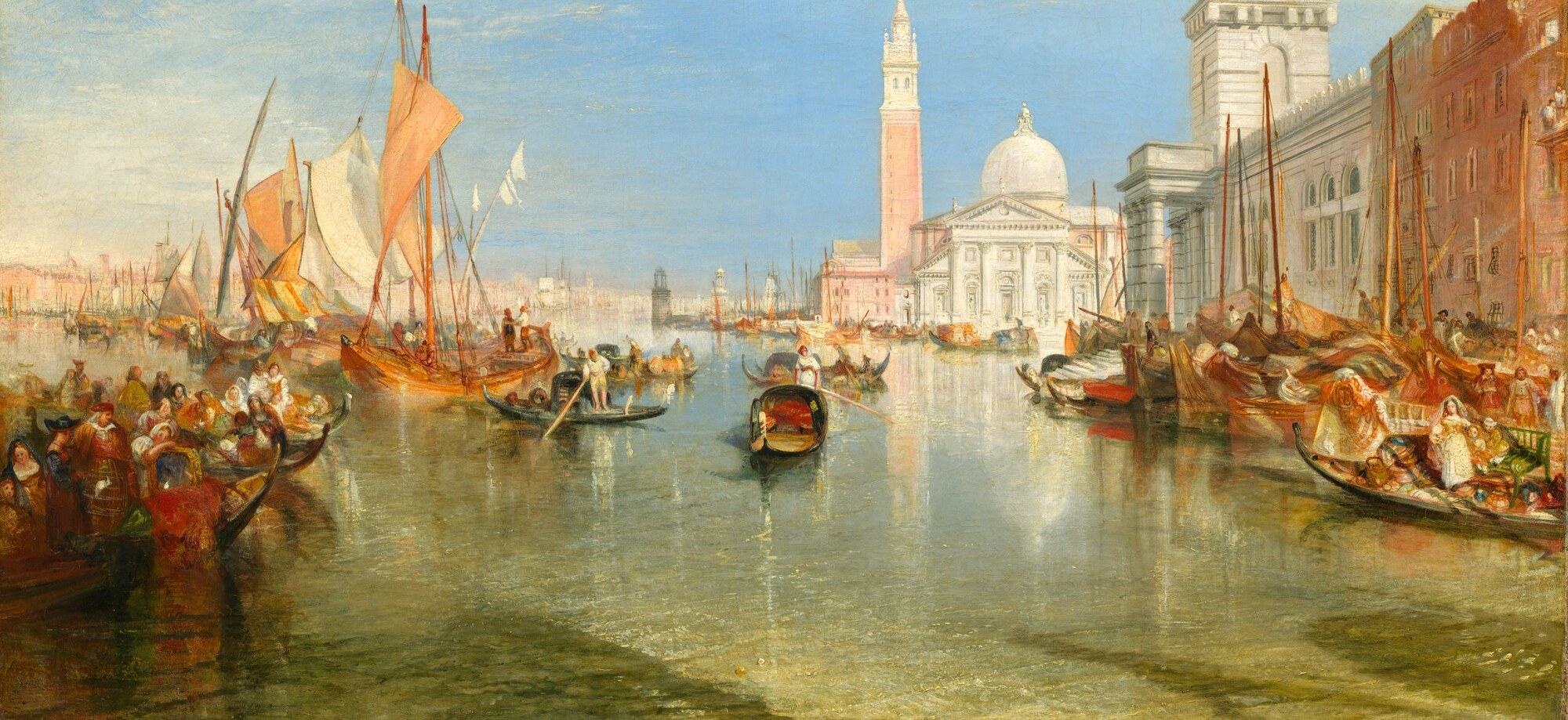
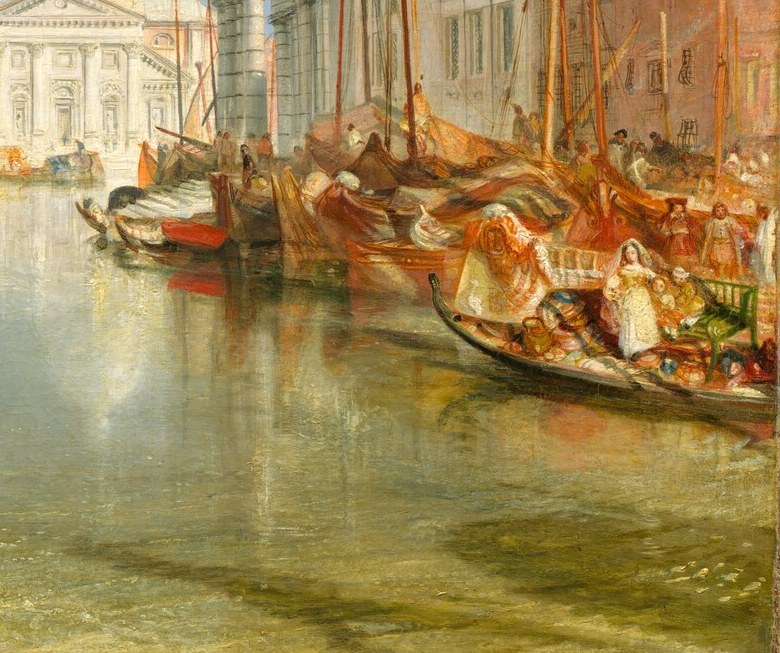
This is J.M.W. Turner's "Venice: The Dogana and San Giorgio Maggiore," painted in 1834 and now in the National Gallery of Art in Washington. It was commissioned by Henry McConnell, a Manchester textile manufacturer, as one half of a deliberate experiment.
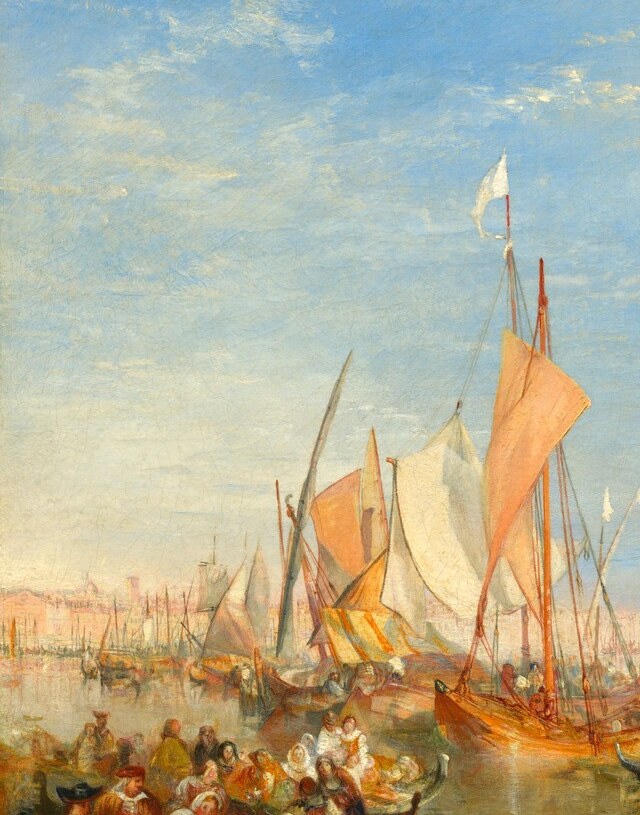
The canvas dissolves Venice into a haze of gold and white light. The customs house at right and the San Giorgio Maggiore church across the water are the only solid anchors; everything else surrenders to Turner's atmosphere. Look closely at the left foreground, and you will find working boats, colored sails, and figures doing the ordinary business of a port city.
McConnell wanted a pair: sunlit Venice on one wall, and on the opposite, Turner's "Keelmen Heaving in Coals by Moonlight" (1835), a nocturnal scene of laborers loading coal on the River Tyne. One painting is about light and commerce on the Mediterranean; the other is about fire, smoke, and industry in northern England. The pairing was a test of whether one painter could capture two such radically different worlds.
Turner was forty-nine when he painted this, traveling incessantly and filling sketchbooks with rapid pencil studies. His late style, derided by some critics as "tinted steam," would come to define Romantic landscape painting.
#arthistory #JMWTurner #romanticism
Details
Transcript
In 1834, London's Royal Academy hung a sun-drenched vision of Venice. The Dogana, the customs house of a commercial empire, anchors the view. Everything else dissolves into gold. The church across the water is barely more solid than the air around it. Critics called this technique 'tinted steam'. The buyer commissioned a second painting to hang opposite this one. It was a night scene of coal heavers in the industrial north of England.