The Strawberry Girl by Phillips, Ammi
View the artwork: The Strawberry Girl →
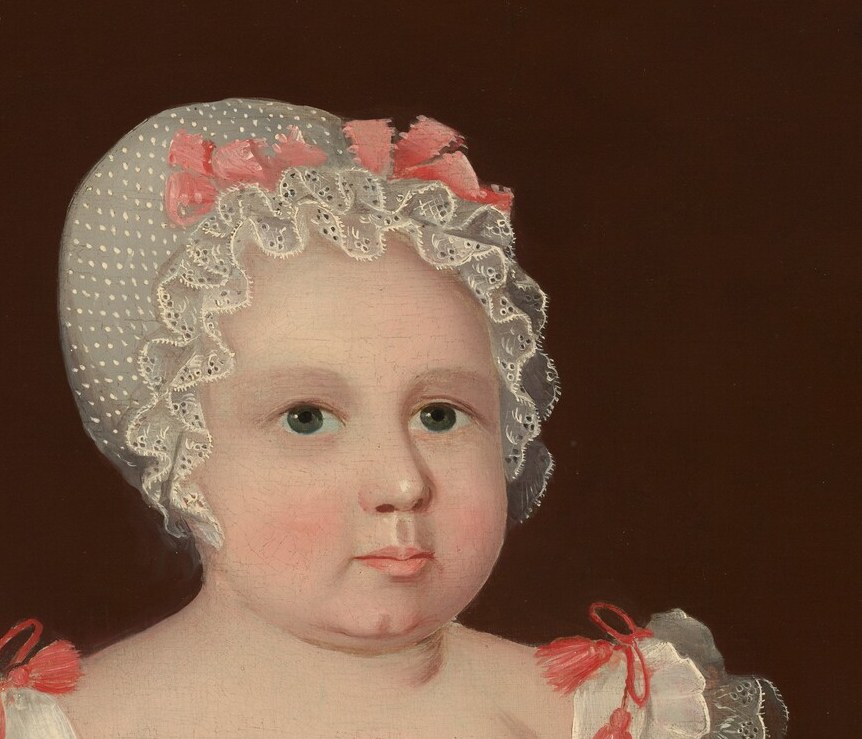
The Strawberry Girl, painted around 1830 by Ammi Phillips, is a portrait that has never set foot in a palace or academy. It was made on a farmstead or in a modest parlor somewhere in New England, paid for by parents who wanted to hold onto their daughter as she was that summer. Phillips was a traveling portraitist who spent decades moving from town to town, painting the faces of early American middle-class life.
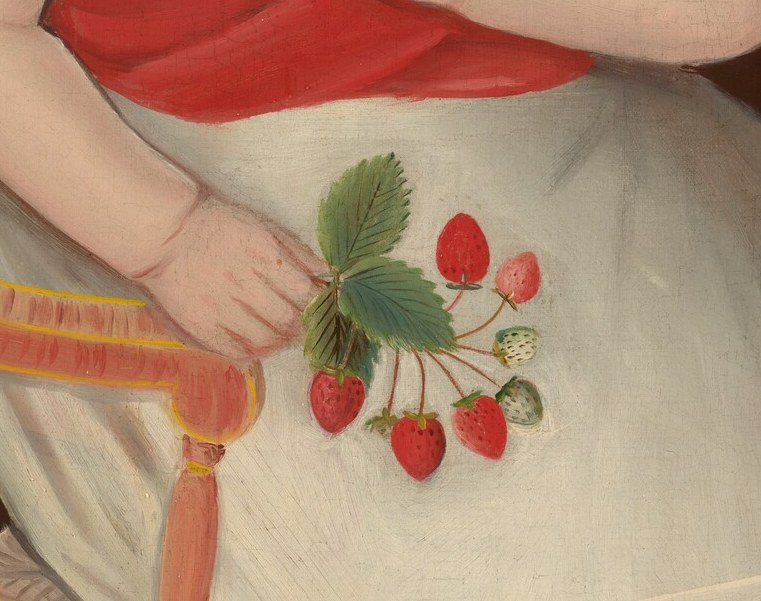
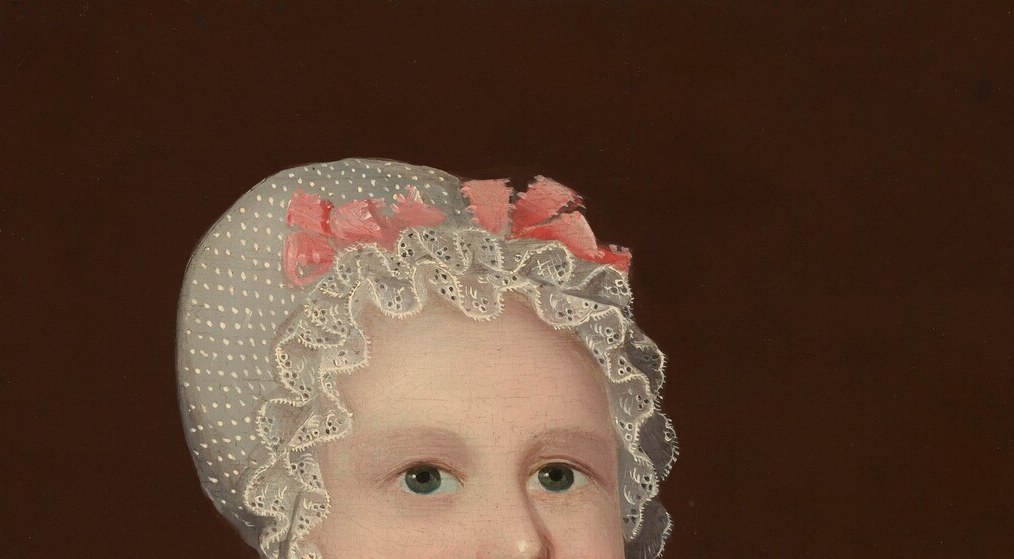
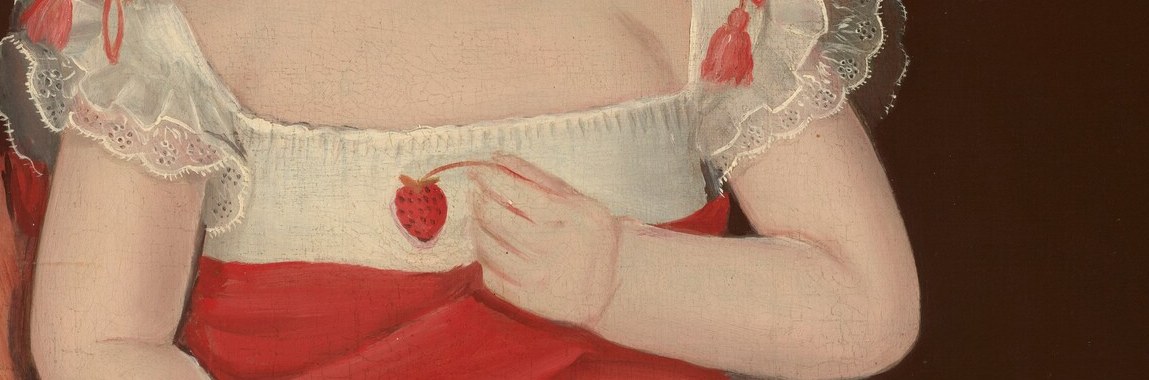
Look at the textiles. The white muslin dress is the star of the canvas, painted as a broad luminous field that holds the whole composition together. The lace at the bonnet and the sleeve is not court lace, it is honest, locally available finery, and Phillips renders it with care. The single jolt of saturated color is the red sash at the waist, which rhymes with the strawberries in the child's hands and, if you look closely, with a small red ornament pinned to her bodice.
For families like this one, a portrait was a public statement of arrival. Sit your child in her best dress, give her a basket of fruit that says summer, sweetness, prosperity, and hire the painter who happens to be in the county that season. The deep, unmodulated dark background was Phillips's economical signature: it isolates the figure and gives a toddler the formal gravity of a state dignitary.
The girl's gaze stops you. Phillips gave his sitters slightly enlarged, nearly symmetrical eyes that stare straight out with a directness that collapses two centuries. She is not smiling. She is present, forever.
#arthistory #americanfolkart #ammiphillips
Details

Transcript
She wears her finest white muslin dress. Lace trims the bonnet and sleeve. Her parents paid for a portrait to show what they had achieved. Ammi Phillips traveled New England painting families like this one. In her hands: a cluster of ripe strawberries. Strawberries meant childhood itself, sweet, and brief.