Portrait of Empress Eugénie de Montijo by Franz Xaver Winterhalter
View the artwork: Portrait of Empress Eugénie de Montijo →
This is Franz Xaver Winterhalter's 1854 portrait of Empress Eugénie de Montijo, the last empress consort of the French, now in the collection of the Metropolitan Museum of Art. Winterhalter was the definitive court painter of mid-19th-century Europe, known for portraits that flattered royalty into icons of glamour and authority.
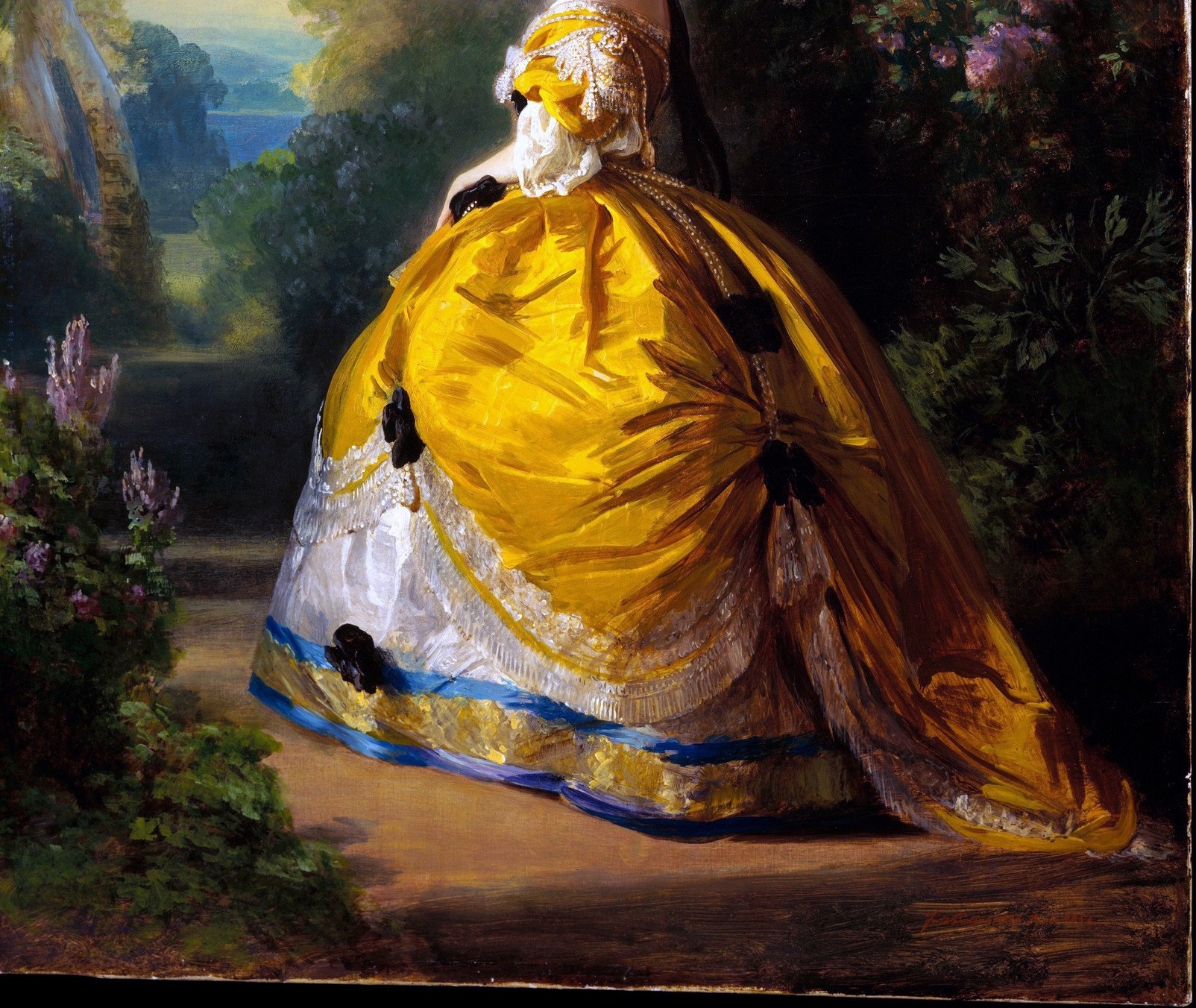
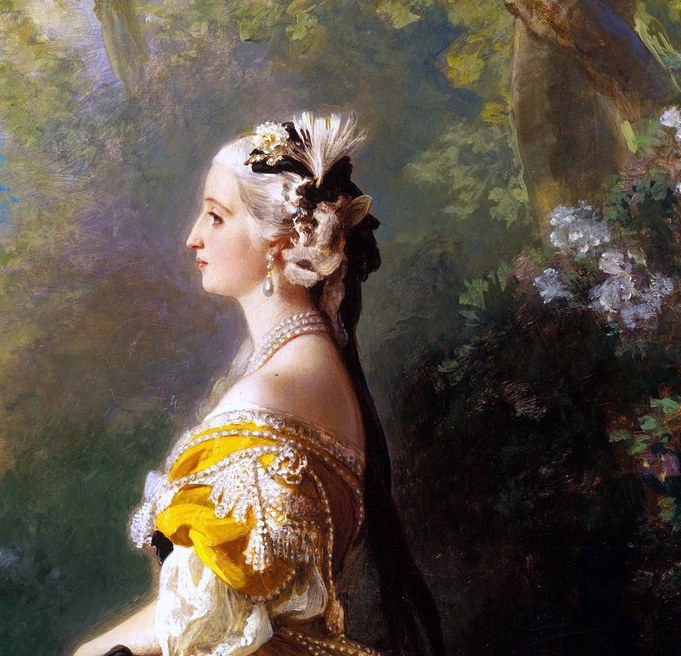
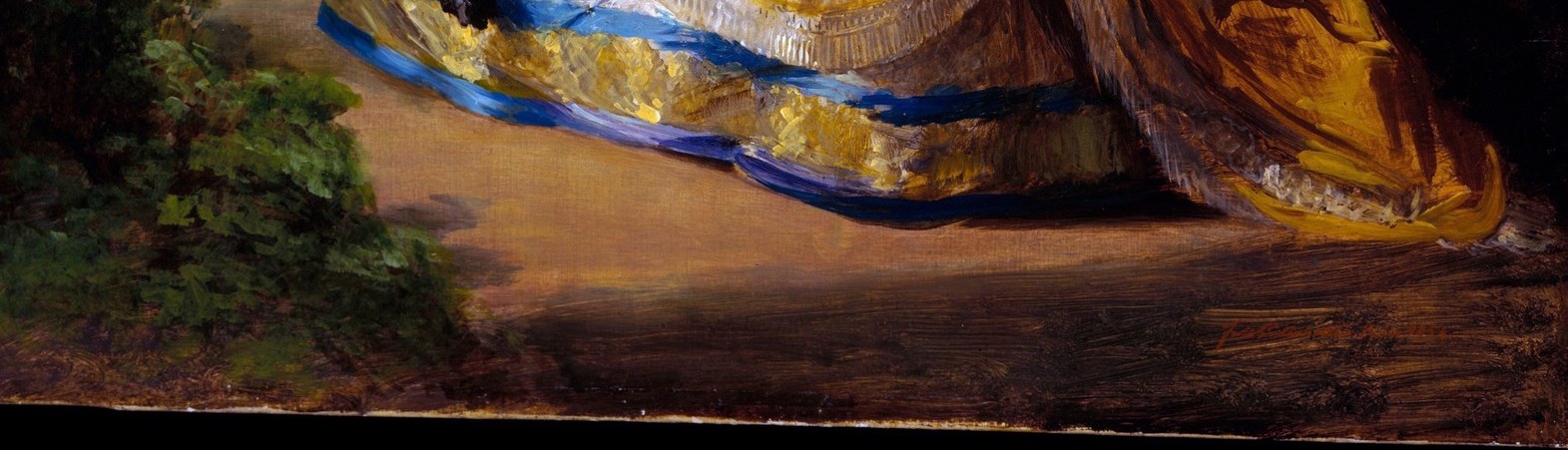
Everything on the canvas is a legible sign. The vast yellow silk crinoline skirt, which occupies nearly half the painting, is not merely a fashion choice: it is sun-king gold, the color of French imperial power. The blue trim at the hem weaves in the heraldic colors of the crown, while the single strand of large pearls and the white feathered headdress substitute for a tiara, signaling queenly rank through codes of nature and purity rather than heavy jewels.
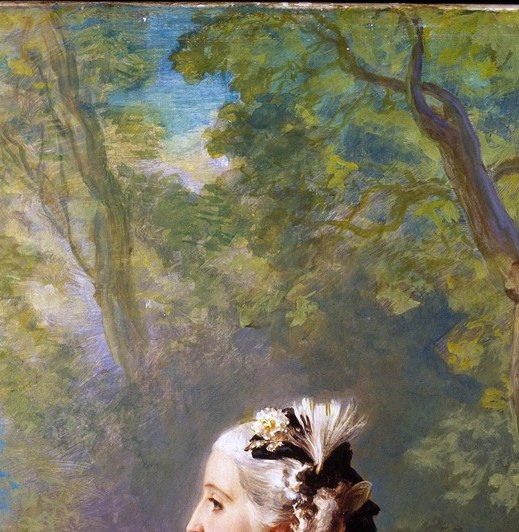
Painted in 1854, the portrait was made for a regime performing stability through spectacle. Eugénie was a Spanish-born countess who had married Napoleon III the year before. Winterhalter gave them the image they needed: a serene, upward-tilted empress framed by a stage-set garden, her lifted skirt a practiced gesture of aristocratic etiquette. The painter applied thick impasto strokes to the silk highlights, showing his own hand openly in the service of courtly illusion.
The Second Empire would collapse in 1870, and Eugénie would spend the rest of her long life in exile. The painting remains: a perfect, shimmering surface of a world on the verge of vanishing.
#arthistory #Winterhalter #SecondEmpire
Details

Transcript
She stands in a garden, bathed in light. This is not a random dress. It is a political uniform. The yellow silk occupies half the canvas. Sun-king gold, the color of French power. The blue trim carries the heraldic colors of the French crown. A single strand of large pearls signals queenly purity without a crown. The gesture of lifting the skirt is a practiced code of aristocratic movement. Her face is the only inward thing in a painting built of external signs. Winterhalter painted the ideal of an empire. Two decades later, it would fall.