Natural Arch at Capri by Haseltine, William Stanley
View the artwork: Natural Arch at Capri →
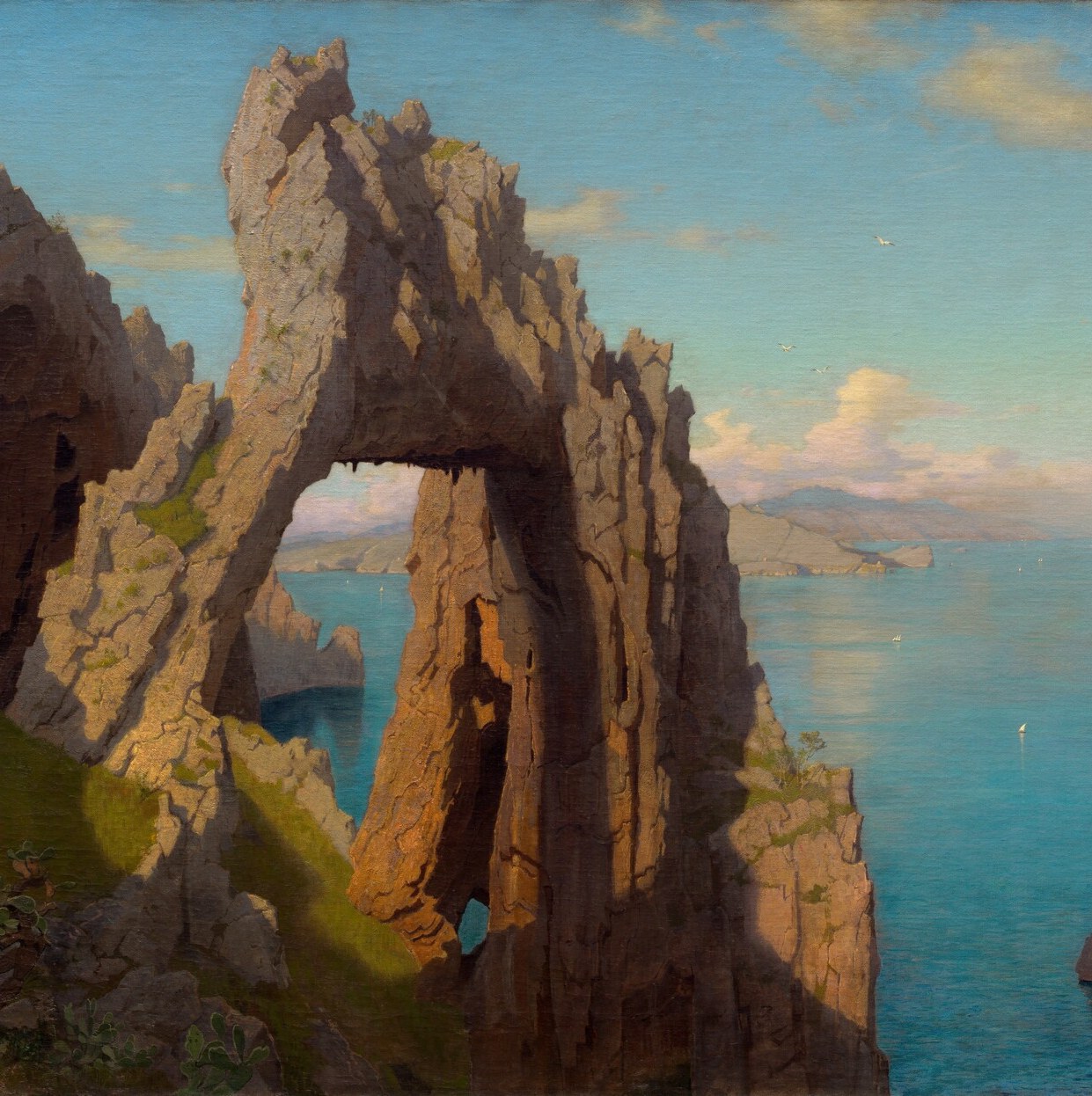
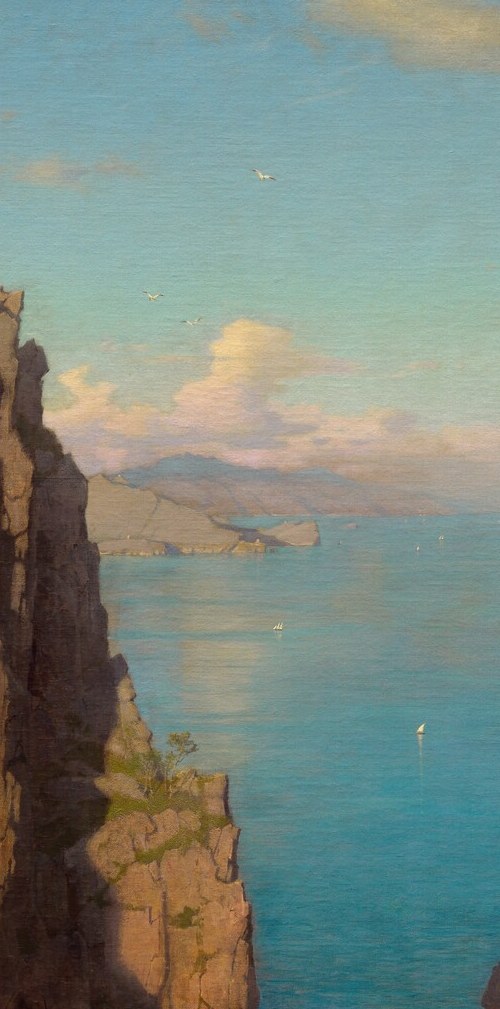
William Stanley Haseltine painted Natural Arch at Capri in 1871, synthesizing the island's dramatic coastline into a single grand composition from the quiet of his Roman studio. The painting now resides in the National Gallery of Art in Washington, D.C., acquired through an unusual corporate gift in 1989.
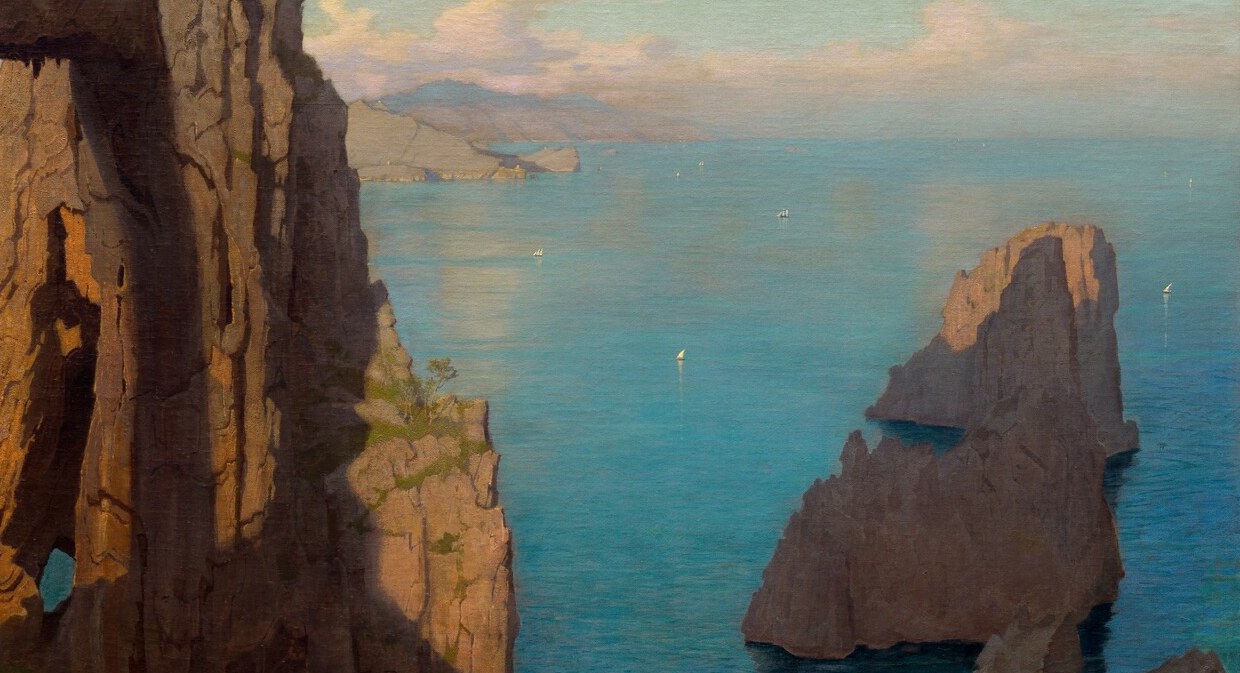
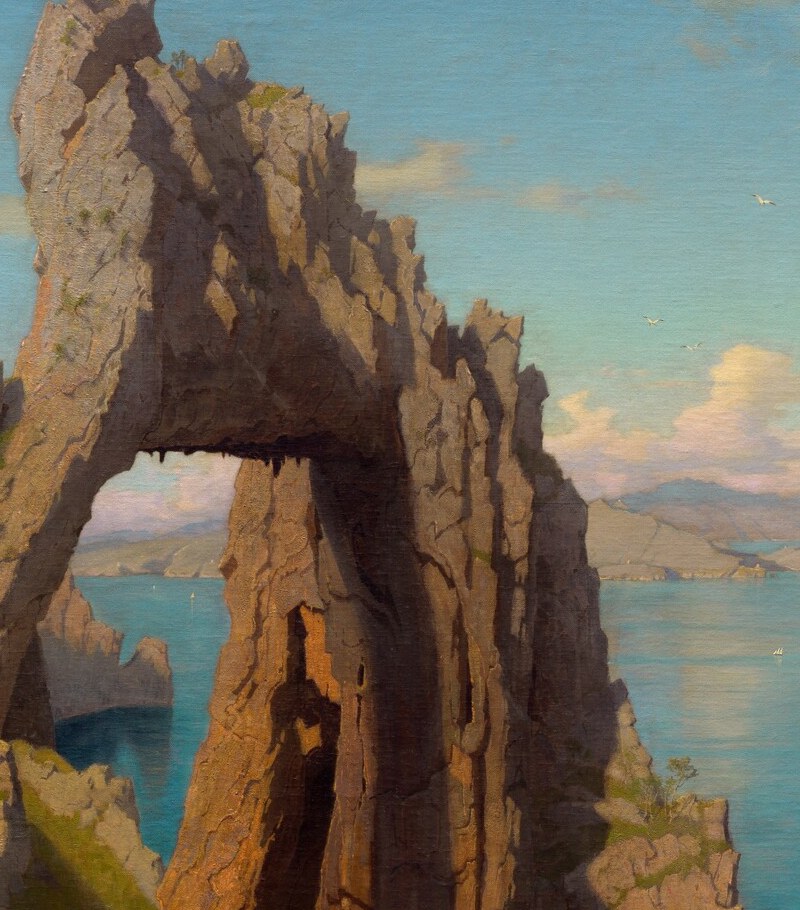
Haseltine was so committed to geological accuracy he was nicknamed "the geologist among painters." Look closely at the sunlit right pier of the arch, the warm limestone is precisely contrasted against the cool blue sea behind it. The real payoff is hidden in the luminous haze through the arch opening: a barely visible distant coastline that adds an entire third plane of depth to the vista.
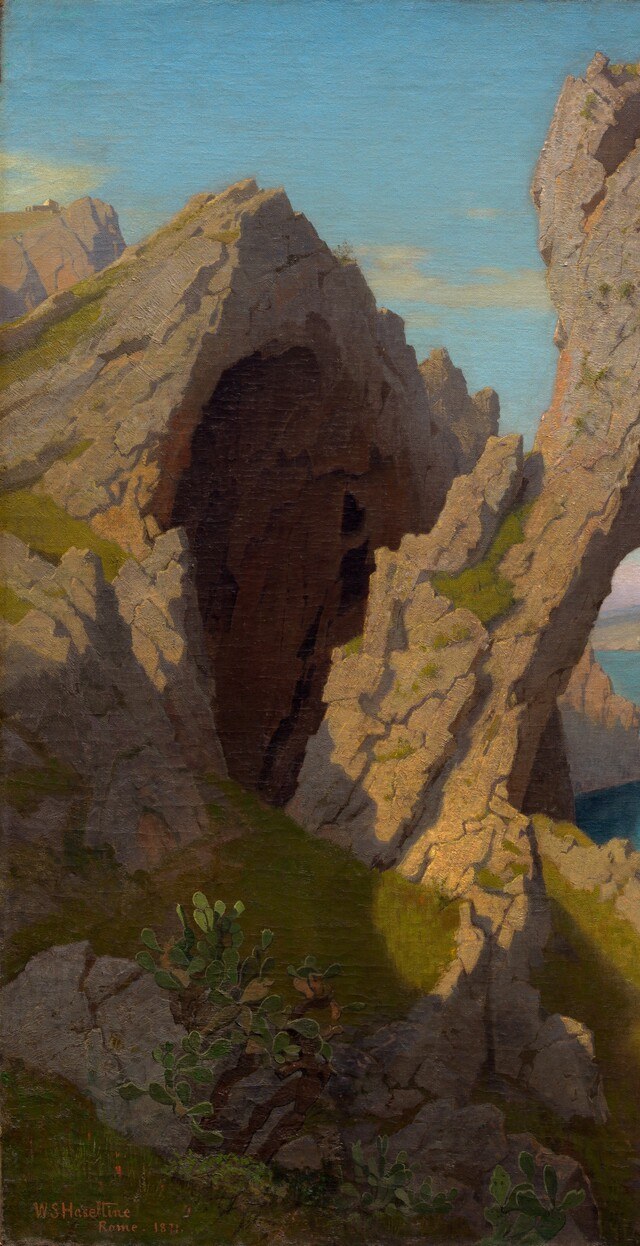
After its creation at the Palazzo Altieri in Rome, the painting remained in private hands for over a century. It reappeared publicly in 1987 at the Ader Picard Tajan auction house in Paris, moved through Berry-Hill Galleries in New York, and was finally purchased for the National Gallery's collection. The funds came from Guest Services, Inc., an American hospitality company, given in honor of the museum's fiftieth anniversary.
A painting of a Capri arch, built from accumulated sketches, begins its public life as a birthday present to a museum. If the archipelago's geology had not captured an American expatriate's imagination in 1858, what would be hanging in this gallery instead?
#arthistory #americanart #nationalgalleryofart
Details
Transcript
In 1987, this painting surfaced at a Paris auction. The towering Arco Naturale frames the Tyrrhenian Sea. Look through the arch. A hidden coastline in the haze. Haseltine built this view from sketches, not from life. The canvas passed through a New York gallery. In 1989, Guest Services Inc. bought it for the National Gallery. The price was a gift for the museum's 50th anniversary.