An Old Lady with a Book by Rembrandt van Rijn
View the artwork: An Old Lady with a Book →
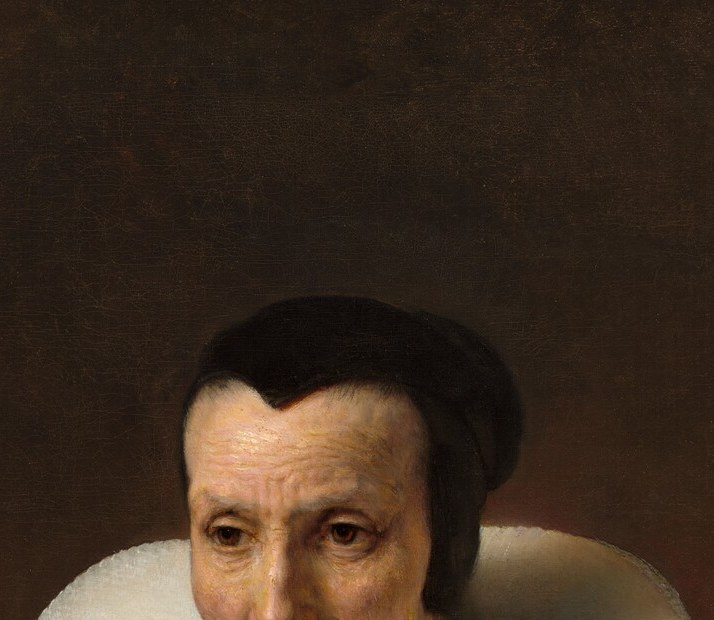
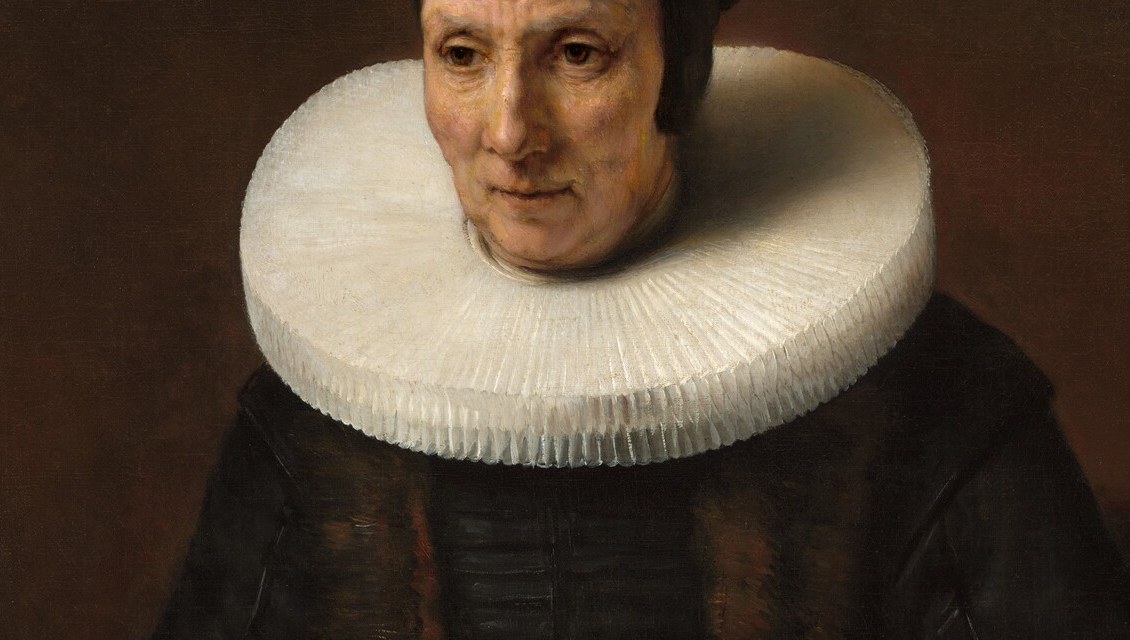
An Old Lady with a Book by Rembrandt van Rijn, painted in 1637, hangs quietly in the collection of the National Gallery of Art, Washington, D.C. It rarely tops the list of his famous works. But spend ten seconds looking through her spectacles, and you'll see the mind of a virtuoso at work.
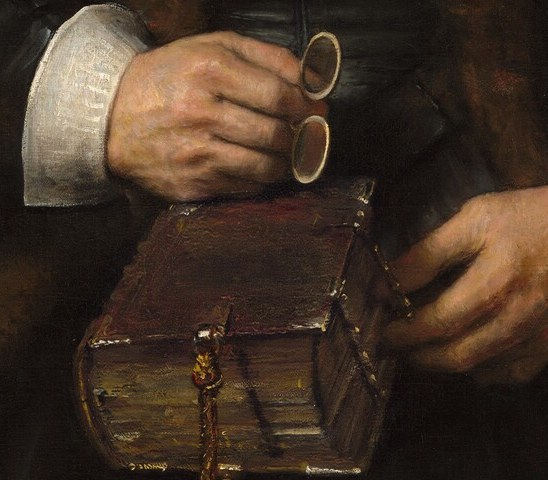
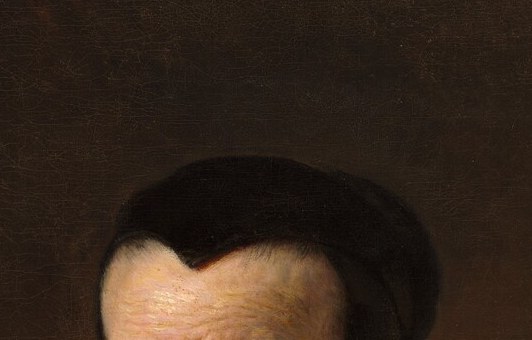
The old woman's face is a masterclass in aging: the illuminated cheek, the gentle expression, the soft shadow beneath her white ruff collar that lifts her out of the dark ground. Her hands cup a small book, likely a prayer book, with the easy grip of daily habit. But the detail that makes this painting extraordinary sits on her nose: a pair of period spectacles, rendered with enough glint to feel tactile.
Look through the lenses. Rembrandt painted the optical distortion of the glass itself, the way it subtly warps the eye behind it. This was 1637. Galileo had trained a telescope on the heavens only a generation earlier. The physical behavior of lenses was cutting-edge knowledge, and here a portrait painter quietly works it into a devotional scene, just because he could see it.
Rembrandt was 31 that year, at the height of his early fame in Amsterdam. He would lose wives, children, and his fortune before the end. But here, in a small canvas few people stop for, he left a signed micro-observation that still teaches you how to look. Next time you're at the museum, stand close enough to the glass.
#arthistory #rembrandt #dutchgoldenage
Details
Transcript
An old woman reads. Nothing more, until you look closer. 1637. Rembrandt is 31, the most sought-after portraitist in Amsterdam. She wears spectacles. A rare, costly detail in a painted portrait. Now look through the lenses themselves. The glass distorts her eyes. Rembrandt painted the refraction. Almost no other painter of his time would bother.