Judith with the Head of Holofernes by Massimo Stanzione
View the artwork: Judith with the Head of Holofernes →
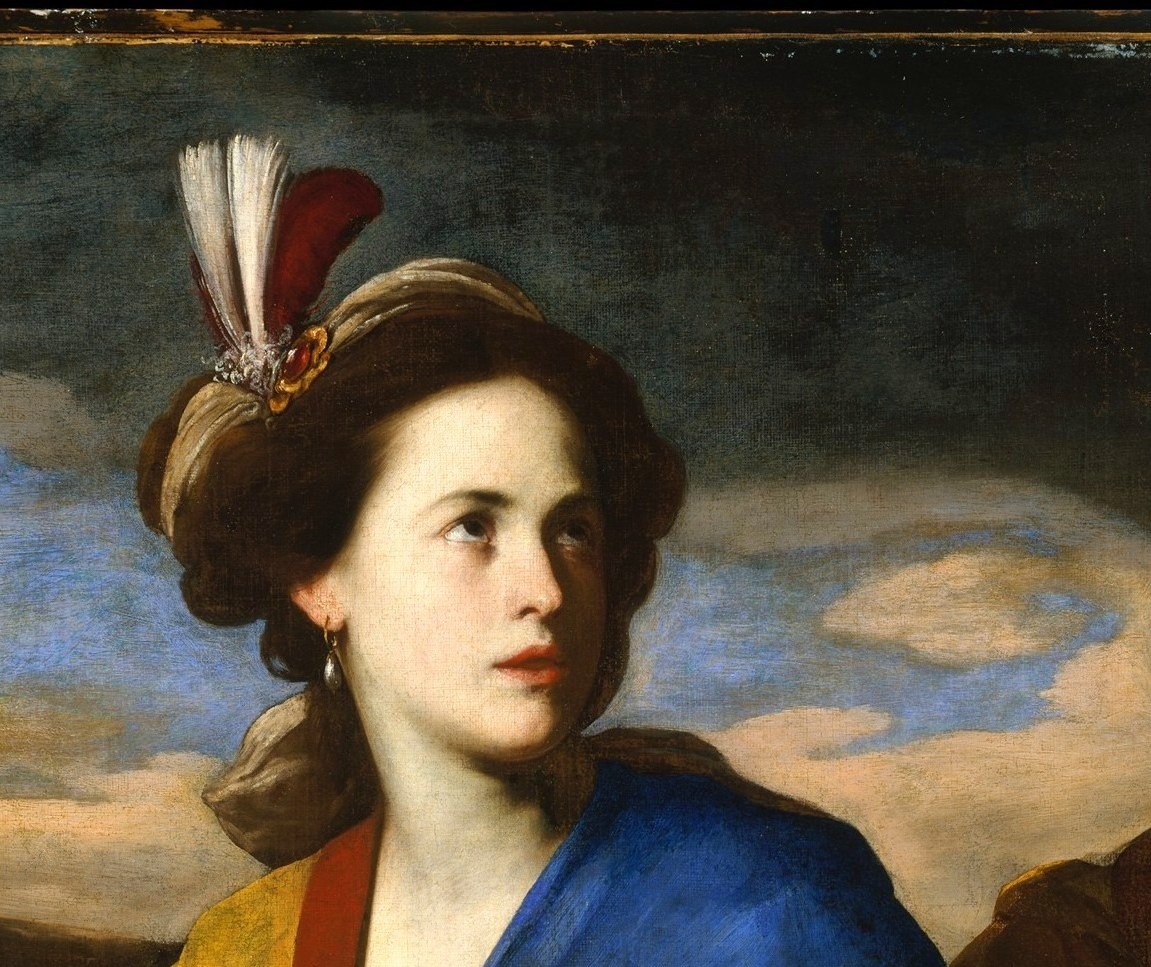
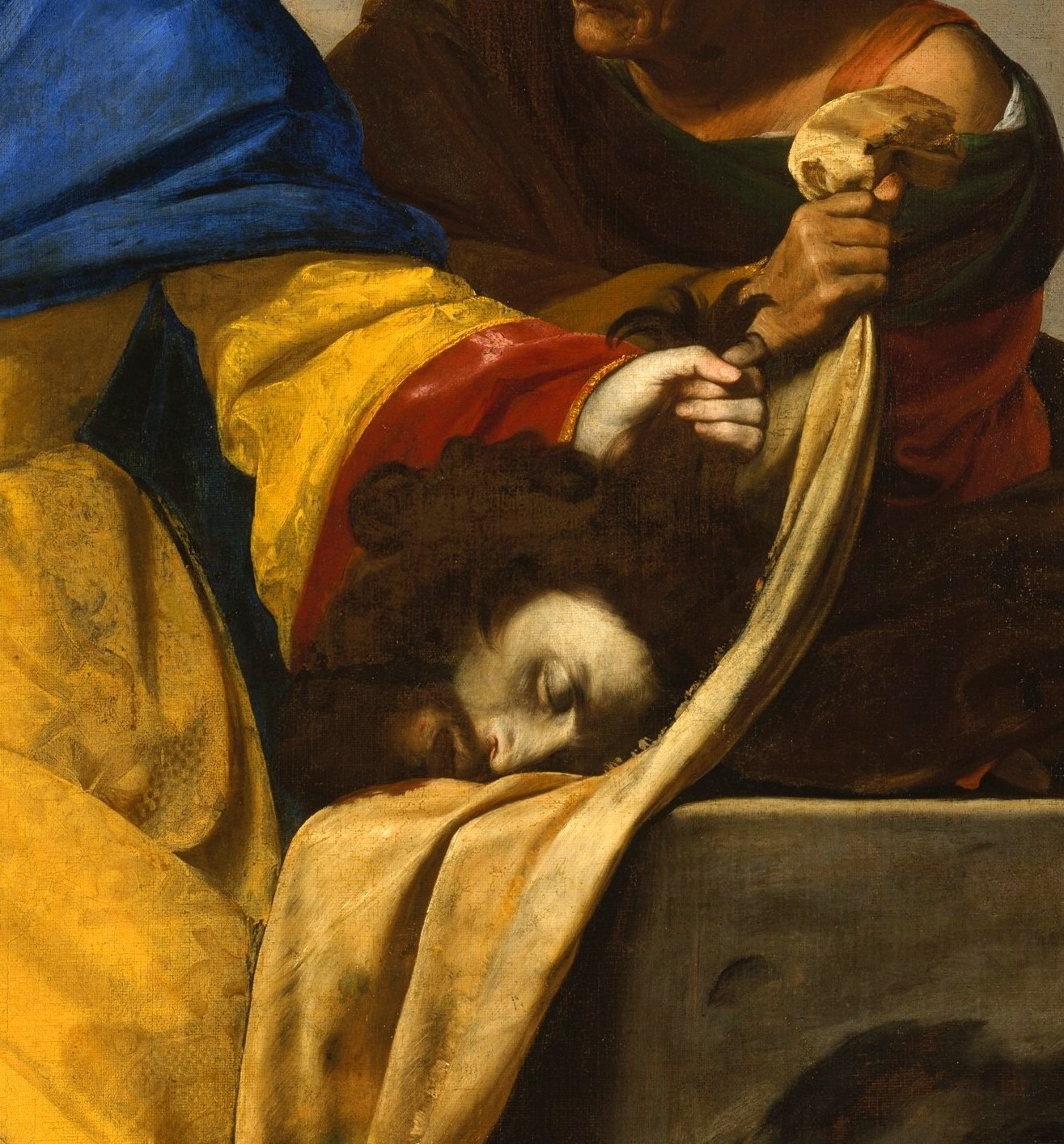
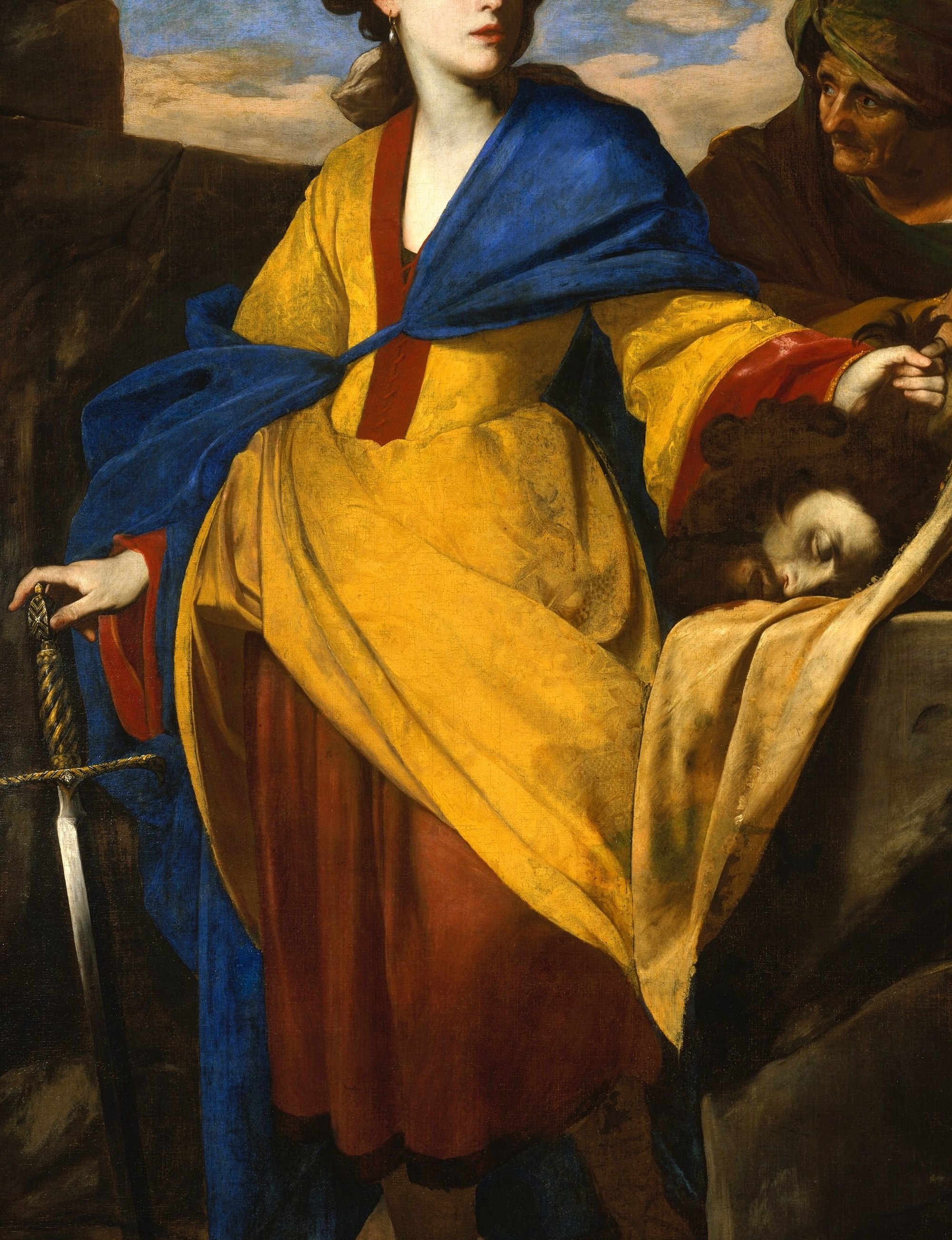
The Bible's most violent heroine, right after the act. Massimo Stanzione's 'Judith with the Head of Holofernes' (c. 1630) captures the unsettling quiet after a beheading, and it does it with a psychological precision that feels almost modern. You're looking at a woman who has just decapitated an invading general to save her people, and her expression is not triumphant or anguished. It's simply resolute.
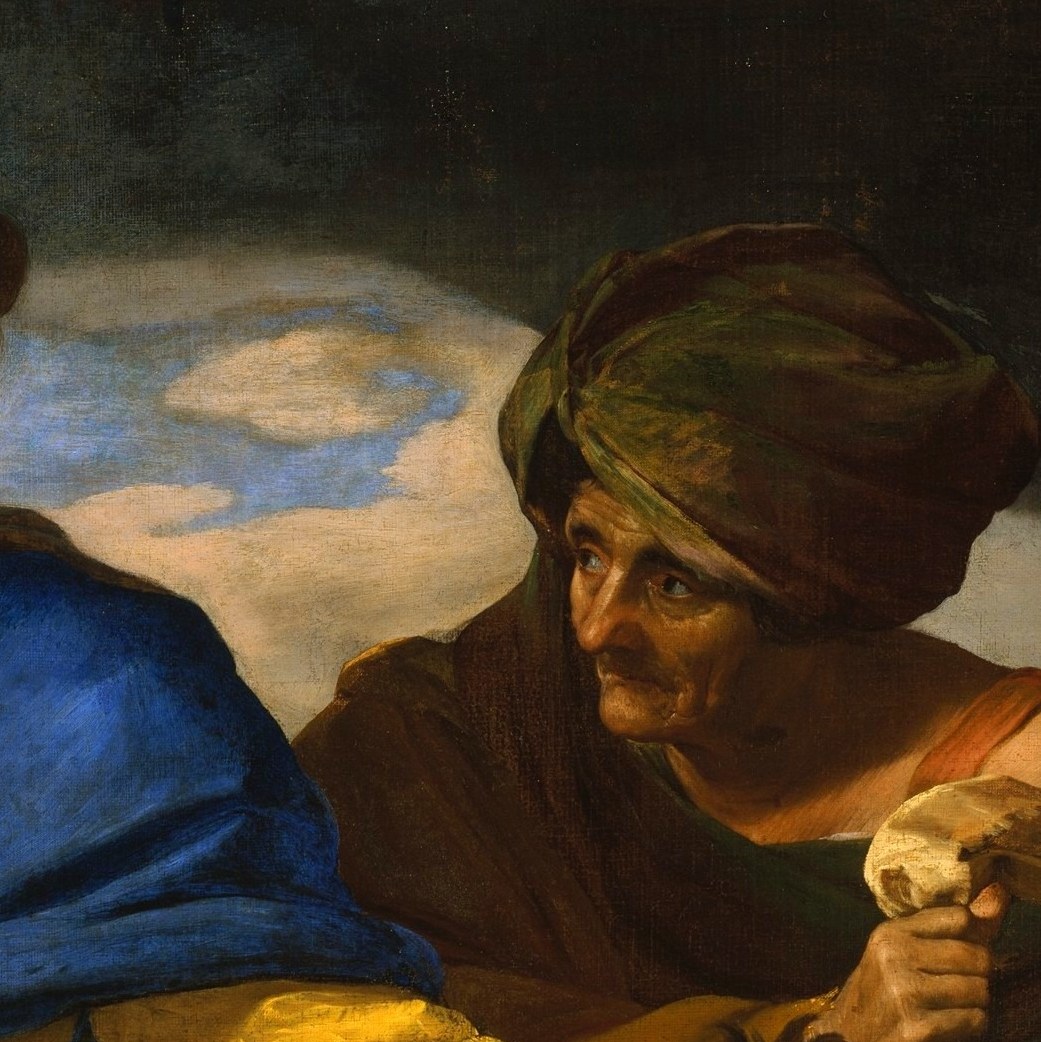
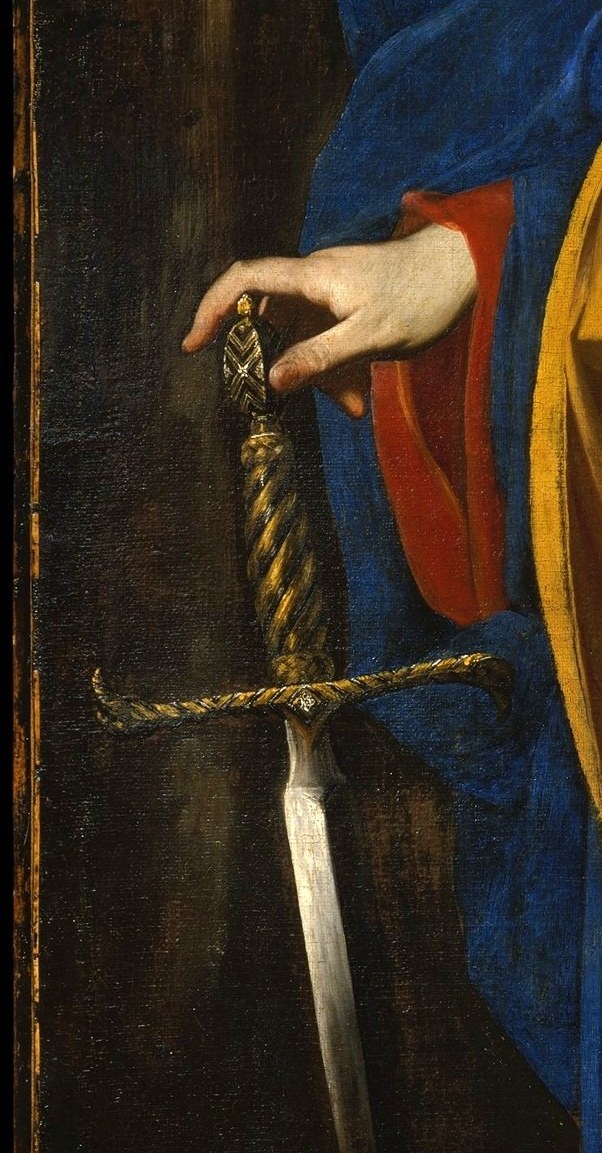
Stanzione's choices make the scene. The sword that killed Holofernes hangs at Judith's side almost casually, its blade barely visible in the shadow. The severed head is bundled in cloth, you can't quite see it, and that half-concealment is more unnerving than a full reveal. The attendant's straining grip on the bundle tells you exactly how heavy it is, both physically and morally. Judith's open left hand gestures almost as if she's about to speak, making her the narrator of her own frightening story.
Stanzione dominated Naples alongside his rival Ribera. Popes and kings knighted him; he called himself 'Eques Maximus', Supreme Knight. He painted this not as a remote biblical scene but with the stark emotional clarity of a city that lived through occupation and revolt. The vivid ultramarine and gold of Judith's dress are a deliberate flag of heroism against the dark, craggy world she stands in.
Look at the upper right corner, a sliver of blue landscape. That's the Assyrian camp outside Bethulia. Stanzione included the whole narrative frame, but it's the woman's face you can't look away from.
#arthistory #baroque #womenofart
Details
Transcript
She has just saved an entire city. And her face shows nothing but quiet resolve. The sword that did it hangs almost casually at her side. Its blade is so easy to miss. Her aged servant carries the proof. The severed head is wrapped up, but the weight is unmistakable. Stanzione painted this for a Naples that knew violence well. He signed his works 'Supreme Knight.'