David at the Cave of Adullam by Giovanni Maldura
View the artwork: David at the Cave of Adullam →
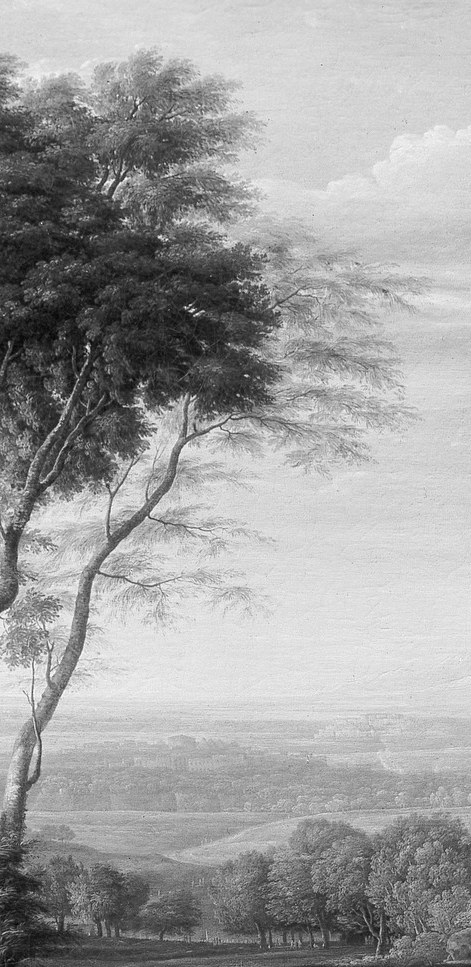
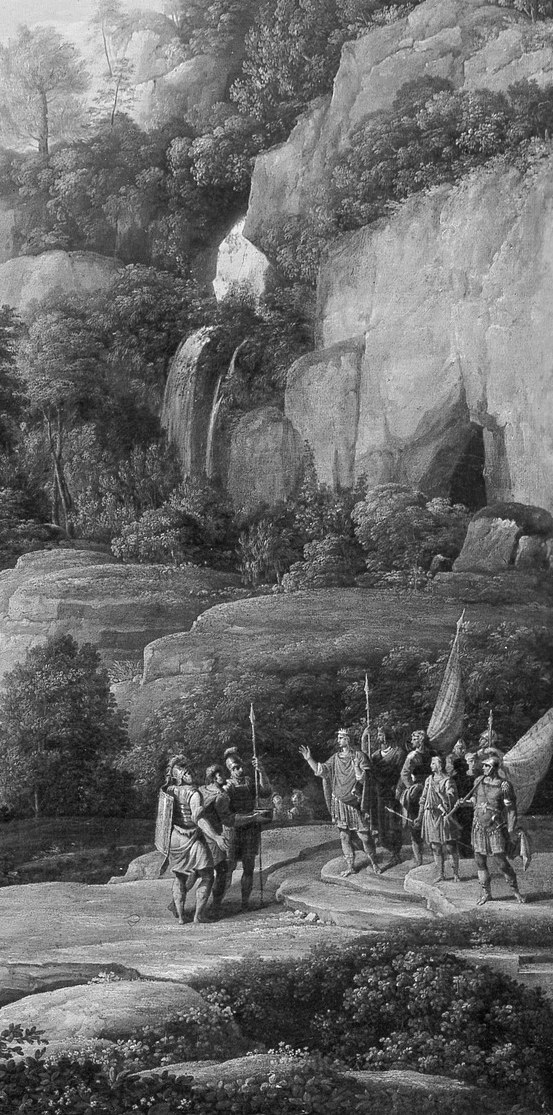
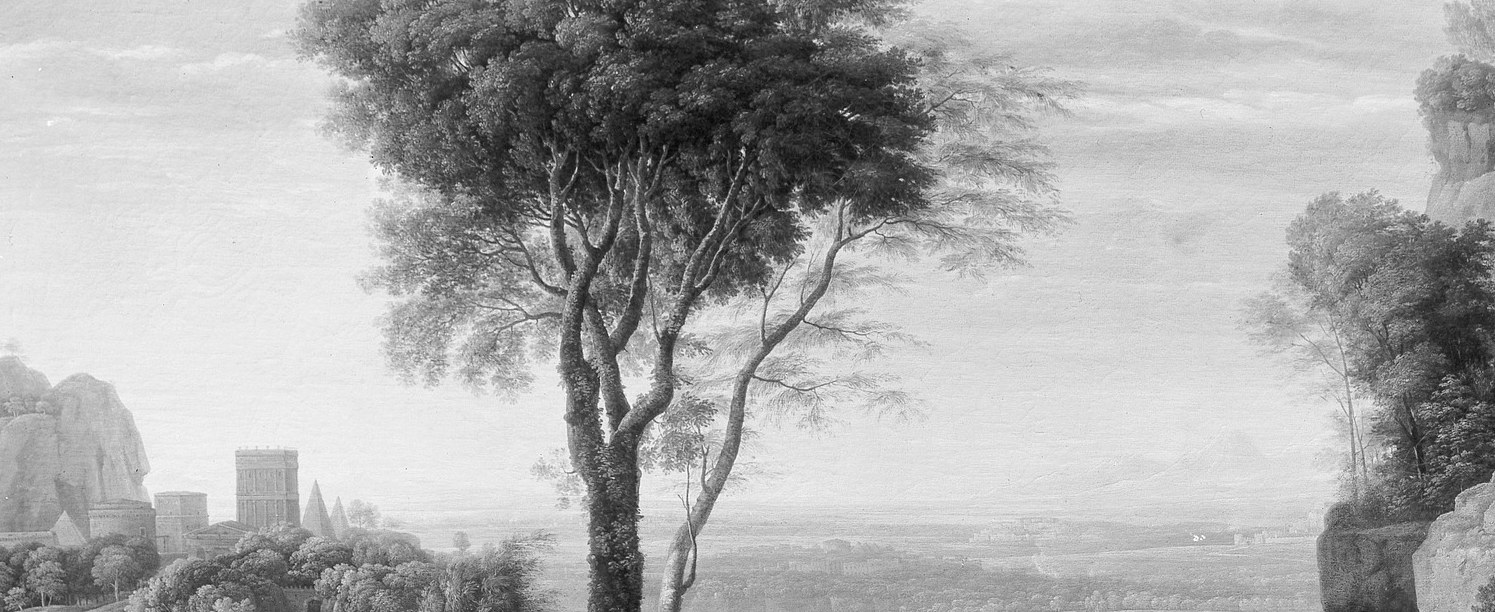
This is Giovanni Maldura's 1829 painting "David at the Cave of Adullam." Most viewers focus on the foreground, where a band of disaffected men pledges loyalty to their leader. But the painting's quietest detail sits on the horizon, almost dissolved by atmospheric haze, and it changes everything about the story the artist is telling.
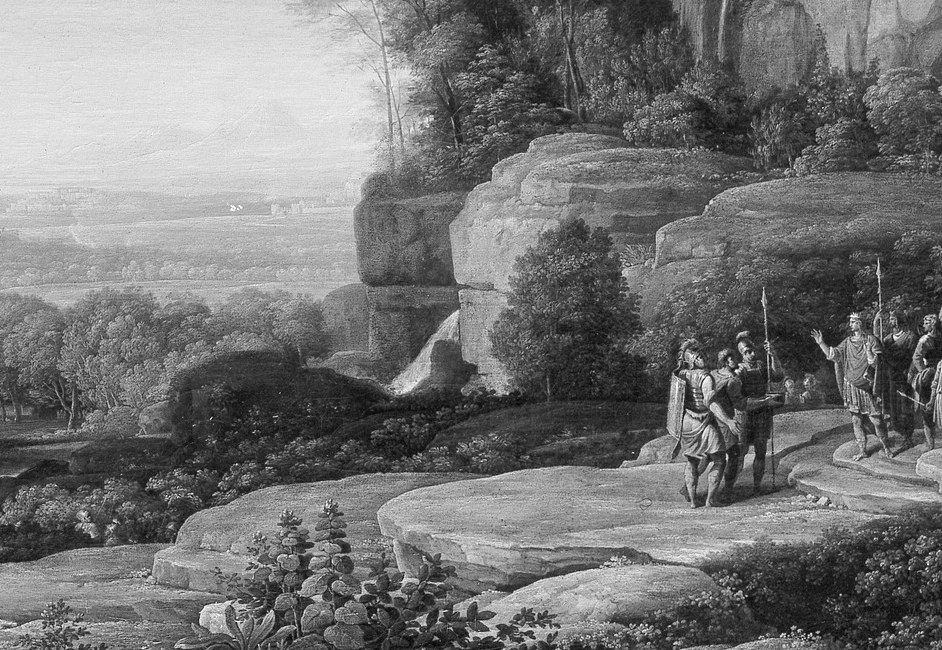
The foreground is all precarity: the men gather under a rocky overhang, their only shelter in the wilderness. The central figure holds a proto-royal standard, an emblem of leadership asserted long before any crown arrives. The kneeling man at the front makes a gesture of voluntary allegiance, the political foundation of the future king's power.
The biblical episode comes from 1 Samuel. David, fleeing King Saul, escaped to the Cave of Adullam, where a ragtag band of outcasts and soldiers gathered around him. It was the moment a fugitive began becoming a king, not through conquest, but through loyalty sworn in hiding.
But if you keep looking past them, beyond the cave and the winding valley, a city barely visible on the horizon catches the light. That is Jerusalem, the kingdom David cannot yet reach. Maldura painted it in haze, so faint it registers almost as atmosphere rather than architecture. The tension of the entire painting lives in that distance: the promise is visible, but the road to it is long, and no one in the cave has yet walked it.
#arthistory #biblicalart #giovannimaldura
Details

Transcript
A band of desperate men gathers in the wilderness. They are outlaws, fleeing a king. He holds a standard. He is not yet a king himself. The cave is their only shelter. Now look beyond them, into the far distance. A city sits on the horizon, almost dissolved in light. Jerusalem. A kingdom he cannot yet claim.