The Vocation of Saint Aloysius (Luigi) Gonzaga by Guercino
View the artwork: The Vocation of Saint Aloysius (Luigi) Gonzaga →
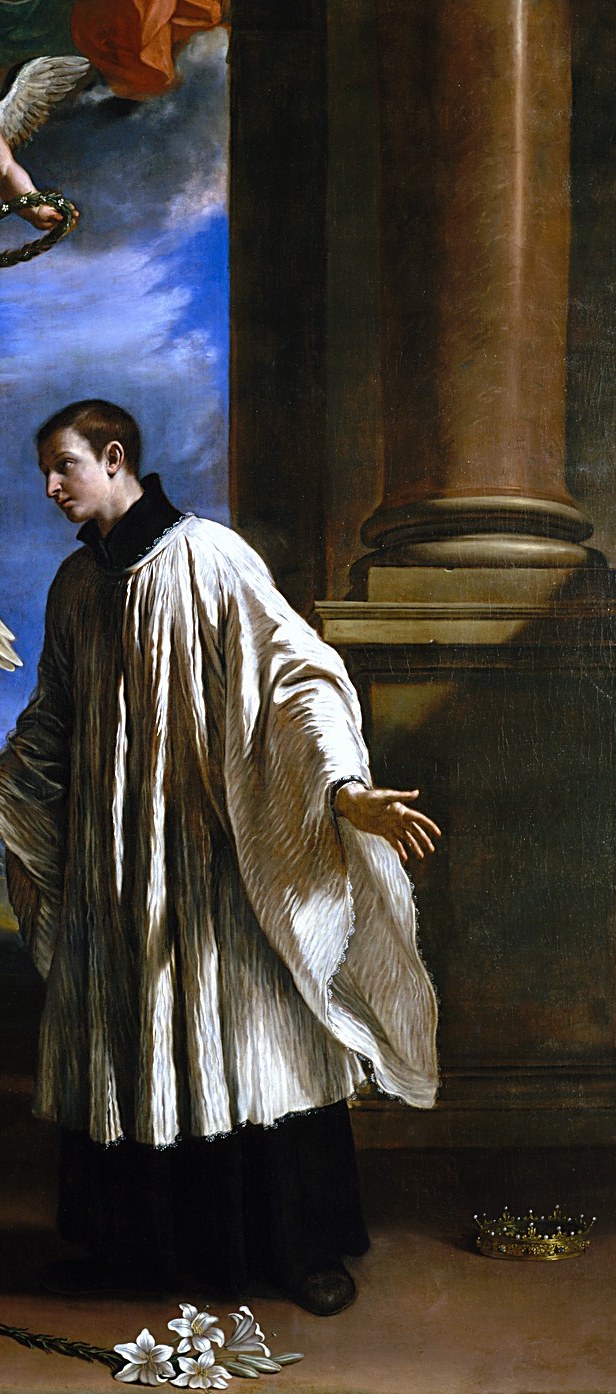
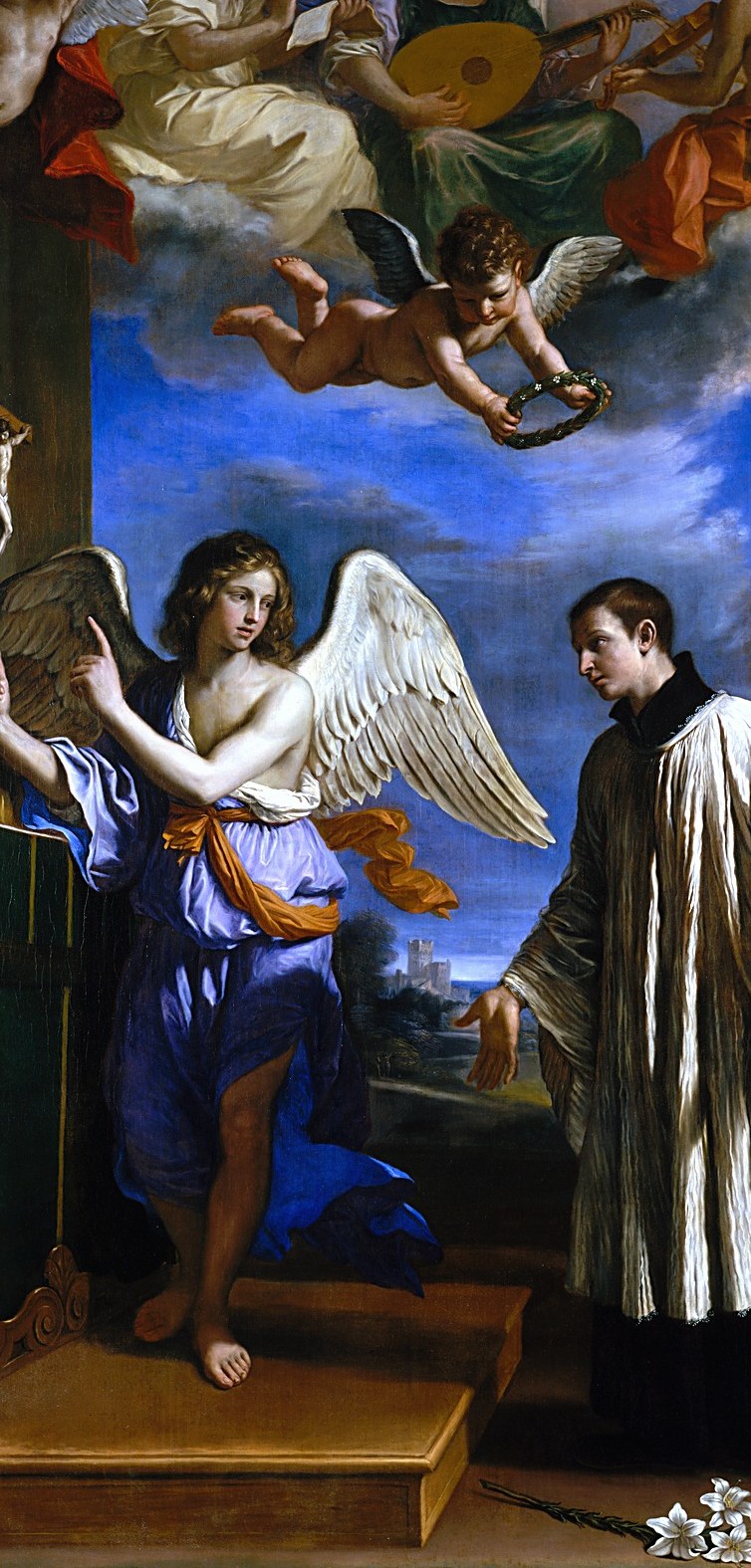
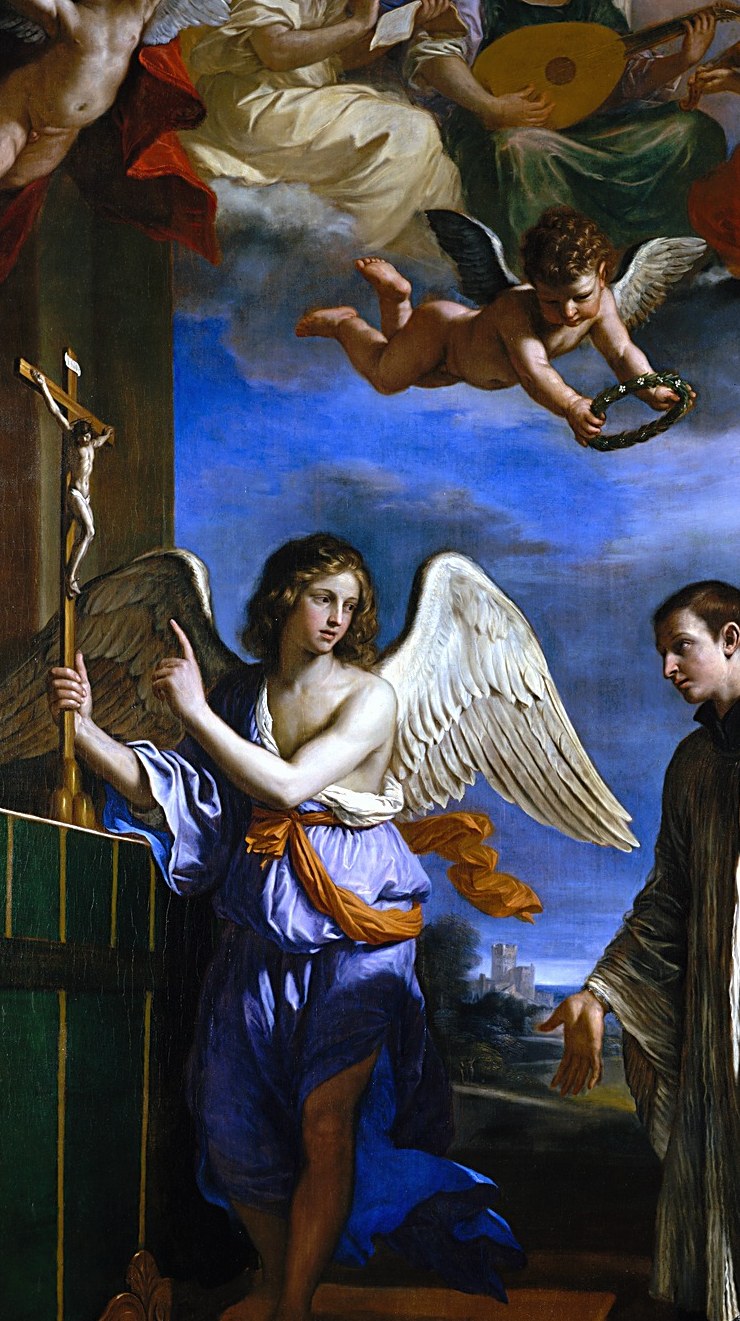
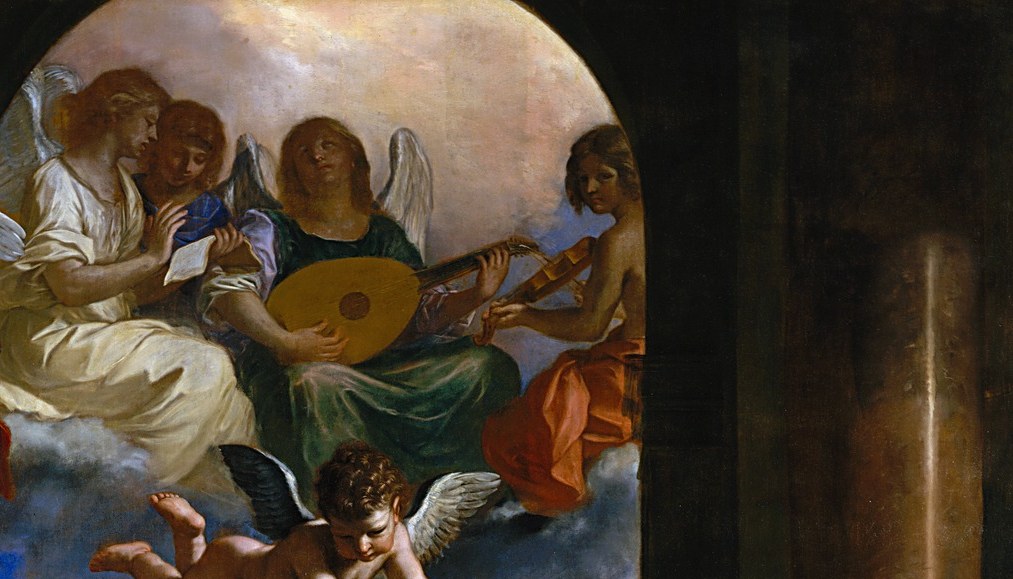
This is Guercino's 'The Vocation of Saint Aloysius Gonzaga', painted around 1650 and now in the collection of the Metropolitan Museum of Art. It freezes the exact moment a young man from one of Italy's most powerful families chose exile from wealth and status.
Look at his face first. Not ecstatic, not anguished. Just quiet, settled certainty. Then look at the angel's face: attentive, solemn, more ambassador than herald. The whole exchange is a transaction between equals, not a command from above. Guercino places the cross in the angel's hand as something extended upward, offered rather than imposed.
Aloysius Gonzaga was born in 1568, the eldest son of a marquis and a lady-in-waiting to the Queen of Spain. His family expected him to rule, to marry, to continue the line. Instead, at 17, he signed away his inheritance to his younger brother and entered the Jesuit novitiate in Rome. Six years later, a plague broke out. Aloysius carried the sick and dying through the streets until he contracted the disease himself. He died on June 21, 1591, at 23.
Guercino painted this in his late period, when his style had shifted from the earthy drama of his youth to something calmer and more composed. You can feel the restraint in the closed composition, the soft light, the refusal to agitate. A life-altering surrender rendered as a still, warm, and quiet conversation. The painting never shouts, because the man it depicts didn't either.
#arthistory #baroque #guercino
Details
Transcript
He was heir to an Italian duchy. And he walked away. At 17, Aloysius Gonzaga signed his inheritance over to his brother. This is his face after the decision. No drama, just certainty. The angel does not command him. The angel offers. A cross, extended upward. Not a burden. A gift. He died at 23, caring for plague victims in Rome. He never looked back.