Study, North Conway, New Hampshire by David Johnson (American, 1827–1908)
View the artwork: Study, North Conway, New Hampshire →
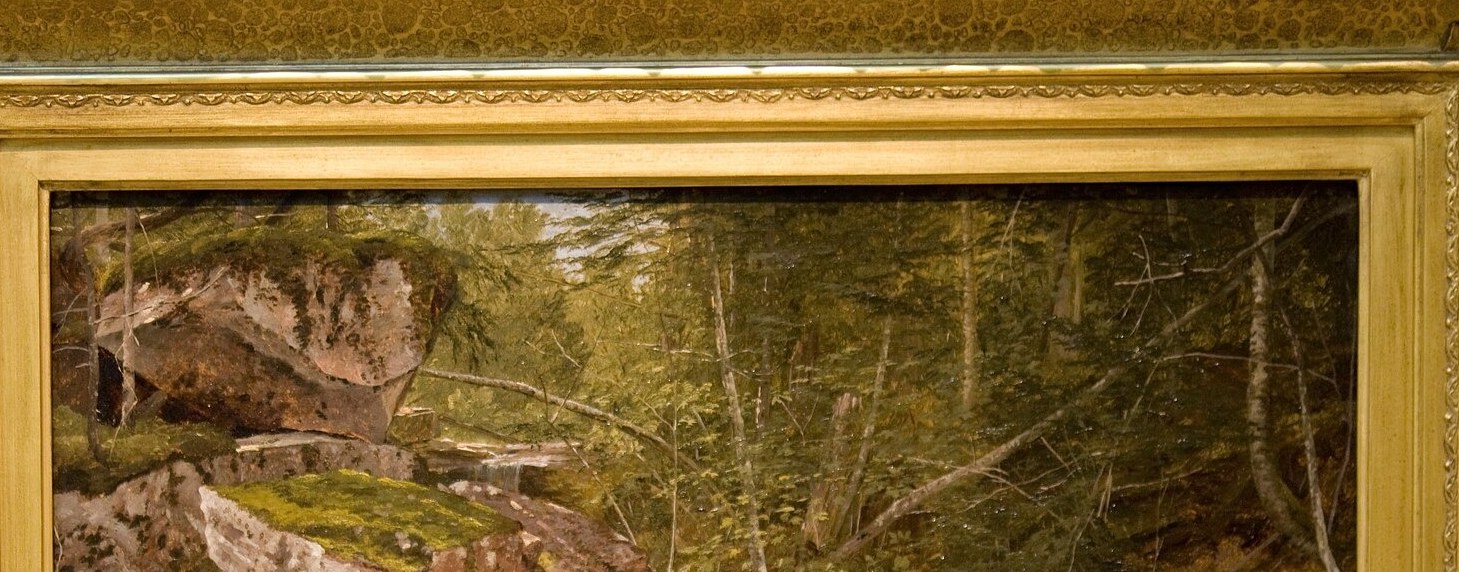
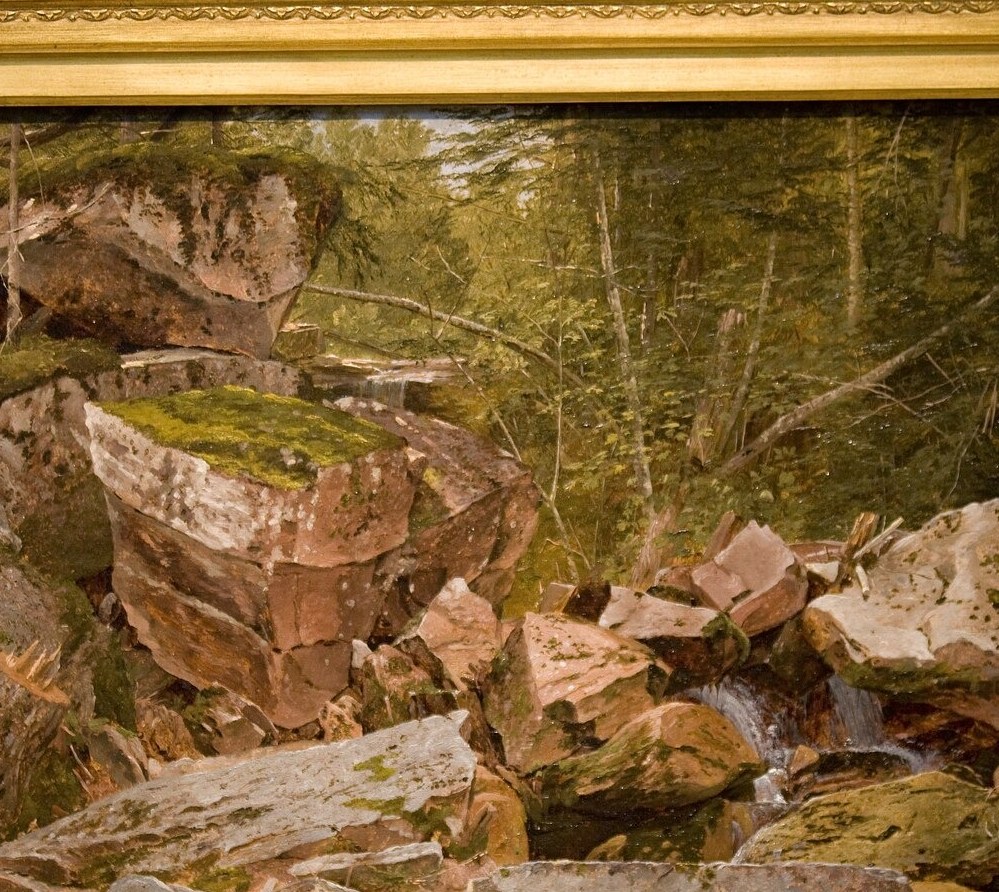
David Johnson painted Study, North Conway, New Hampshire in 1851, deep in the White Mountains. It is a small, private oil study, made outdoors, and today it lives in the collection of the Museum of Fine Arts, Boston. Johnson belonged to the second generation of Hudson River School painters, the ones who left the studio behind and carried their kits into the forest to paint American geology from life.
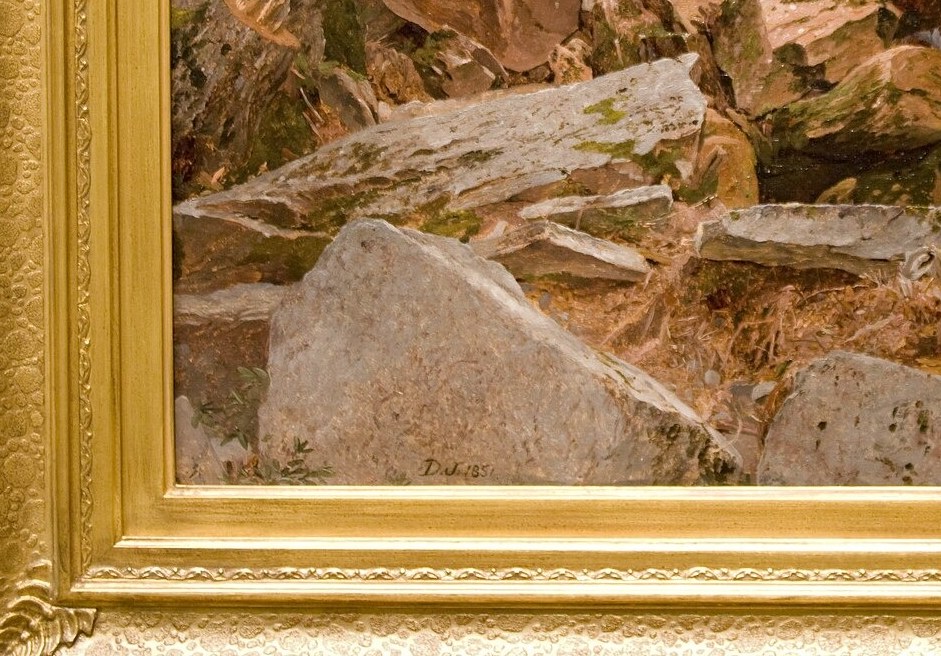
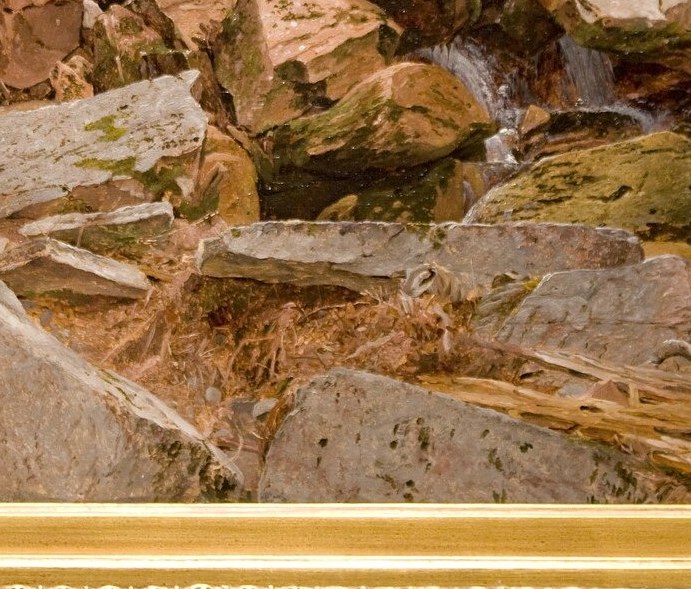
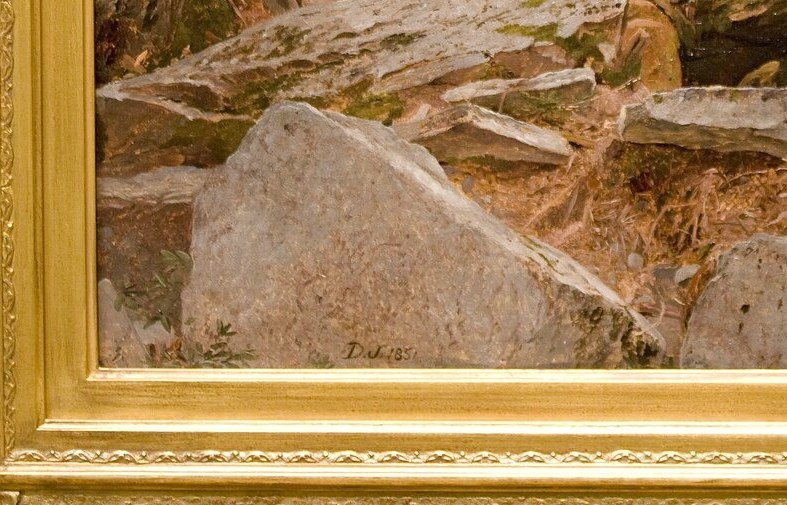
What holds the painting together is that boulder in the foreground. From a distance it reads as sun-warmed granite, pinkish and grey. But step closer and the paint itself does the work. Johnson loaded his brush with thick, stiff pigment and laid strokes down in the direction of the stone's grain. The surface is not flat. It carries a three-dimensional relief that catches gallery light almost like the rock it depicts.
Johnson trained under Asher B. Durand, who insisted that every leaf and crevice be painted from direct observation. This study is the result: botanical accuracy in the moss, fast silver paint for the stream, and a sculptural impasto that turns oil into stone. The White Mountains were a proving ground for this kind of American realism, and the canvas is small enough to have been carried in a field satchel.
Next time you see a rock face in a landscape painting, walk right up to it. If it looks this carved, the painter was probably standing in a stream.
#arthistory #hudsonriverschool #davidjohnson
Details
Transcript
A forest stream. Sunlight, moss, fast water. Looks like paint. Feels like a place. He painted this in 1851, in the White Mountains of New Hampshire. This generation worked outdoors, chasing American geology. Now walk up to the rock. He loaded the brush and left it. The stone is actual relief.