The Crucifixion by Gerard David
View the artwork: The Crucifixion →
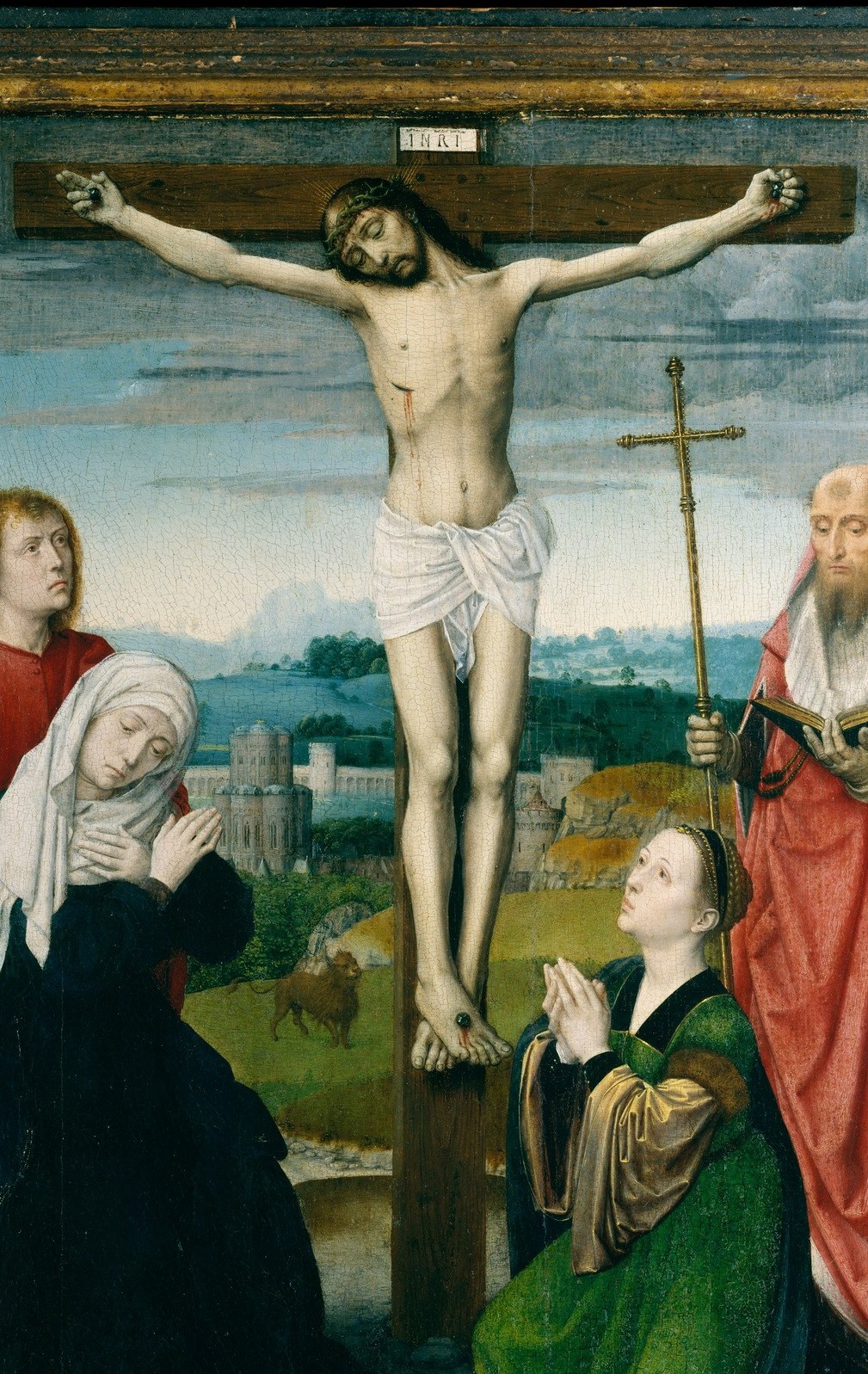
Gerard David's 'The Crucifixion,' painted around 1495, is not a scene of chaos and torment but of profound, human stillness. Housed at the National Gallery in London, this Early Netherlandish panel was made for private contemplation, and its power lives in the distinct, recognizable forms of grief it maps out at the foot of the cross.
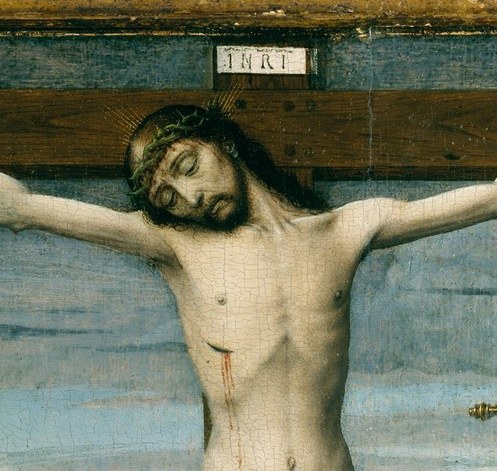
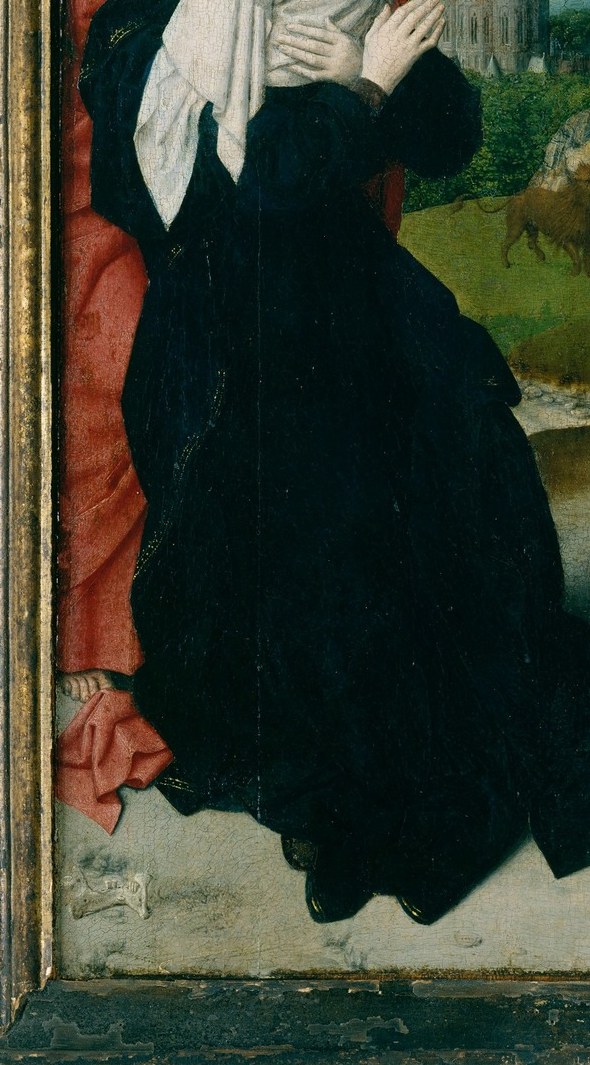
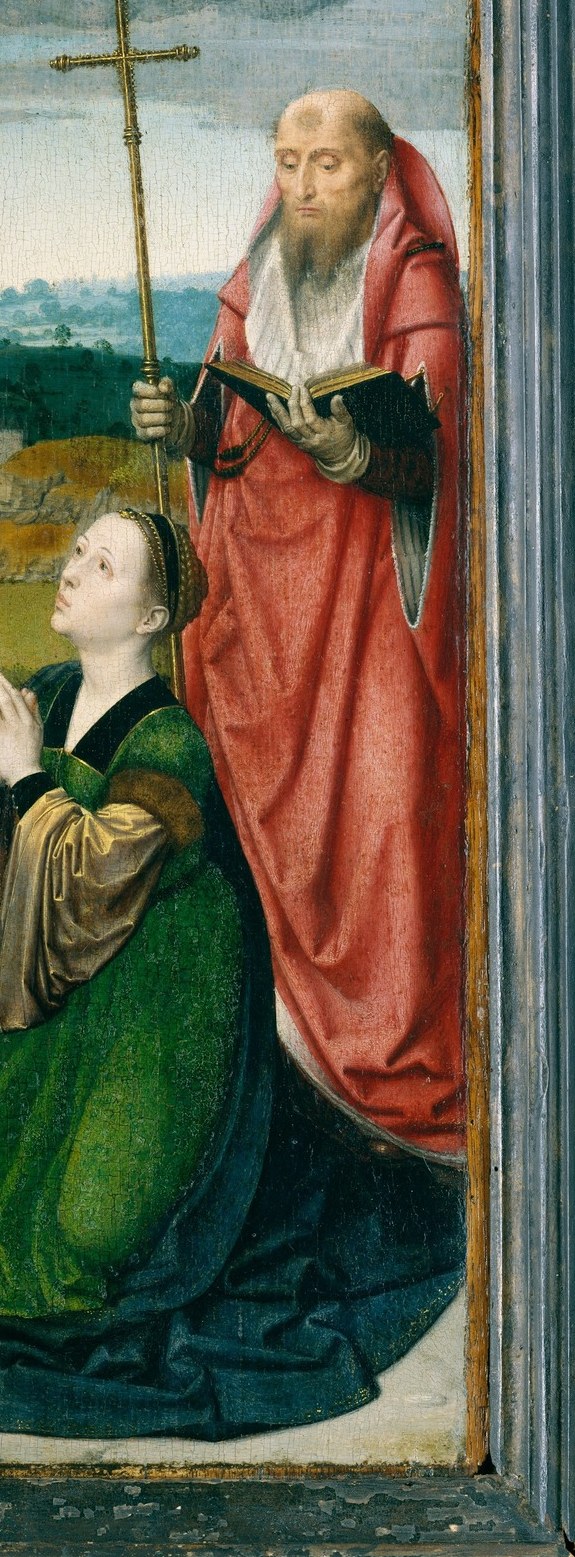
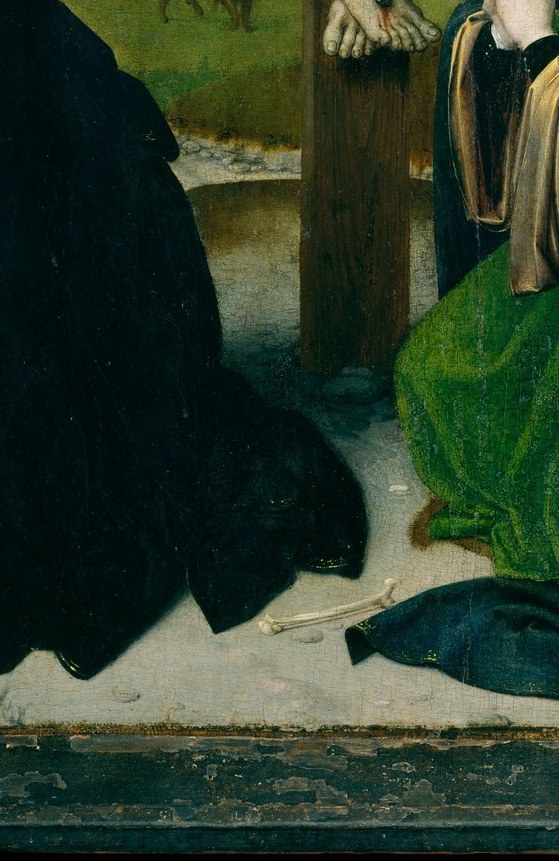
Look first at Christ's face: serene, tilted, accepting. That composure sits in direct contrast to the three mourners below him. A figure in a dark blue mantle, the Virgin Mary, has physically collapsed under her sorrow. Her hands are pressed, her body weightless with loss. Beside her, Mary Magdalene in a rich green robe stays upright, her hands clasped in fervent, active prayer. On the right, John the Evangelist stands in a red robe, holding an open book as he bears solemn witness.
David was a master in Bruges who ran prolific workshops, and here he turns a biblical scene into a psychological portrait of mourning. Each figure embodies a different human response to the same devastating event: the collapse, the urgent prayer, the stoic testimony. The Flemish landscape behind them, a walled town imagined as Jerusalem, rolls away into a luminous, indifferent distance, making the small group of figures at the center feel even more isolated in their loss.
This is a painting designed as a devotional mirror. You are meant to see your own form of grief in theirs, and to sit with it.
#arthistory #earlynetherlandish #gerarddavid
Details
Transcript
A man nailed to wood under a grey sky. His face does not show agony. He waits, eyes down, calm. But at the foot of the cross, the world has split open. His mother kneels. The dark mantle is a collapsed weight of grief. Beside her, Mary Magdalene clasps her hands in fervent, active prayer. Gerard David painted this around 1495 for private devotion in Bruges. On the right, John the Evangelist holds an open book. He is the witness. His red robe and the text signal scripture fulfilled.