The Small Cowper Madonna by Raphael
View the artwork: The Small Cowper Madonna →
This is Raphael's Small Cowper Madonna, painted around 1505 when the artist was just 22 years old. It now lives at the National Gallery of Art in Washington, D.C. The panel is small, meant for private devotion in someone's home, and it captures the moment the young Raphael absorbed everything Florence could teach him and began turning paint into something almost weightless.
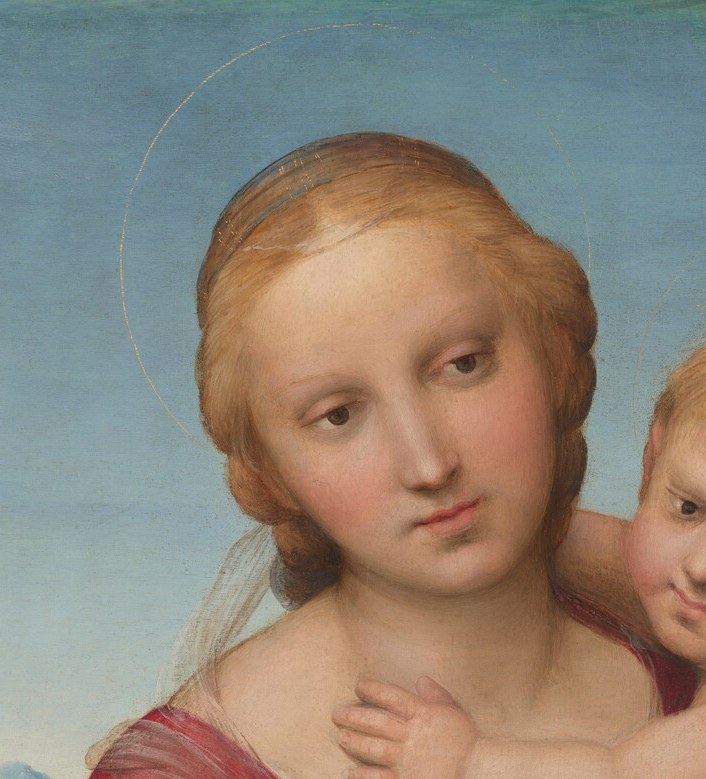
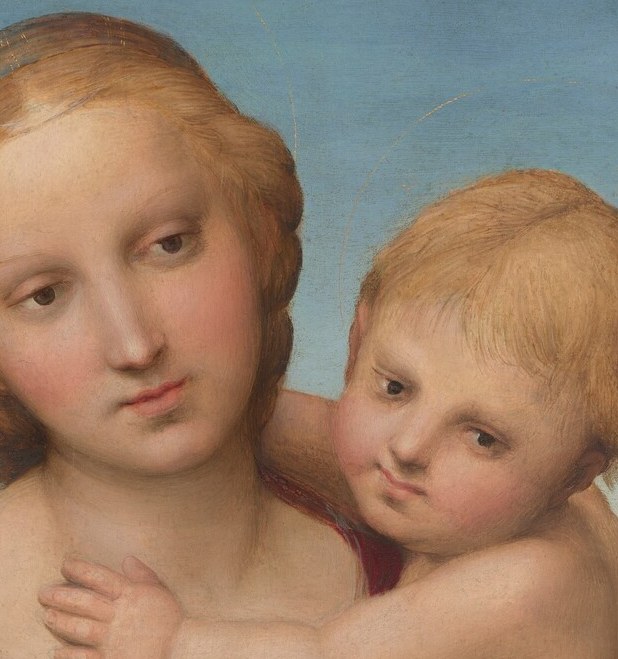
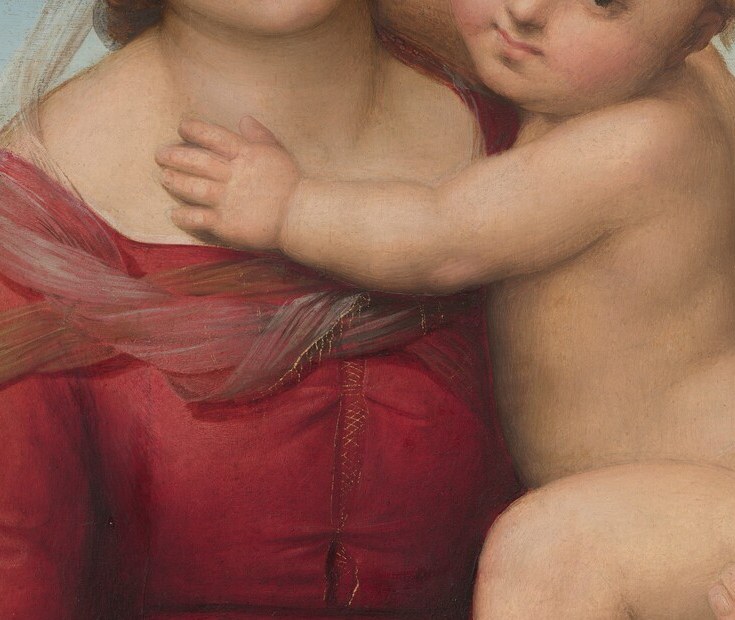
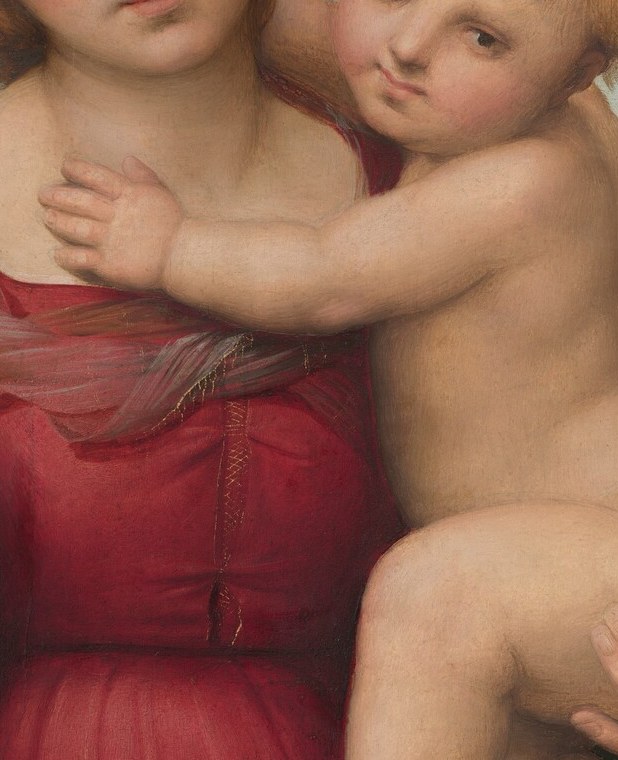
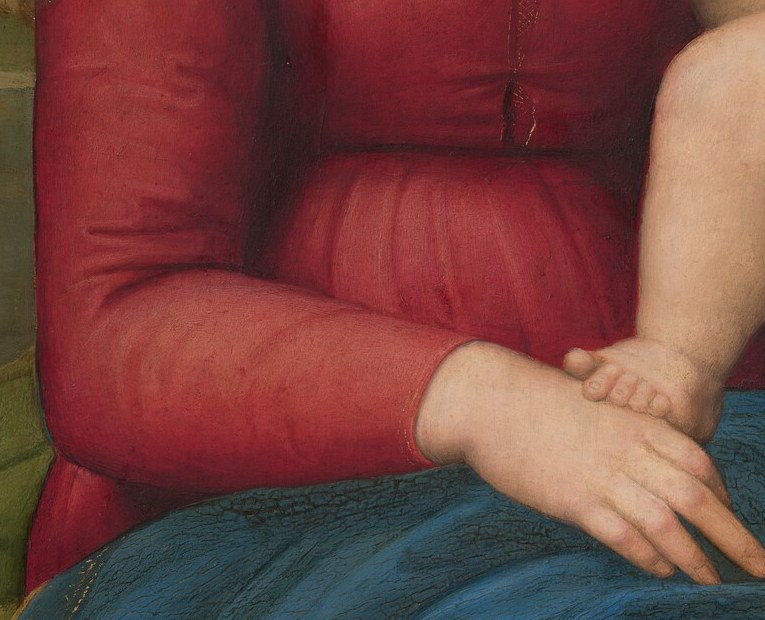
Look first at the Christ Child's torso. The belly is rounded and dimpled, the skin warm and alive. This was a Renaissance argument made in oil: the divine took on real, vulnerable human flesh. Then shift up to Mary's hairline, where a veil so fine it barely exists catches the light. The gold of her hair glows through the translucent fabric, a trick Raphael borrowed from Leonardo's sfumato, the technique of letting edges dissolve like smoke instead of drawing hard lines.
Raphael arrived in Florence around 1504 and found Leonardo and Michelangelo already there, changing what painting could do. He studied them both. In this little panel you can see him working out what he absorbed: the soft modeling of flesh from Leonardo, the sculptural weight of drapery from his own teacher Perugino, and a compositional calm that was already entirely his own. The distant church and the tiny standing figure in the landscape ground the sacred scene in a recognizable Italian countryside, Umbria or Tuscany, the world Raphael knew.
The painting is called "Small Cowper" to distinguish it from a larger Madonna that also belonged to the Cowper family, British collectors who owned it before it crossed the Atlantic. It is a quiet panel, built for looking slowly. What detail in it holds your eye the longest?
#arthistory #raphael #renaissance
Details
Transcript
In 1505, a 22-year-old from Urbino painted this panel. Start with the child's body. Soft dimples and a warm belly, built entirely from thin layers of oil. Raphael was convincing the eye that God had actual flesh. Now look above her forehead. A translucent veil, so thin the gold hair glows right through it. He learned this from Leonardo: no hard edges, only disappearing smoke. A 22-year-old, already dissolving oil into light.