Virgin and Child by Hans Memling
View the artwork: Virgin and Child →
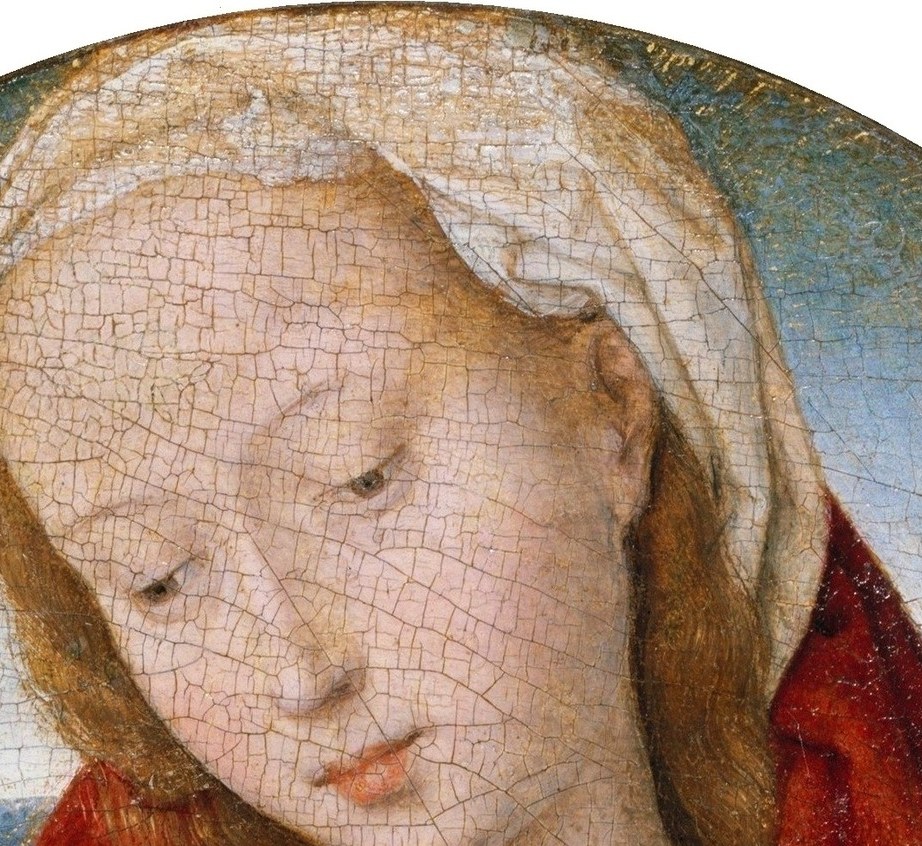
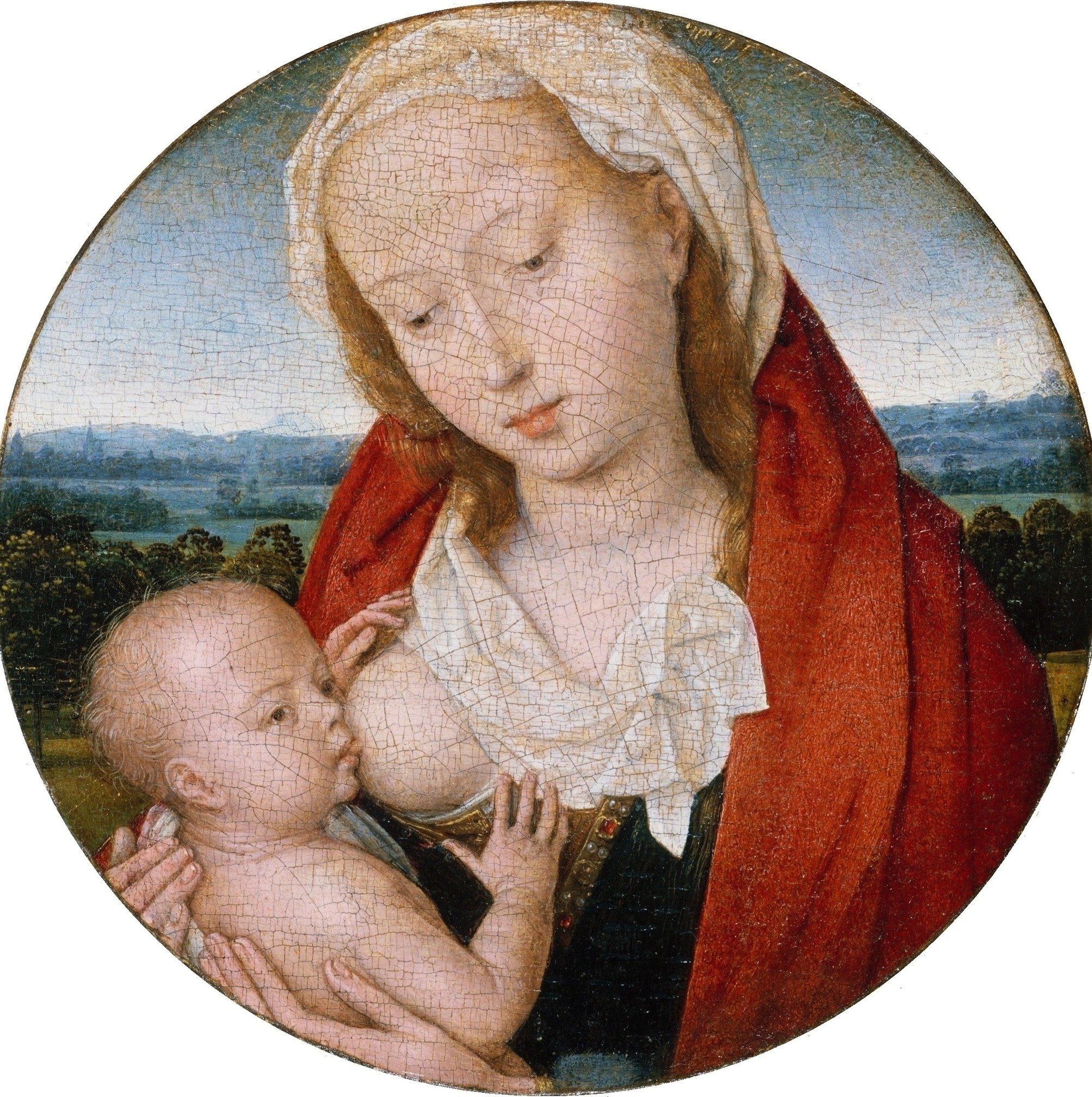
This is Hans Memling's 'Virgin and Child,' painted around 1477. It now lives at the Metropolitan Museum of Art. The painting is a tondo, a circular format unusual in Netherlandish art, and was made for private devotion, probably commissioned by a wealthy Bruges merchant or banker for his home.
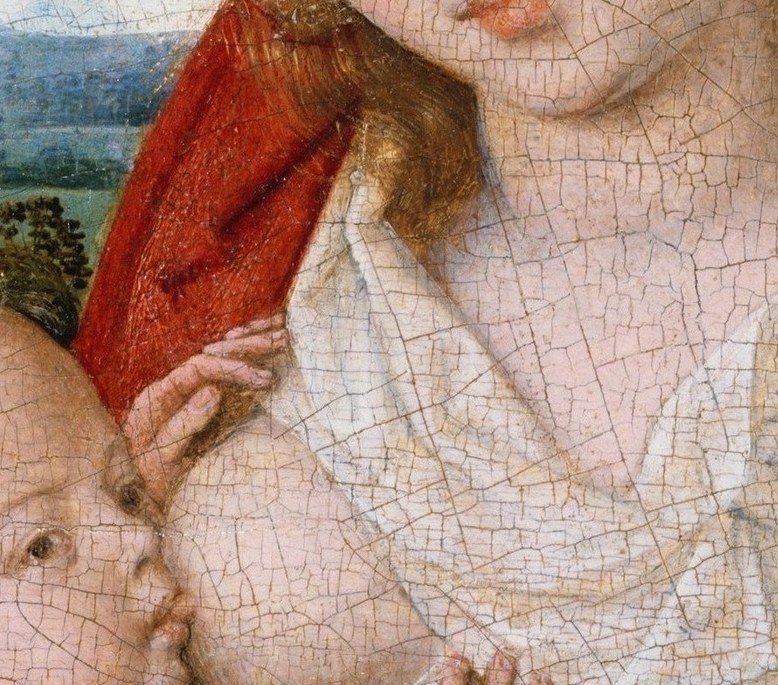
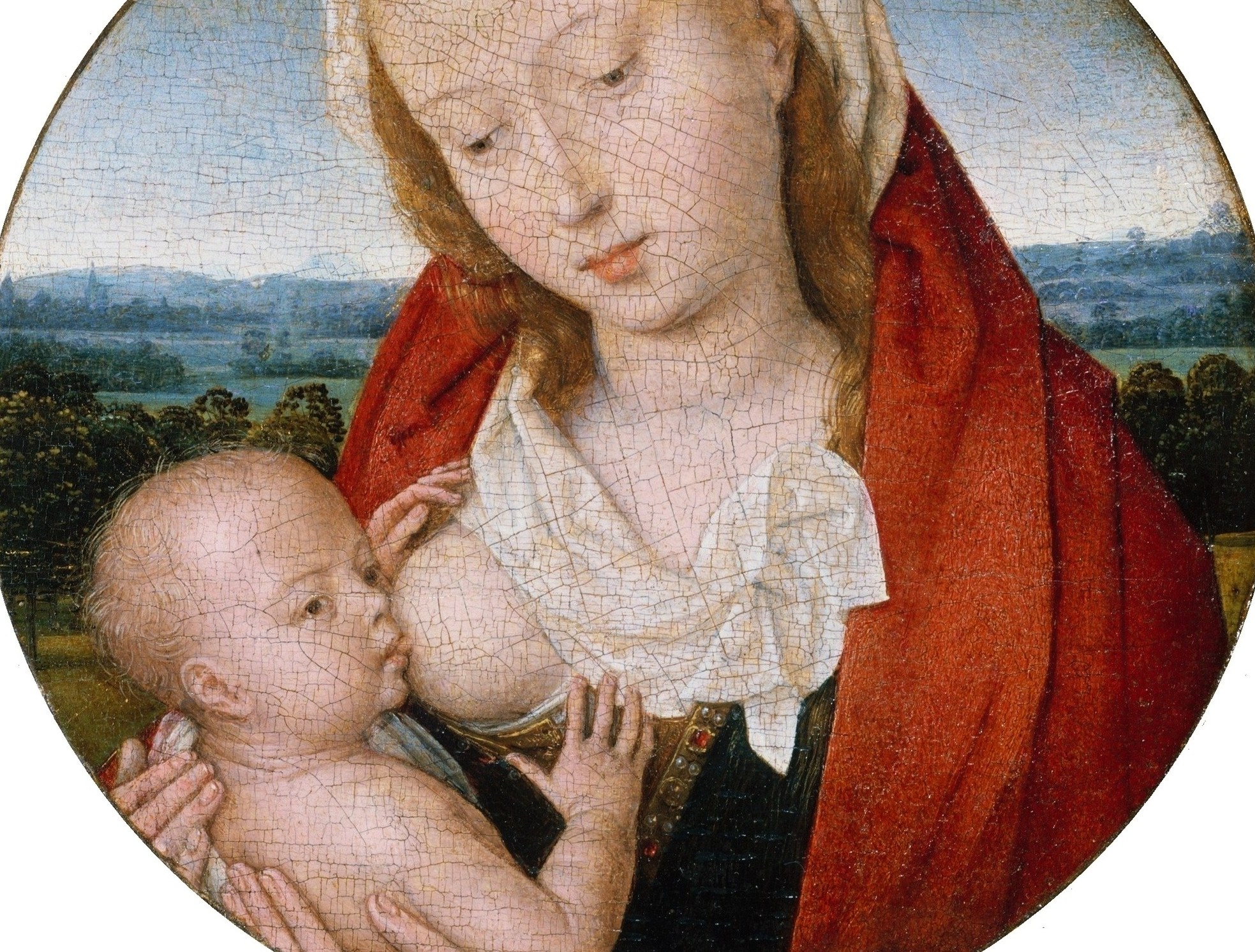
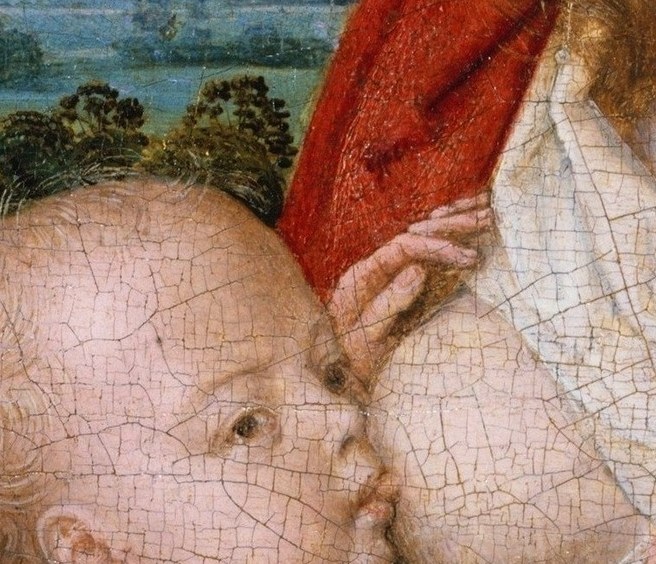
Look at the baby's grip on her chemise and the soft, rounded belly. Memling observed real infants. The nursing breast, the 'Maria Lactans' motif, was a serious theological statement: Christ took fully human flesh, fully dependent on his mother. The red cloak signals both her queenship and the blood of the Passion to come.
Memling was the leading painter in Bruges, running a large workshop. A 1480 tax register lists him among the city's wealthiest citizens. His patrons were the bankers, clergy, and merchants who made Bruges one of the richest cities in Europe. This small, intimate painting is the product of that world, a luxurious object for focused, personal prayer.
It is a painting about closeness. Mother and child fill the circle. The landscape behind them is a peaceful paradise. There is no scandal here, only the quiet doctrine that the infinite once needed to be fed and held.
#arthistory #hansmemling #earlynetherlandish
Details
Transcript
She looks like any young mother, quiet and absorbed. But the red cloak and the bare breast tell you who she is. This is Mary, nursing the Christ Child. A 'Maria Lactans.' A theological point made in flesh and milk. Human, hungry, divine, all at once. The circle itself is a clue. It was made for a private home, not a church. In 1477, Hans Memling was Bruges's most successful painter. A tax record shows he was one of the richest men in the city.