Schloss Milkel in Moonlight by Carl Gustav Carus
View the artwork: Schloss Milkel in Moonlight →
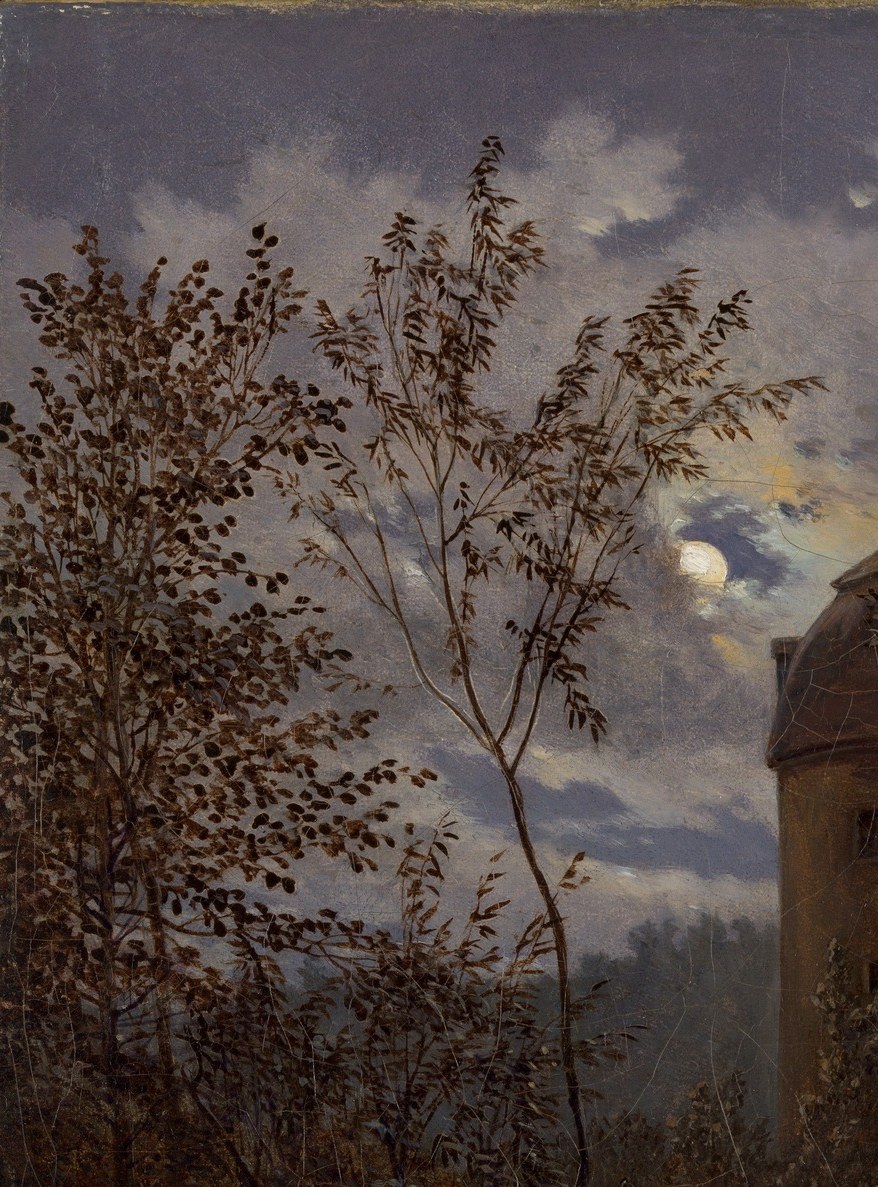
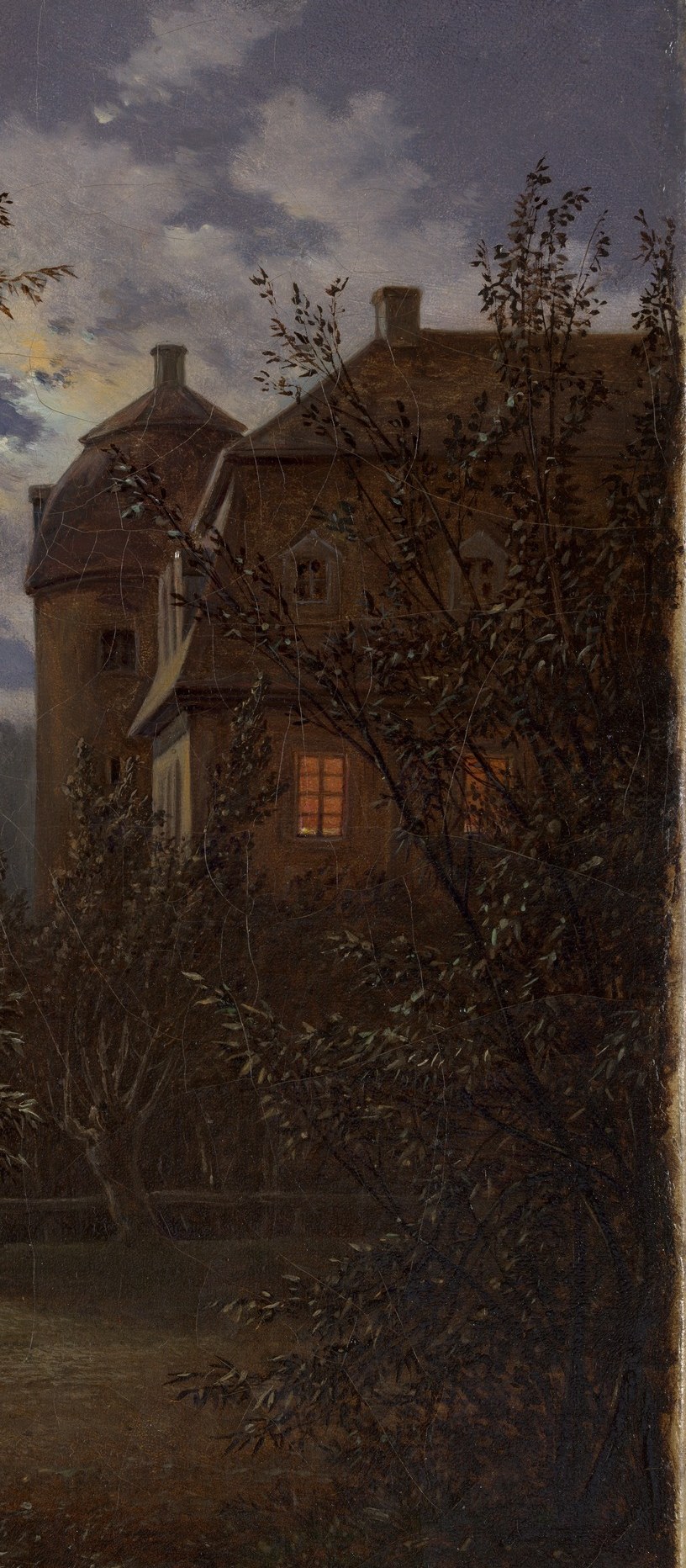
Carl Gustav Carus painted "Schloss Milkel in Moonlight" in 1834, and for nearly two centuries most viewers have seen a pure nocturne, a sleeping house under a cold moon. The painting hangs in a private collection, rarely exhibited, which keeps its quiet power intact.
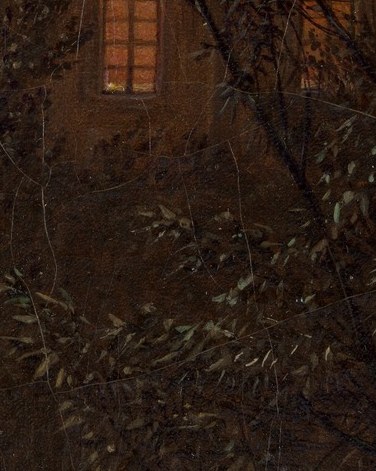
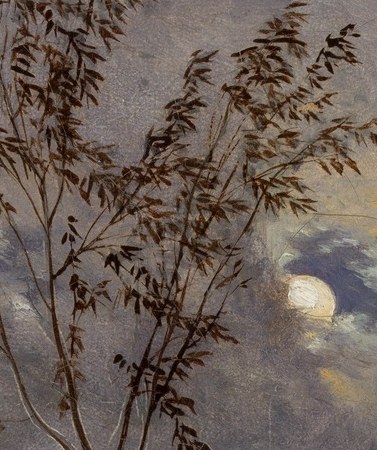
Look at the single lit window. It is the only warm color in the entire picture. Carus built the whole composition around it: the deep blue sky, the pale moon disc half-veiled by cloud, and the intricate web of bare branches all exist to make that one rectangle of amber feel like a held breath. The tree trunks in the foreground are darker than the building itself, nature dwarfs architecture here, in true Romantic fashion.
Carus was not a full-time painter. He was a physician, a naturalist, a psychologist, and a friend of Goethe. He studied landscape painting under Caspar David Friedrich and absorbed the core Romantic idea that a landscape is never just a place, it is a state of mind. This painting was made at night, for himself, not for a patron.
That window holds the story. Who is awake at this hour? A scholar reading by candlelight. A servant tending a fire. A sleepless count. Carus does not tell us. He only gives us the light, and the stillness around it.
#arthistory #romanticism #germanart
Details

Transcript
The house is almost swallowed by the night. Carus was a doctor and a naturalist by day. He painted this at night, for himself. Look at the sky. That deep blue is untouched by the moon. And these bare branches are not just a frame, they are the finest brushwork in the picture. Everything is cold, blue, and silent. Except one square of amber. He studied under Caspar David Friedrich, who taught him that a landscape is a portrait of a feeling. One lit window. Someone is awake inside the sleeping house.