The Cathedrals of Wall Street by Florine Stettheimer
View the artwork: The Cathedrals of Wall Street →
This is Florine Stettheimer's 'The Cathedrals of Wall Street,' painted in 1939 and now in the collection of the Metropolitan Museum of Art. It is the second in her series of four monumental 'Cathedrals' paintings depicting the true centers of power in New York City: Broadway, Wall Street, Fifth Avenue, and the art museums.
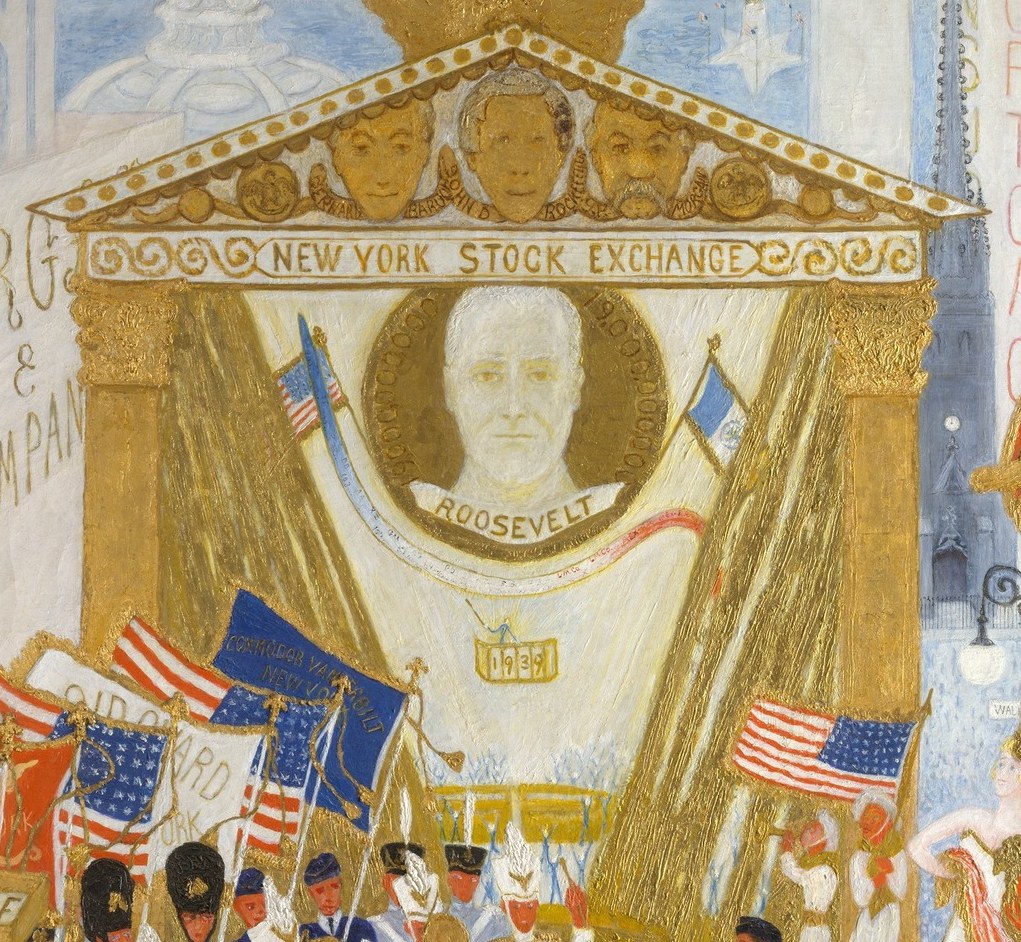
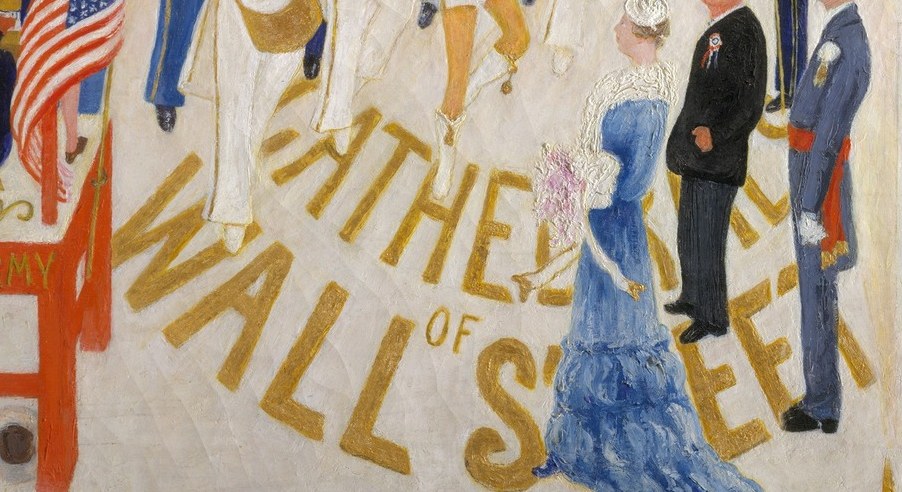
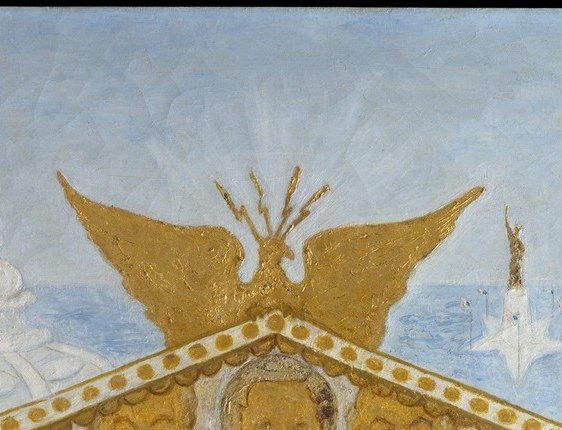
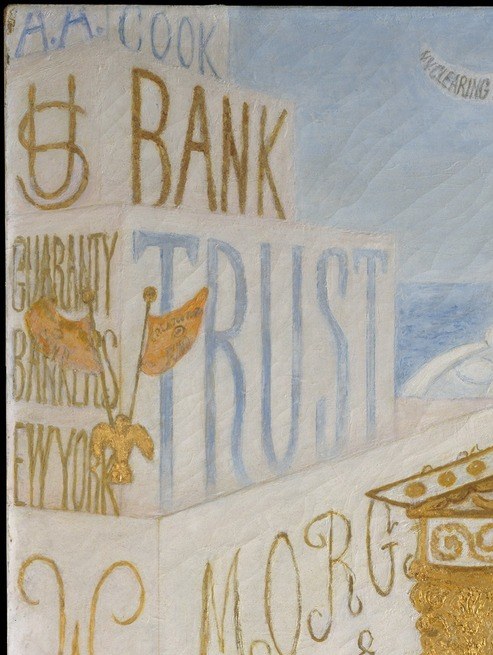
Look at how the New York Stock Exchange is rendered entirely in gold, with classical columns and a pediment like a Greek temple. Every detail is a coded symbol of American financial faith: the golden eagle as predatory nationhood, the 'BANK' and 'TRUST' signs as sacred text, the flags blurring patriotism with market ritual. Even the title is painted directly onto the canvas as a thesis statement.
Stettheimer was a modernist painter, poet, and salonnière whose Upper East Side gatherings drew the avant-garde, including Marcel Duchamp. In 1938, when MoMA sent the first American art exhibition to Europe, she and Georgia O'Keeffe were the only women included. She painted this work as fascism rose abroad and the Depression lingered at home, turning a sharp, satirical eye on what Americans truly worship.
A gold temple, a founding father's face in the pediment, and a Salvation Army cart at the steps: the whole American argument in one painting.
#arthistory #florinestettheimer #modernism
Details
Transcript
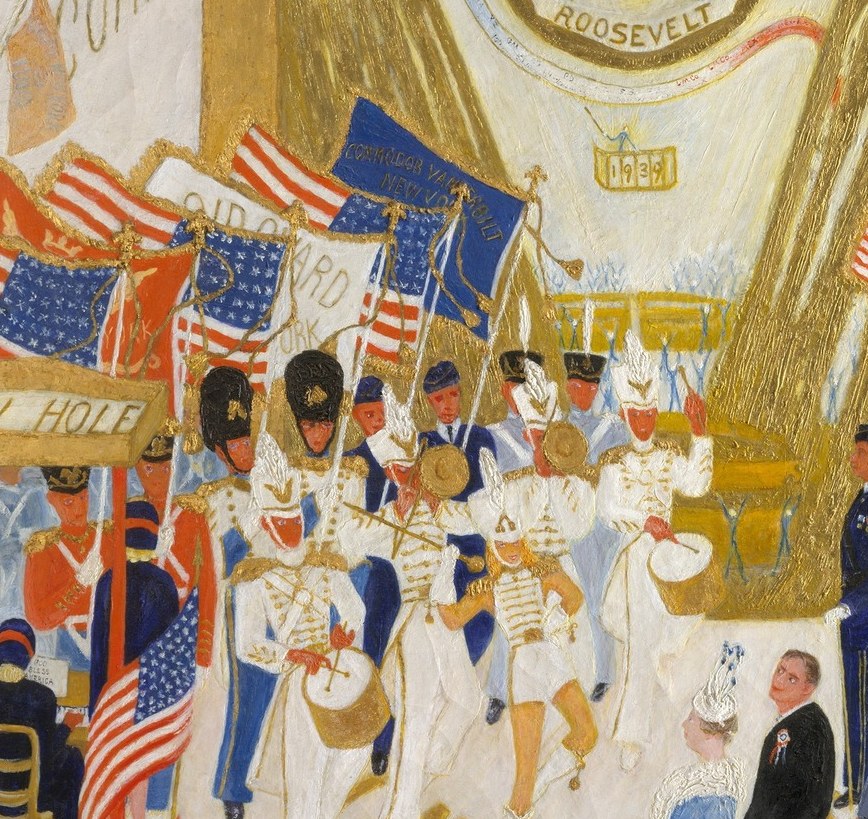
She doesn't paint Wall Street. She paints a cathedral. The New York Stock Exchange stands as a gilded temple. Perched at the very top: a golden eagle, the nation's predator saint. The words 'BANK' and 'TRUST' hang like stained-glass inscriptions. An American flag procession blurs patriotism with market celebration. A Salvation Army cart from 1939 sits at the base of the golden exchange. Stettheimer inscribed her thesis right onto the canvas: 'CATHEDRALS OF WALL ST.'