Vanitas Still Life by Jacob de Gheyn II (Netherlandish, 1565–1629)
View the artwork: Vanitas Still Life →
This is Jacob de Gheyn II's 'Vanitas Still Life' of 1603, the earliest known independent vanitas painting, now in the Metropolitan Museum of Art. It was painted just as tulip mania was beginning to grip the Netherlands, within a few decades, a single bulb of a prized variety would sell for more than ten times a craftsman's annual income, before the market collapsed catastrophically in 1637.
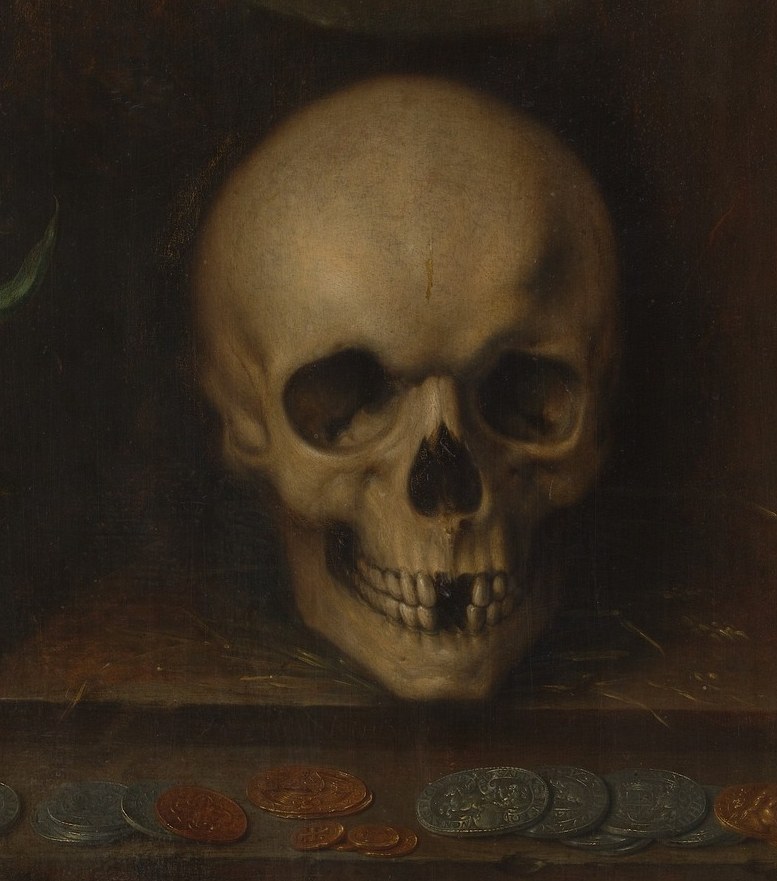
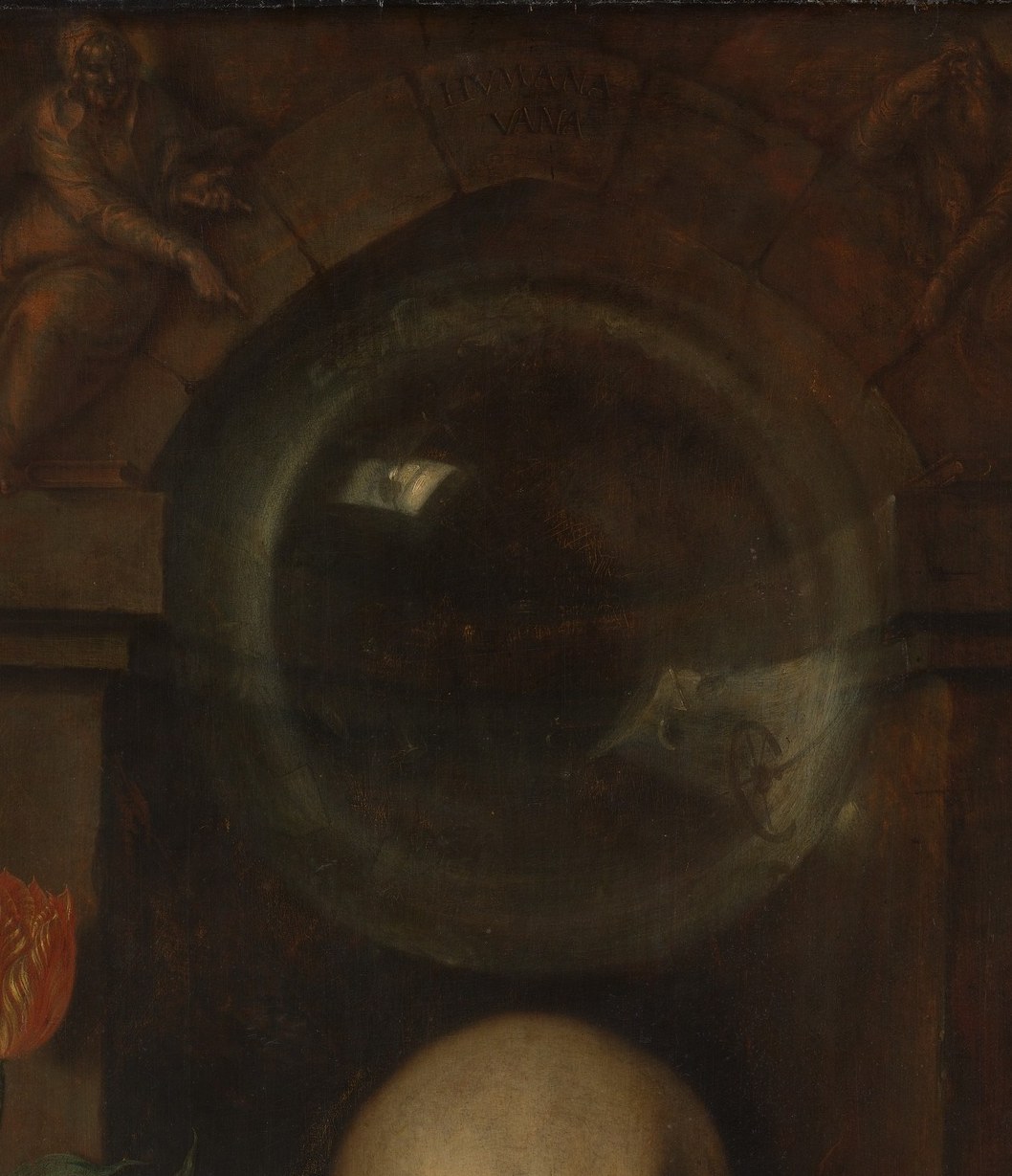
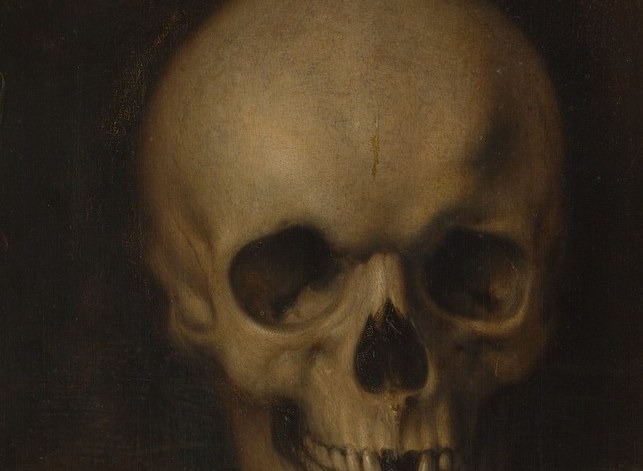
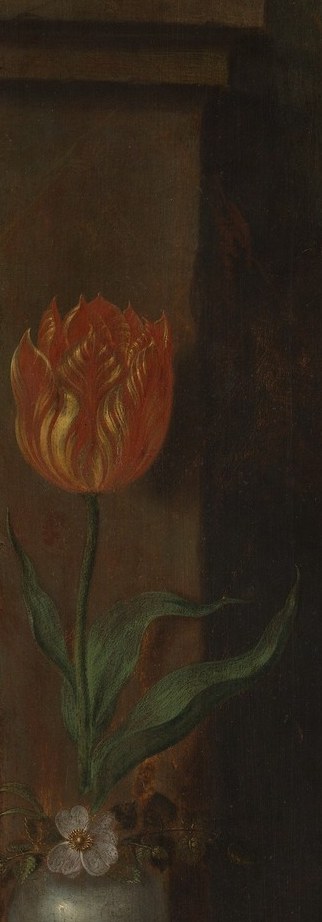
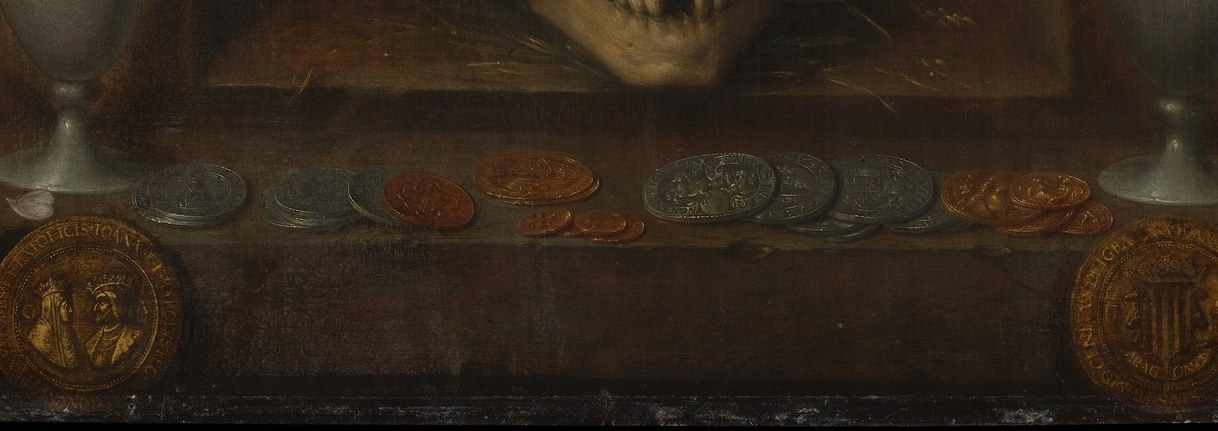
The painting assembles the classic vanitas vocabulary in one tightly composed niche. The skull faces you squarely, its eye sockets the deepest shadows in the frame. Above it floats an enormous soap bubble, the 'homo bulla' emblem, man as a bubble, with a reflected window or landscape just visible inside the membrane. Below sit scattered coins whose metallic glints are nearly swallowed by the surrounding darkness, and to the left, a single red tulip in a slender glass tube, already at its peak and therefore already beginning its decline.
De Gheyn was unusually well positioned to paint a tulip-and-coin vanitas. He worked in The Hague and had personal ties to the botanist Carolus Clusius, who established the first major tulip collection in the Netherlands at the Leiden botanical garden in the 1590s. De Gheyn would have seen rare bulbs firsthand and understood their staggering prices before tulip mania became the popular story we know.
The painting is small, about 32 by 22 inches, but its central bubble is one of the earliest monumental renderings of a transparent sphere in Western art. The entire illusion rests on a single stroke of white highlight. Take another look at that highlight, and then at the void of the skull's left eye socket. The whole argument of the painting lives in those two inches of canvas.
#arthistory #dutchgoldenage #vanitas
Details
Transcript
Before the tulip bubble burst, a single bulb could buy a house. This bloom was painted right as tulip mania began. Scattered below: the coins that bought those bulbs. And directly above the wealth, a skull faces you straight on. Look into the bubble above it, something is reflected inside. Jacob de Gheyn painted this in 1603. He knew the tulip market personally.