A Man and a Woman on Horseback by Philips Wouwerman
View the artwork: A Man and a Woman on Horseback →
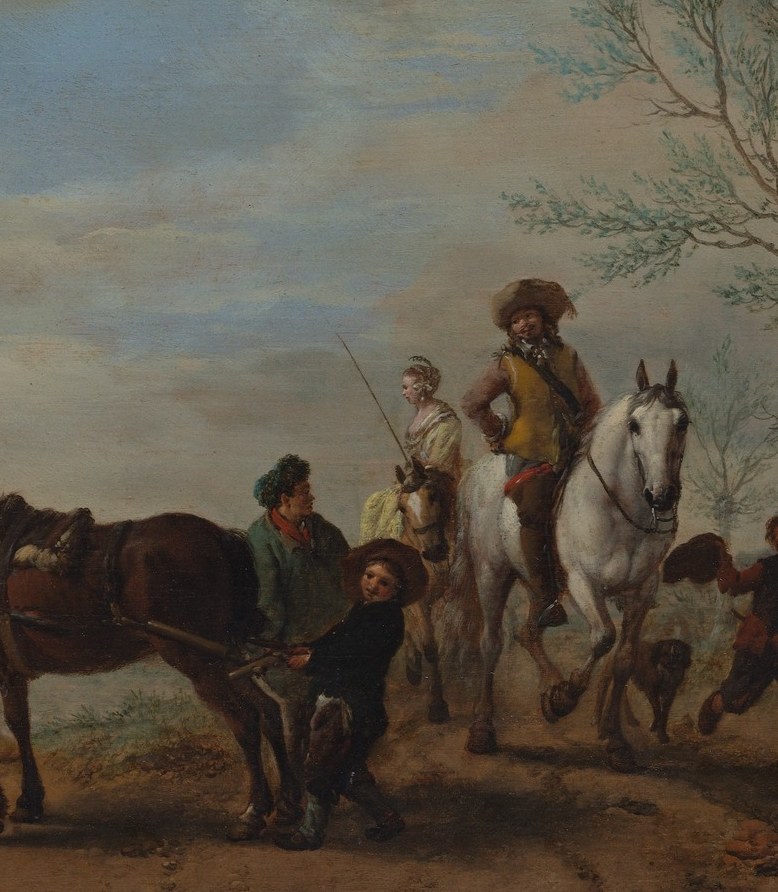
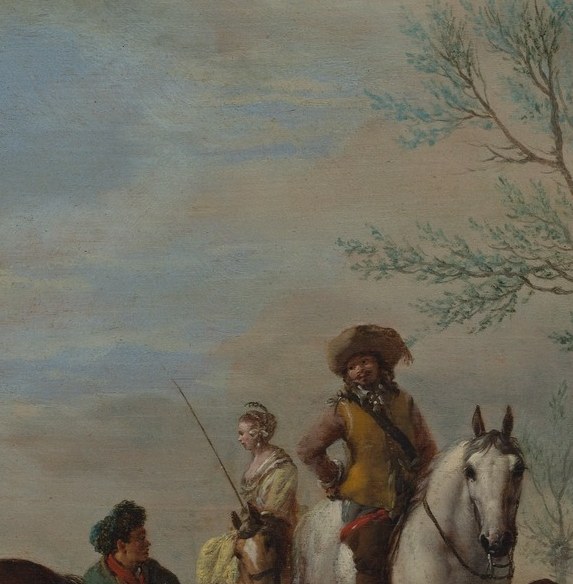
This is Philips Wouwerman's "A Man and a Woman on Horseback," painted in 1653. Before railways or asphalt, the unpaved road was a leveler in Dutch society. Everyone traveled the same ruts, breathed the same dust, and paused at the same streams.
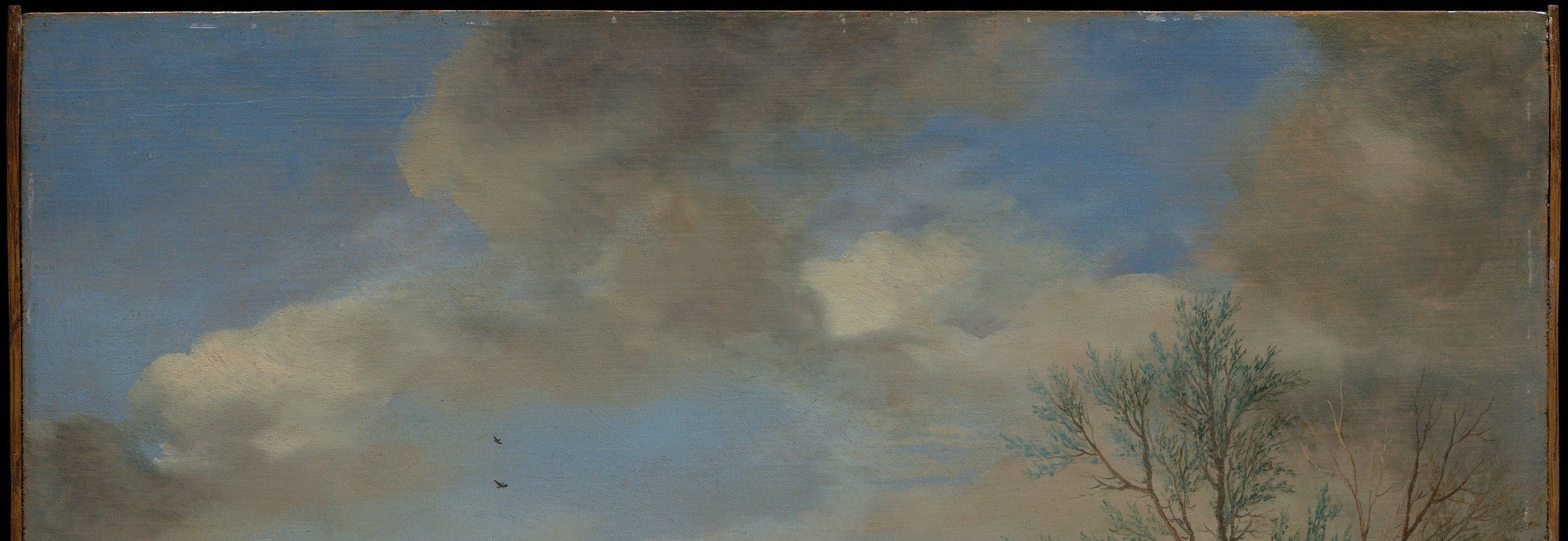
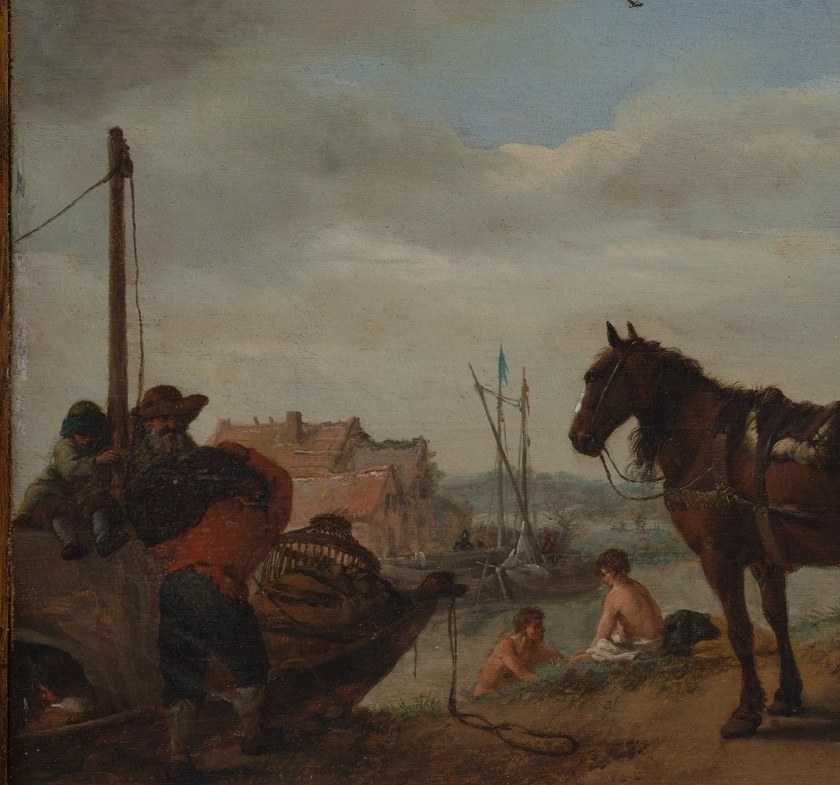
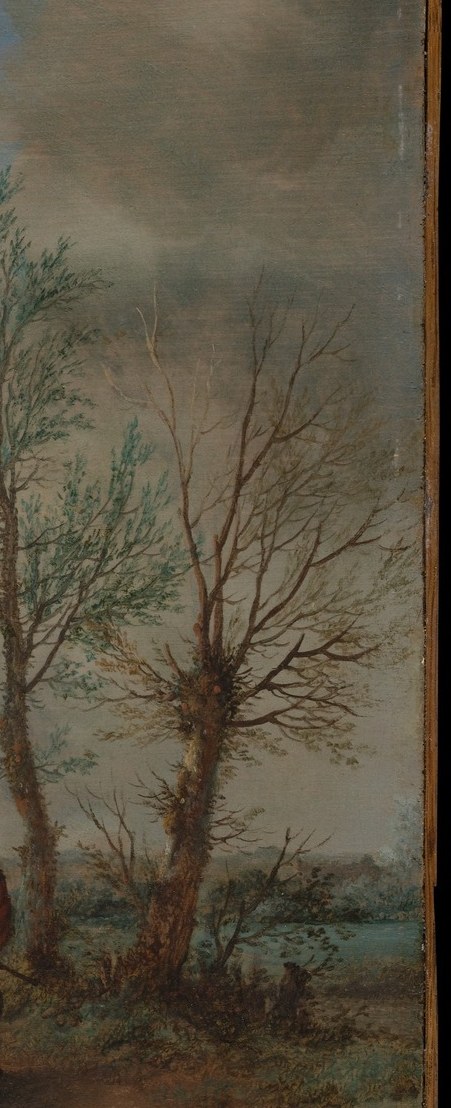
Look first at the luminous white horse in the center. A woman sits sidesaddle, an upright posture that signaled her status. The man beside her walks, guiding the horse. He is an escort, not a rider. Just behind them, a brown horse pulls a cart carrying two travelers. The social gap is visible in a single glance. Then scan the far edges of the painting. Bare winter trees mark the margins, and barely visible figures bend near a stream in the mid-left.
The Netherlands in the 1650s hummed with movement. The Dutch Golden Age had connected cities via a dense web of roads and waterways. Wouwerman, a Haarlem native, painted this busy artery as a small theater of daily life. The dramatic sky, with dark clouds breaking into light, was his signature. It turns a dusty commute into a moment worth witnessing.
A painting like this is a time machine made of oil paint. What would it sound like to stand on this road in 1653?
#arthistory #dutchgoldenage #philipswouwerman
Details
Transcript
The road was the artery of 17th-century Dutch life. Look who shares the same rutted earth. A woman rides sidesaddle, a gendered convention of the time. He walks and guides the horse. He escorts, she is conveyed. Behind them, common travelers rattle in a two-wheeled cart. And at the very edge, people crouch to cross a stream. This road carried everyone, long before cars or asphalt.