The Lamentation by Ludovico Carracci
View the artwork: The Lamentation →
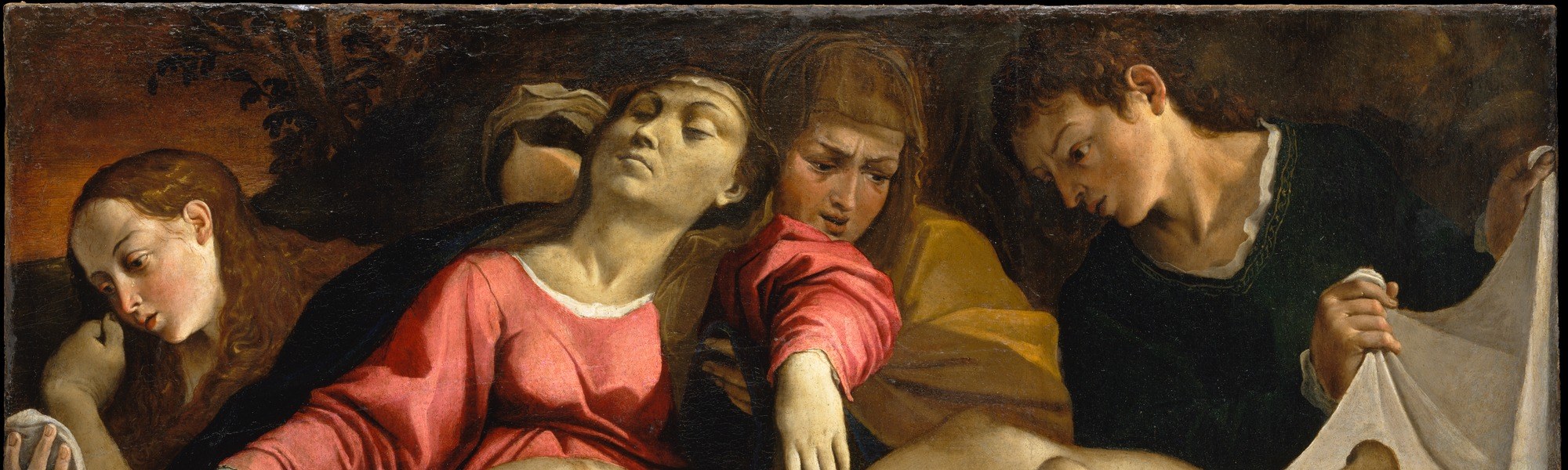
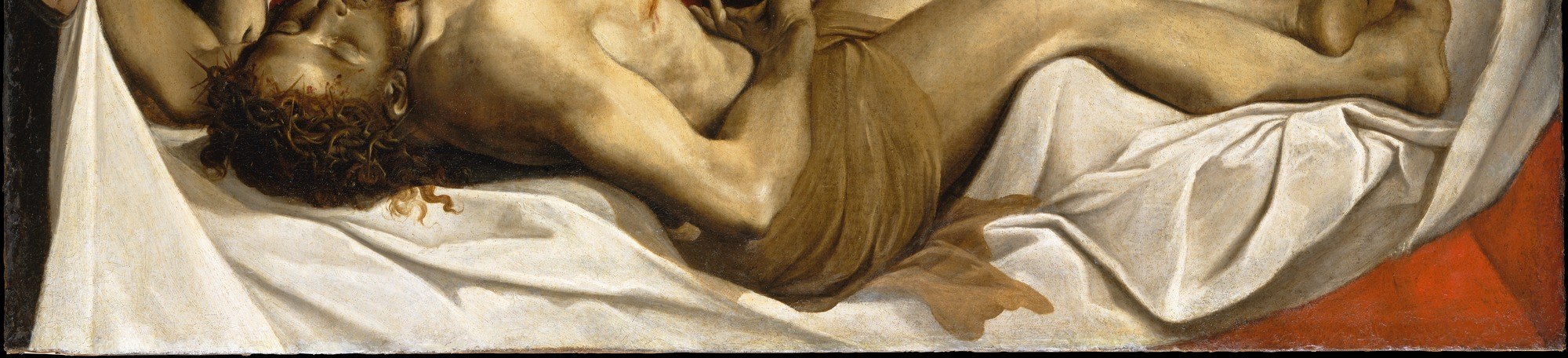
This is Ludovico Carracci's "The Lamentation," painted around 1582 and housed today at the Metropolitan Museum of Art. It shows the moment after the Deposition and before the Entombment, when Christ's body lies on the stone of unction and his followers gather one last time.
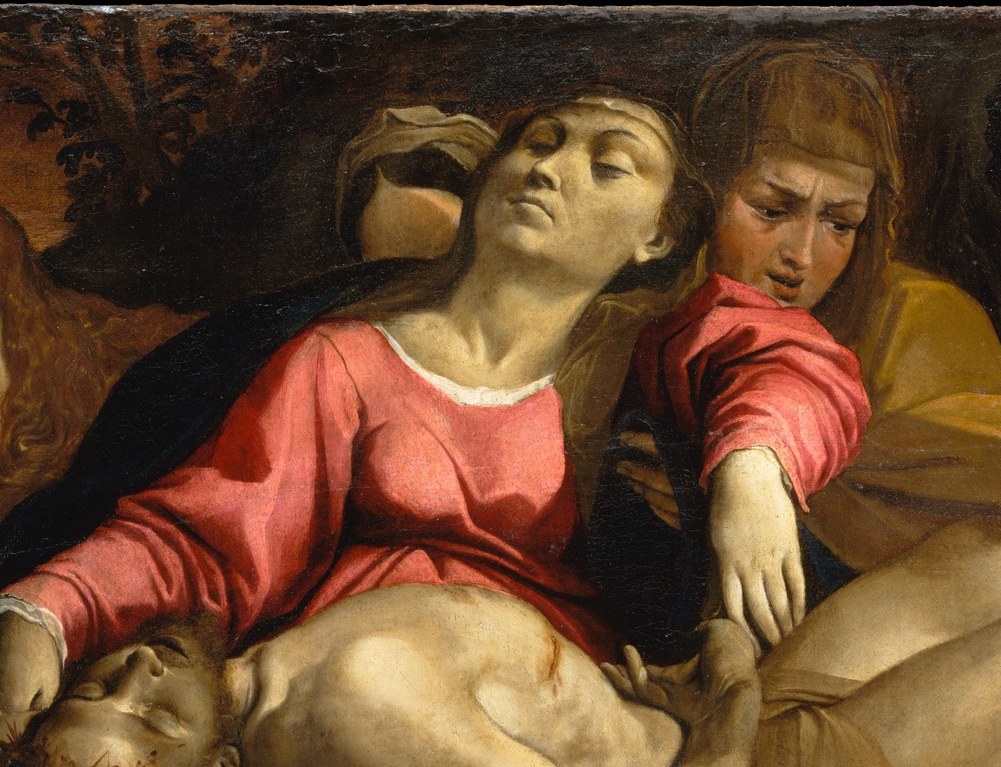
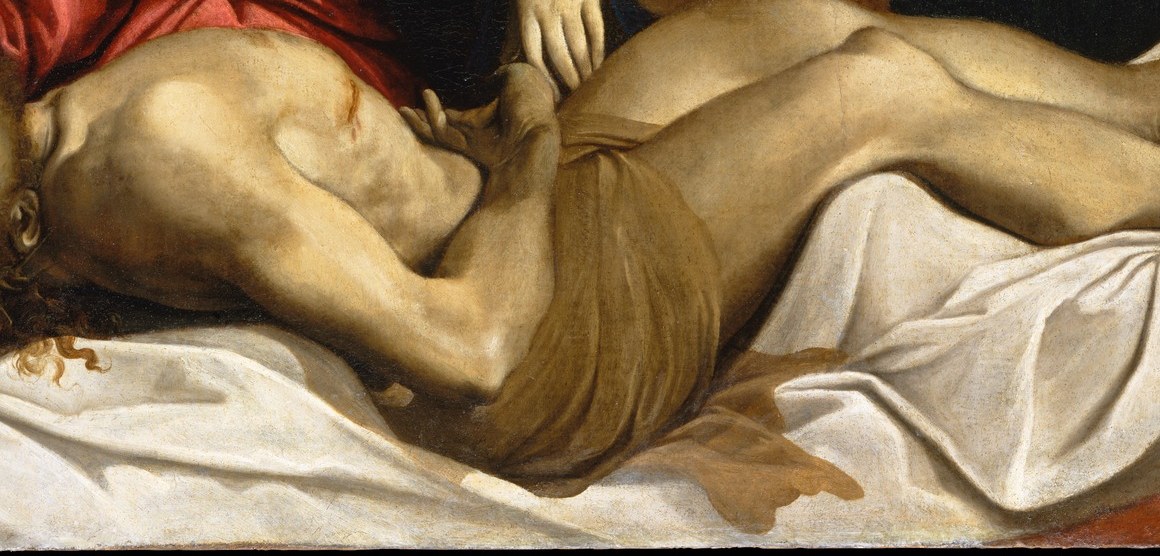
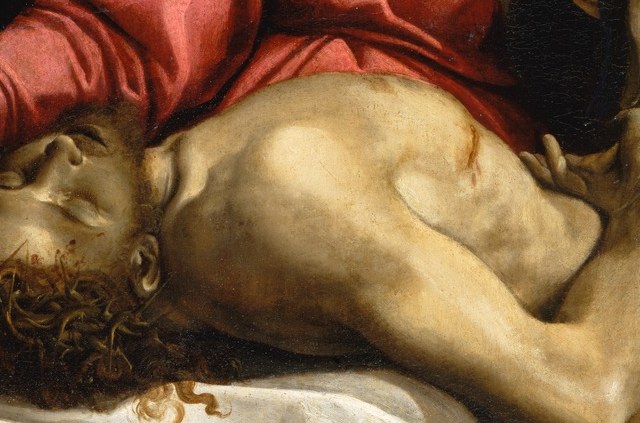
Carracci codes the scene through fabric. The white burial shroud is the brightest thing on the canvas, liturgical white, the color of the Eucharist and the Resurrection, already claiming the body as sacred before anyone speaks. Magdalene's red robe anchors the lower half; red is passion, both emotional and physical, the color of active, human grief. Across from her, John the Evangelist wears gold-yellow, the complementary counterweight. The Virgin Mary appears in shadowed restraint at upper left, her sorrow is withdrawn, theological, distinct from Magdalene's demonstrative mourning. A fifth figure at the far right is nearly swallowed by the black void, barely legible unless the image is brightened.
Ludovico Carracci (1555-1619) helped lead the Bolognese school's reform of religious painting. Alongside his cousins Annibale and Agostino, he pushed back against Mannerist artificiality by insisting on naturalism and legible emotion. "The Lamentation" is an early work, he was about 27, but the theatrical chiaroscuro and the color-coded theology are already fully formed. He uses darkness not as mood alone but as a spotlight: everything except the mourners and the body is eliminated, forcing the eye to stay inside the grief.
The painting works like a silent argument. Four colors, four roles, one body at the center. That is the whole Church, Carracci seems to say, gathered around the Eucharist, and the viewer is invited into the circle.
#arthistory #carracci #counterreformation
Details
Transcript
A dead man on a white cloth, ringed by mourners. Carracci makes you read the scene through color. Start with the brightest thing on the canvas: this shroud. Liturgical white, it means this body is not a corpse, it is the Host. The woman in saturated red bending over him: Mary Magdalene. Her face carries the human cost of the scene. Upper right, a man in a gold-yellow robe. St. John the Evangelist. Gold and red sit opposite each other, the beloved disciple and the forgiven woman in balance.