Edge of the Woods Near L'Hermitage, Pontoise by Camille Pissarro

This is Camille Pissarro's "Edge of the Woods Near L'Hermitage, Pontoise," painted in 1879 and held by the Musée d'Orsay. It looks like a study of perfect rural peace. But this painting spent years hidden inside a bank vault beside looted gold.

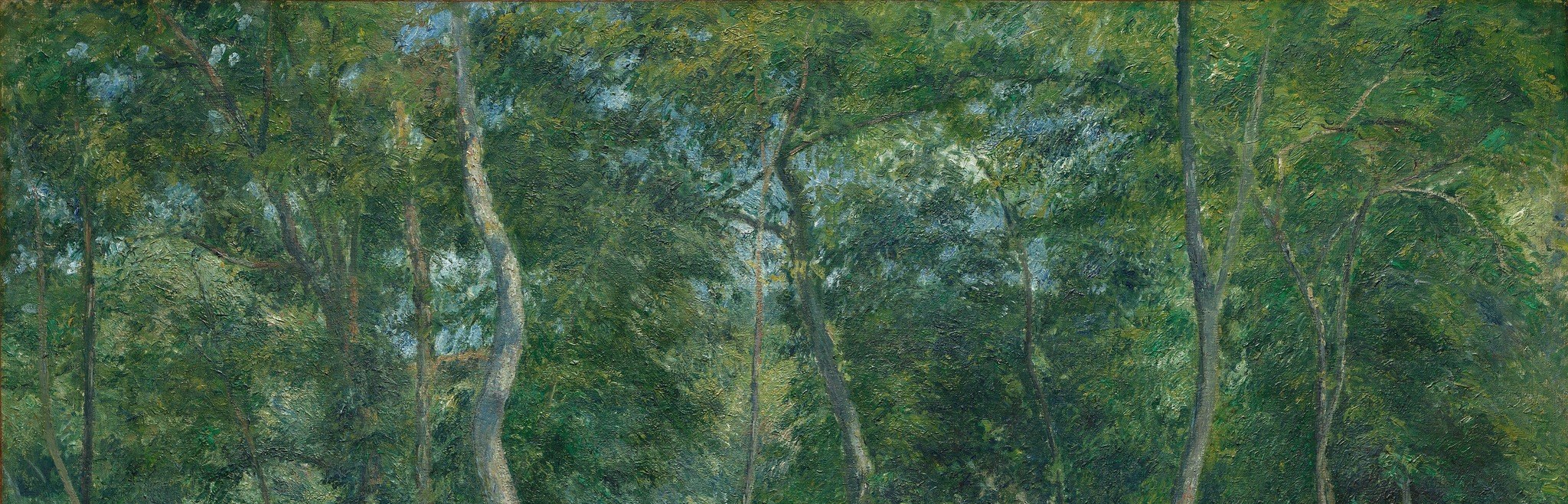
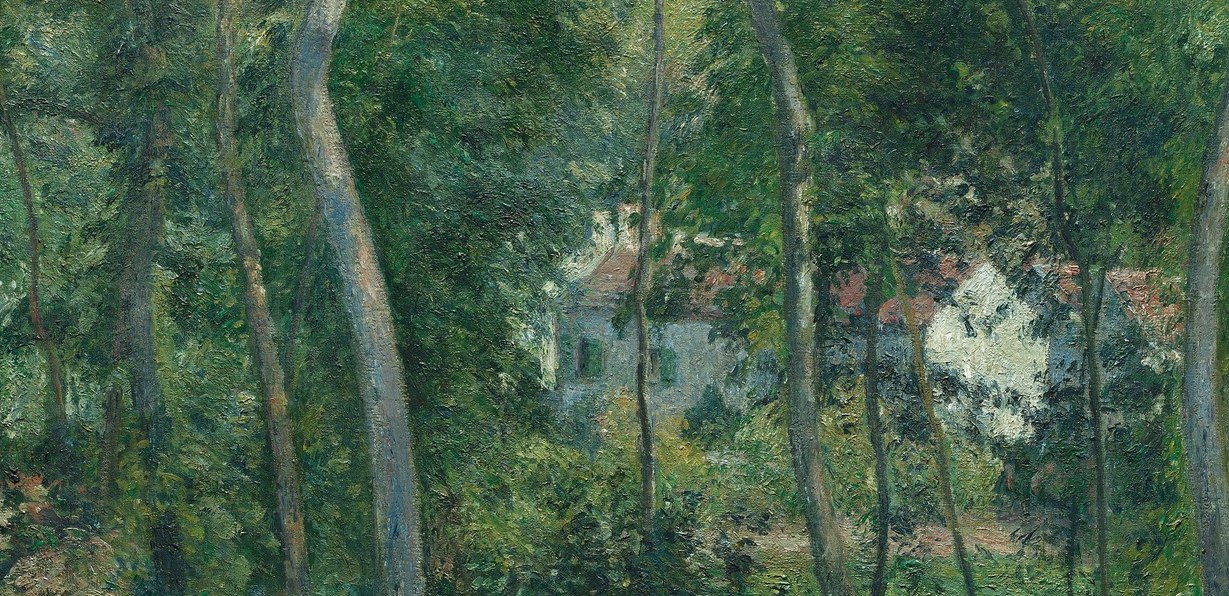
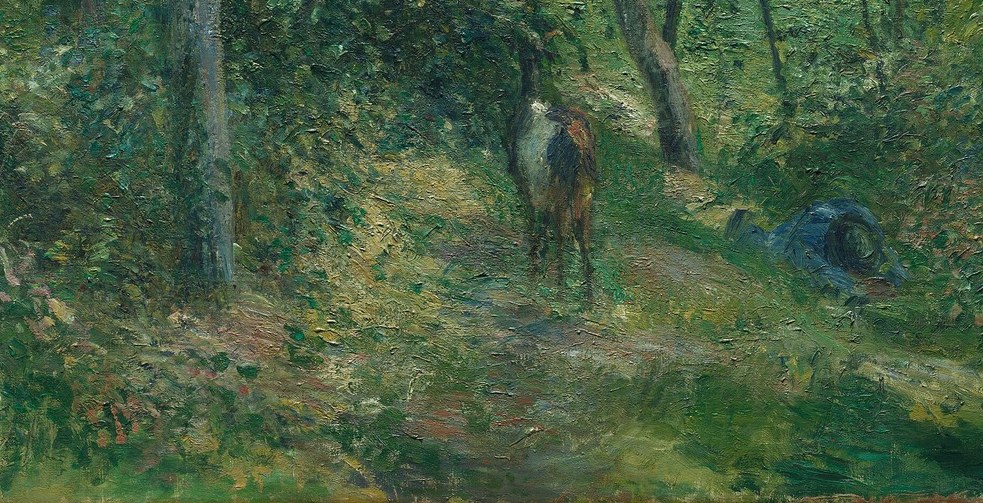
Look at the small figure under the trees at mid-left and the white house glimpsed through the dense green canopy. Pissarro built the entire composition around the dirt path curving in from the lower center, a classical device that pulls your eye from the deep shadow of the foreground into the sunlit ground beyond. The canopy itself is a mosaic of broken green dabs. He never painted a single leaf.

During the Nazi occupation of France, this canvas was confiscated and stored in a vault at the Société Générale bank. It sat alongside gold bars stolen from Jewish families. After the war it was recovered and eventually placed in the Musée du Luxembourg before moving to the Musée d'Orsay.

A painting of a man alone on a path, carrying the weight of what happened to it. What do you carry when you walk through a quiet wood?

#arthistory #impressionism #pissarro

Details
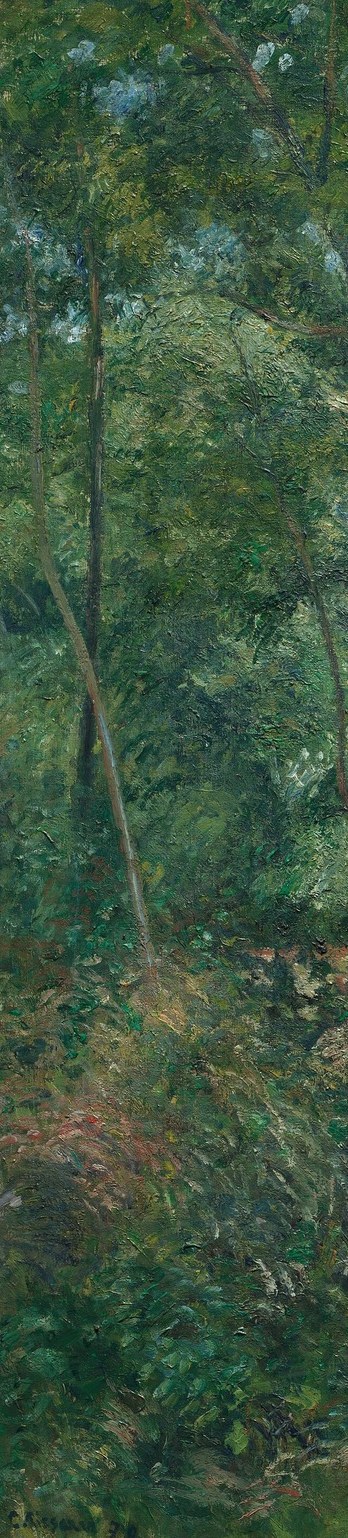
The most prominent vertical anchor of the composition; its lean and texture pull the eye deep into the forest, revealing Pissarro's interest in bare structure against lush green.
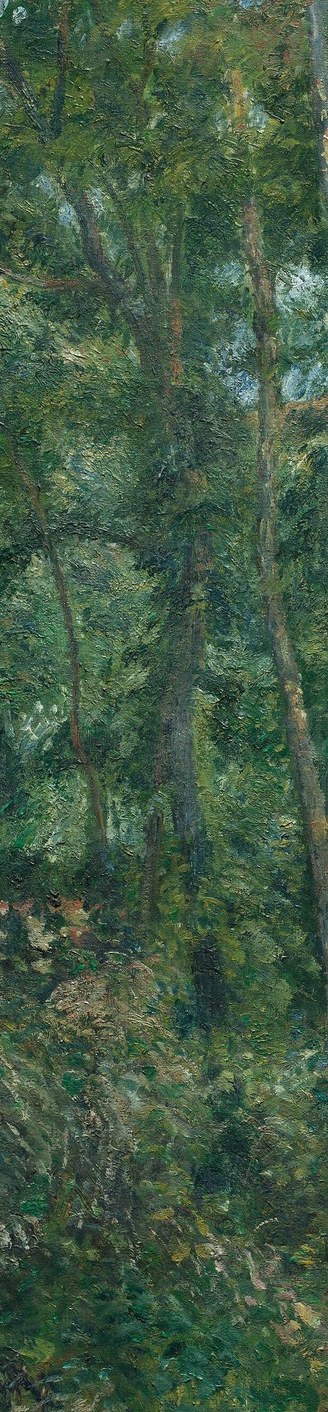
Pissarro's broken brushwork is most legible here; individual dabs of green, blue-green and yellow-green mosaic together to suggest light filtering through leaves rather than describing any single leaf.
Paired with the first trunk it creates a natural frame, a Barbizon device Pissarro inherited and re-deployed with Impressionist looseness.
This passage demonstrates Pissarro's atmospheric depth: colour grows cooler and less saturated with each receding plane, creating convincing aerial perspective entirely through hue rather than line.
The warmest, lightest zone of the forest floor; the soft ochre-green suggests dappled sunlight reaching the ground, giving spatial depth and a sense of midday calm.
Transcript

A quiet path into the woods. Nothing more. Painted by Camille Pissarro in 1879. Sunlight breaks through the canopy, landing here. A small figure stands alone among the trees. In 1940, the Nazis looted this painting. It was hidden inside a French bank vault. Stored beside gold bars stolen from Jewish families. A scene of perfect calm, built from a crime.