Dune Landscape with Figures by Philips Wouwerman
View the artwork: Dune Landscape with Figures →
Philips Wouwerman’s “Dune Landscape with Figures” (circa 1644) is a painting that rewards the slow viewer. Housed in a prominent collection, it was created at the height of the Dutch Golden Age by an artist known for his luminous scenes of travel, hunting, and battle.
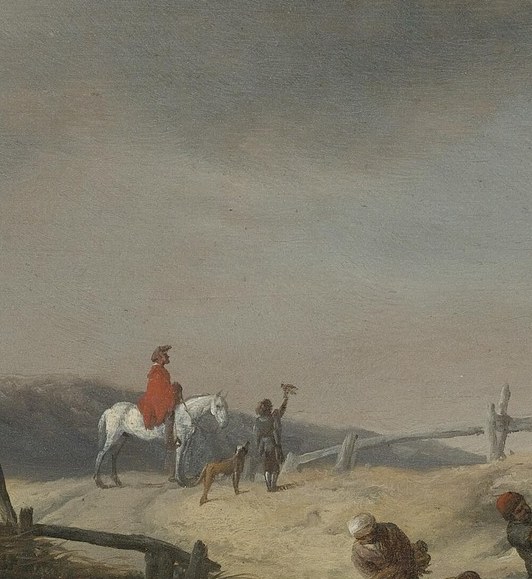
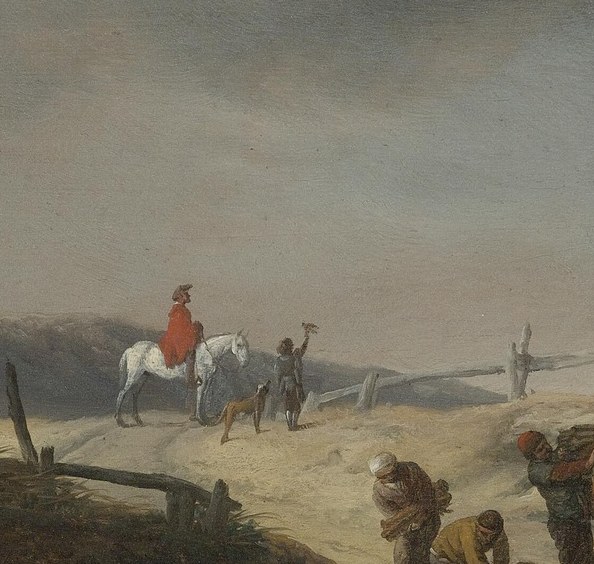
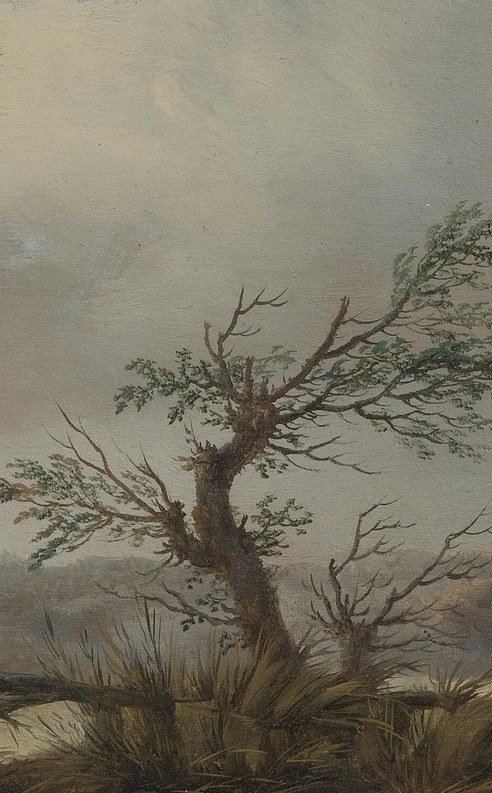
Your eye lands immediately on the man in the red coat on the white horse, a pure compositional anchor. But stay with the painting. Notice the dog trotting at his feet, a sign that this is an ordinary journey, not a grand procession. Then scan the far-left background, past the bending tree and the huddled travelers on foot.
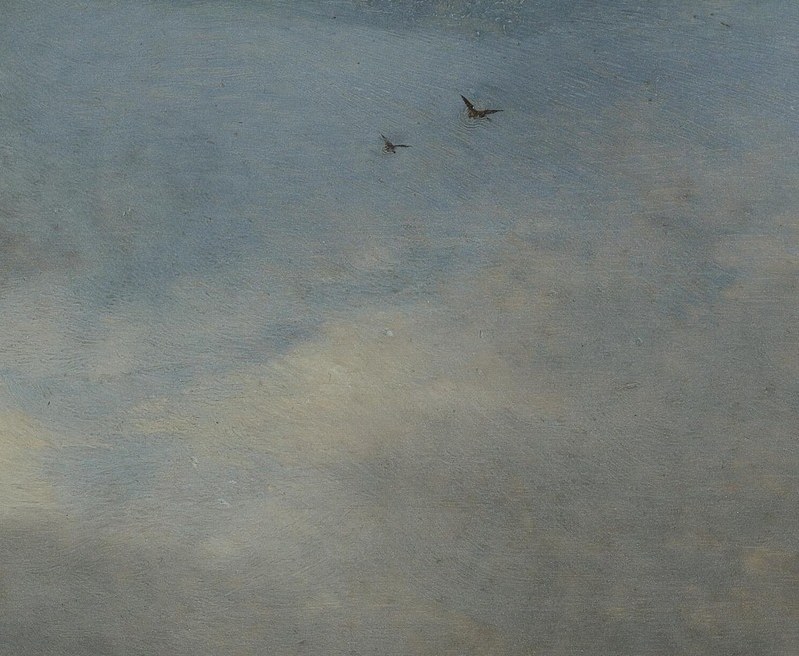
There, in the pale haze, is a tiny glint of water or wet sand. This detail, easy to scroll past but inescapable if you look, confirms the painting’s true geography. The figures are not lost in an inland desert of sand; they are traversing the coastal dunes of the Netherlands, with the North Sea just out of frame.
Wouwerman joined the Haarlem Guild of St. Luke and became one of the most prolific painters of his day. The little glint is his quiet signature of truth, a reminder that the world of a 17th-century painting often extends far beyond its immediate foreground.
#arthistory #dutchgoldenage #philipswouwerman
Details
Transcript
At first glance, just a group traveling through the dunes. The man in red leads the way. His horse marks his status. A dog trots at their feet. This is a daily routine, not a military march. Philips Wouwerman painted this in 1644, during the Dutch Golden Age. Now look to the far left. Past the figures, past the dune. A faint glint of water. They are traveling right along the coastline.