View of the Schuylkill County Almshouse Property by Charles C. Hofmann
View the artwork: View of the Schuylkill County Almshouse Property →
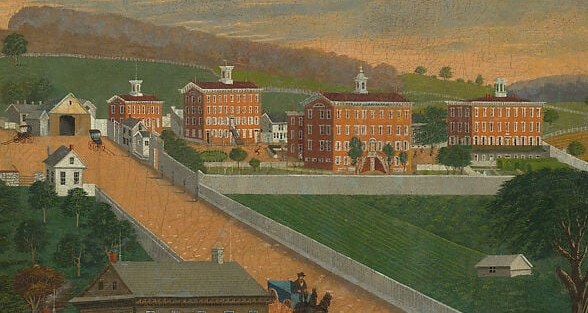
View of the Schuylkill County Almshouse Property, painted by Charles C. Hofmann in 1876, is a transaction preserved on canvas. Hofmann was an itinerant sign-painter who suffered from alcoholism and often found himself destitute; he traded paintings to almshouses and innkeepers across eastern Pennsylvania in exchange for room and board. This precise, luminous view of a rural poorhouse is his receipt, now held in The Met's American Wing.
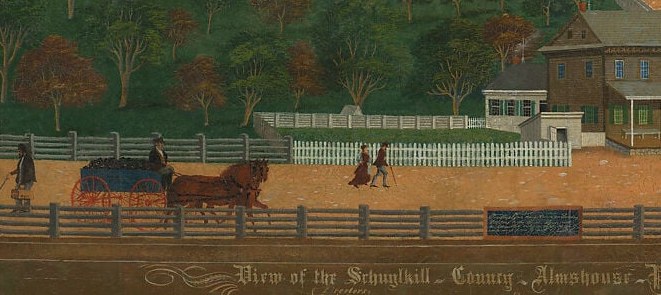
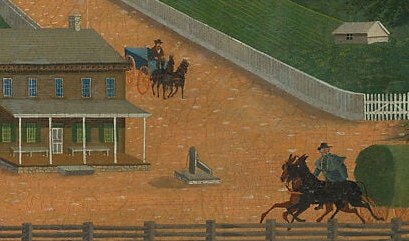
The painting is built like a sign, with a clear, legible inscription across the lower margin and the vivid, almost enameled color of a man trained to make things readable from a distance. The long wooden fence in the foreground does not just frame a pastoral view: it marks the literal boundary of county property, a line between the self-sufficient farm and the world outside. The almshouse itself was a working institution, and the grazing horses in the right pasture signal the inmates' labor growing their own food.
This almshouse was part of a 19th-century Pennsylvania system that offered shelter to the indigent, the elderly, and those without family, often in exchange for work. Hofmann's own life traced that same precarious edge. By 1882 he had died in another such institution, leaving behind a trail of these documentary views as the price of his care.
A painting like this raises a quiet question about value: what does it cost to be remembered, and who gets to set the price?
#arthistory #americanart #folkart
Details

Transcript
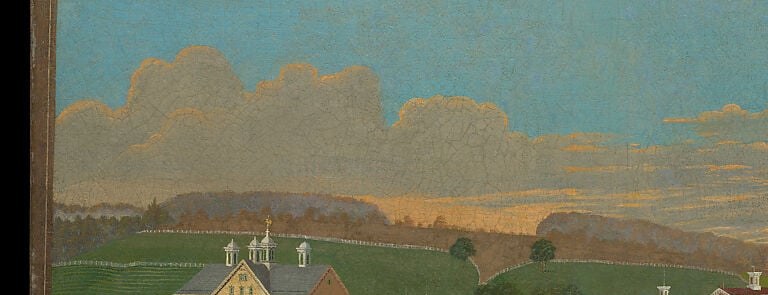
An almshouse was the last resort for Pennsylvania's poor. The painter gave it a postcard sky, bright and benevolent. Look along the bottom edge. That lettering is precise. Charles C. Hofmann was a sign-painter by trade. He settled his debts with paintings when money ran out. In 1876, this canvas covered his keep inside these walls.