The Hatch Family by Eastman Johnson
View the artwork: The Hatch Family →
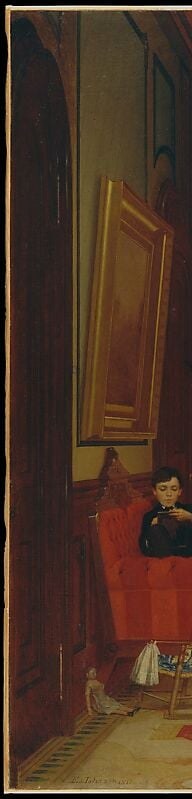
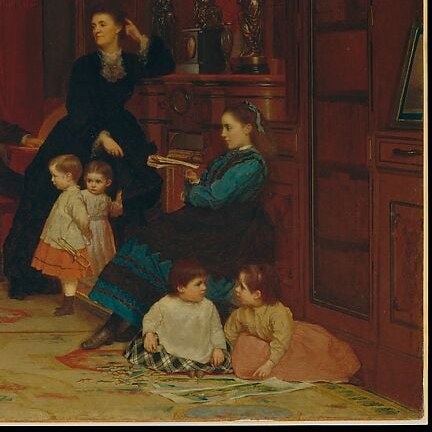
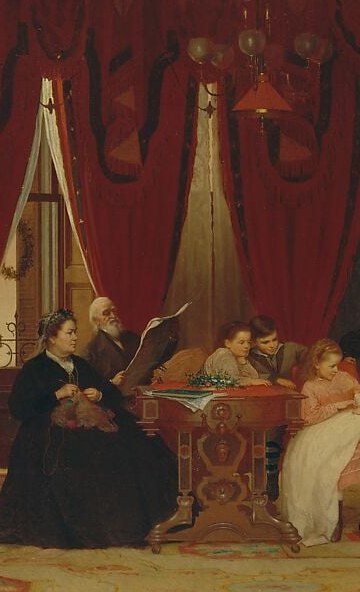
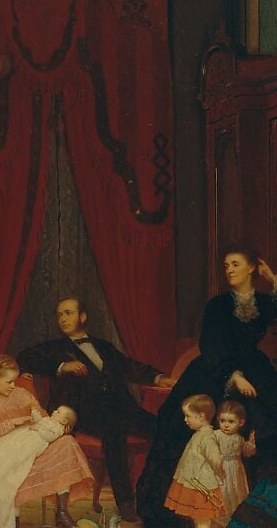
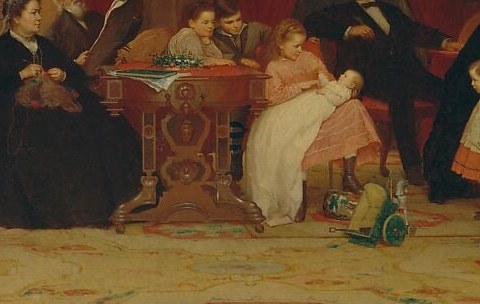
This is The Hatch Family by Eastman Johnson, painted in 1870-71. It hangs at the Metropolitan Museum of Art, which Johnson himself co-founded. On its surface, it is a warm, unposed snapshot of a Victorian family gathered around a mother reading aloud. But it is also the survivor of a brazen art theft.
In 1996, while on loan to a gallery in New York, the painting was cut clean from its frame and stolen. The thief contacted the gallery and demanded twenty thousand dollars in ransom. The FBI set up a sting operation, and an undercover agent recovered the painting in a McDonald's parking lot in New Haven, Connecticut. The man was arrested, and The Hatch Family returned to museum walls.
Look at the soft daylight suffusing the room, Eastman Johnson was called the American Rembrandt for his ability to paint interior atmosphere without showing its source. The models were his own family, his wife Elizabeth and their children, which accounts for the scene's genuine, unposed quality. The little figure at floor level far right isn't immediately obvious; that may be the youngest child or a family dog, a detail that rewards the patient eye.
Johnson painted this celebration of domestic peace just after the Civil War, when Americans were reimagining the home as a refuge. That image of fragile, everyday harmony is precisely what someone tried to sell back to us in a parking lot.
#arthistory #eastmanjohnson #truecrimeart
Details
Transcript
It looks like a quiet family evening in 1871. A mother reads aloud. Children sew and listen. The painter used his own wife and children as models. In 1996, this painting vanished from a gallery wall. Cut right from the frame. A ransom call followed. The FBI traced it to New Haven. The thief was a local. He asked for twenty thousand dollars to get it back. An undercover agent recovered it. The family came home.