Madonna and child by Master of the Female Half-Lengths
View the artwork: Madonna and child →
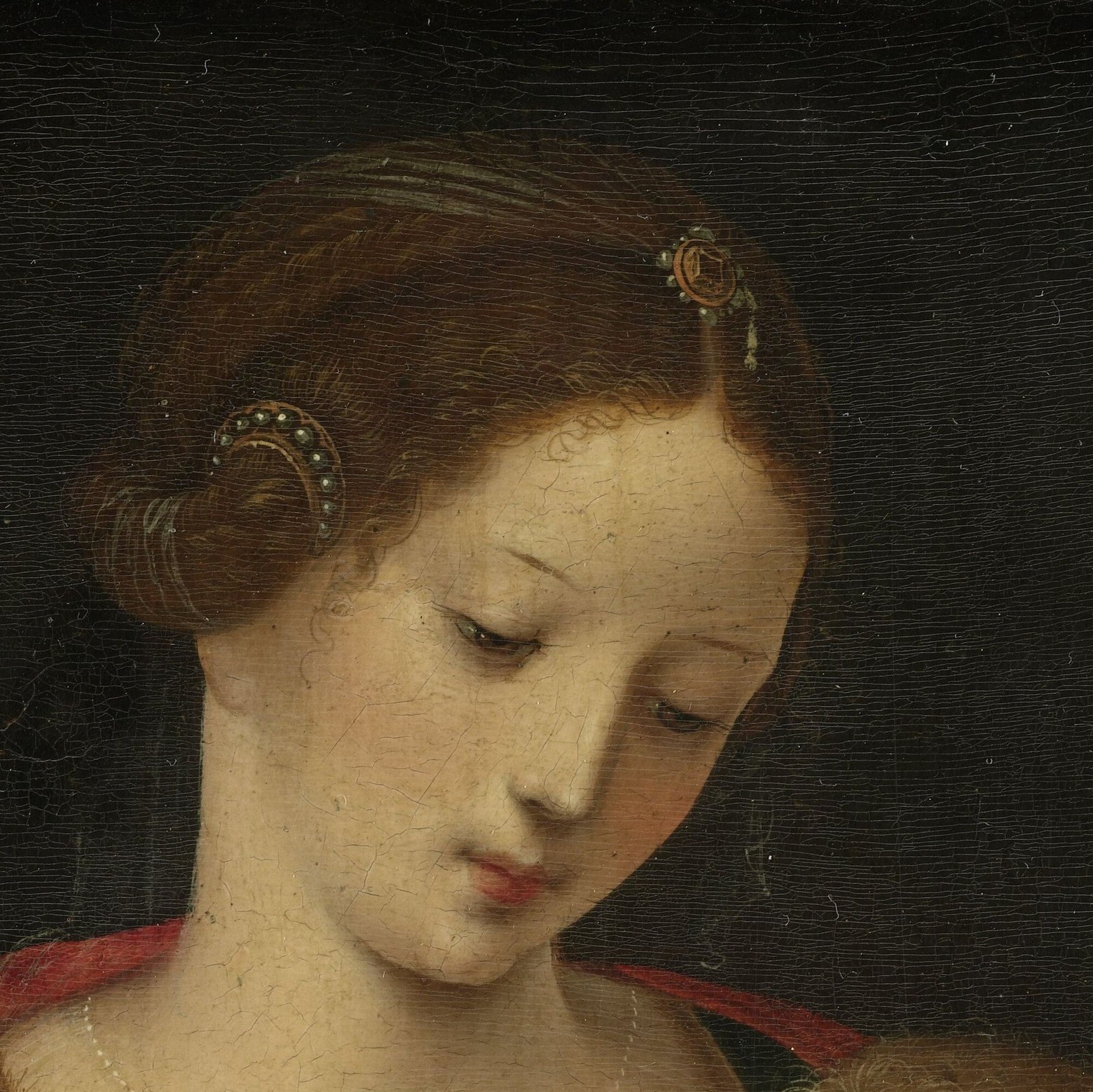
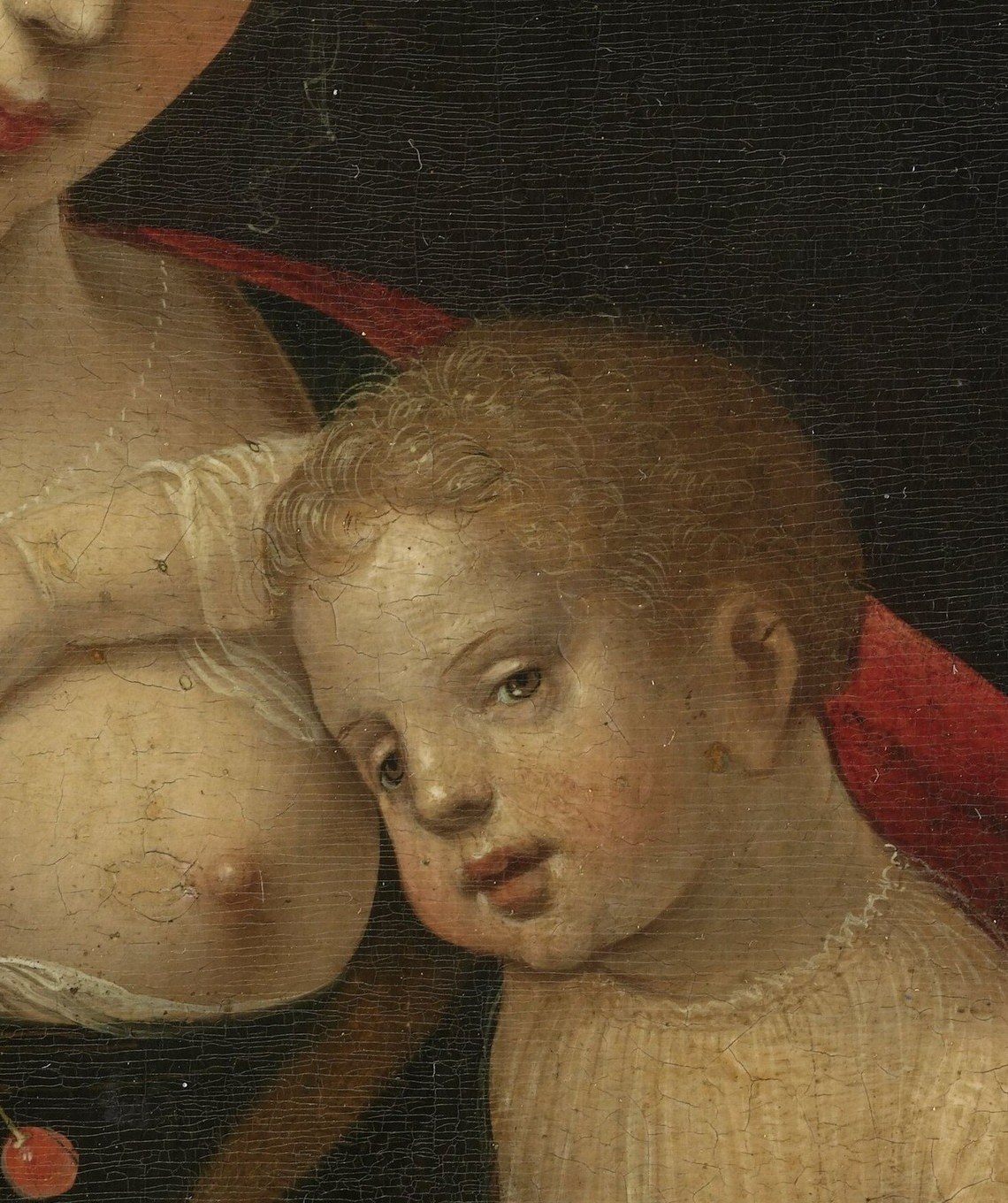
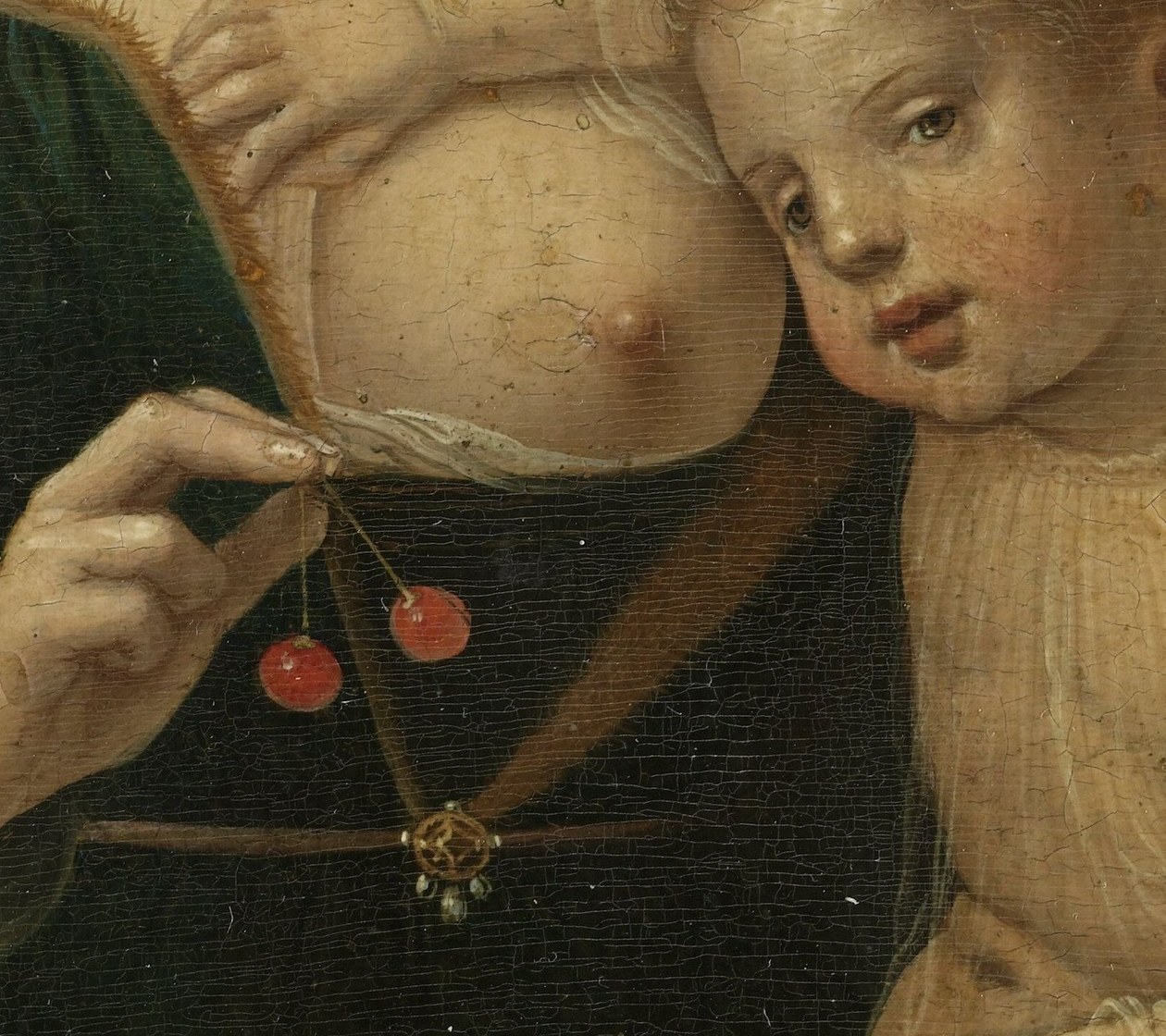
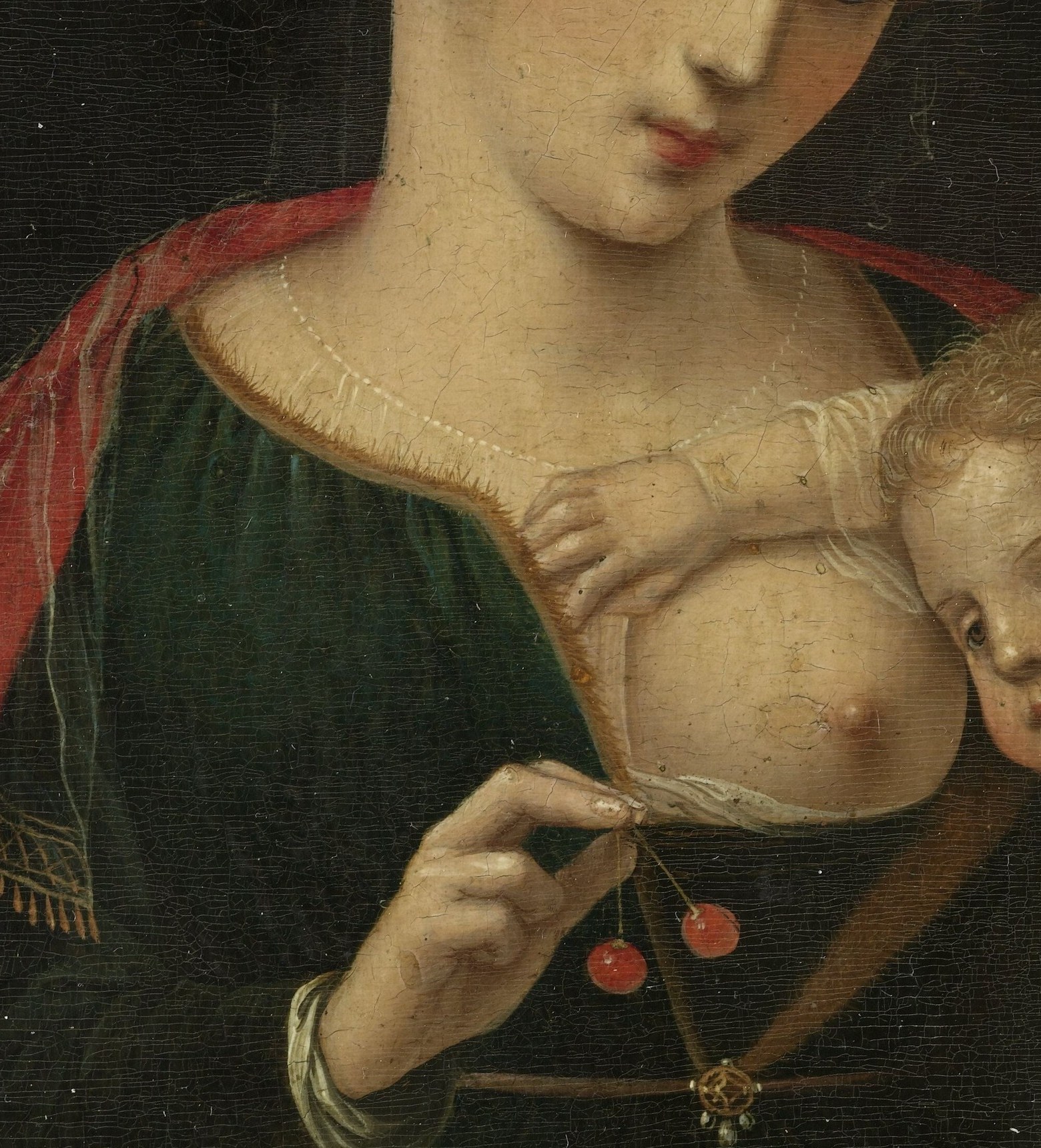
This is *Madonna and Child*, painted around 1530 by an artist known only as the Master of the Female Half-Lengths. The painting lives at the intersection of tenderness and theology, and the single most arresting detail is how casually the infant reaches for the red-beaded necklace his mother offers. He is not distracted or playing. He is accepting.
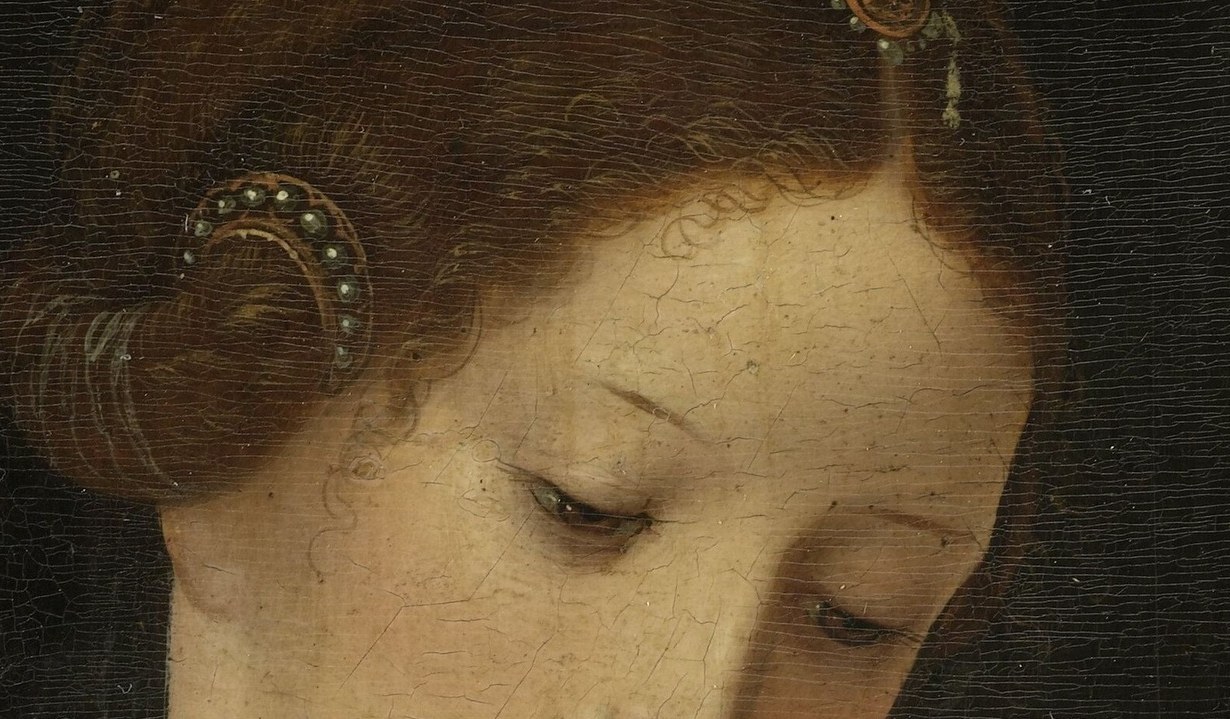
Look at the beads themselves. In 16th-century Antwerp, red coral was a common protective charm for children, something any mother would recognize. But in a Marian painting, red beads also carry an unavoidable second meaning: blood, and the sacrifice to come. Mary’s right hand presents the beads with the formality of a liturgical gesture. The child’s left hand reaches out to grasp them. Their eyes stay on each other, locked in a private understanding the viewer is not invited to interrupt.
The artist was likely the head of a workshop in Antwerp, active between about 1520 and 1540, whose real name is lost. The notname “Master of the Female Half-Lengths” comes from a single painting of three young women making music, and it now covers dozens of small-scale domestic and religious panels. None carry a signature. None were tied to a specific patron. This was work made for the open market, for private homes, for quiet devotion.
The dark background isolates the two figures completely. There is no landscape, no architecture, no distraction. Just a mother, her child, and the object that will one day become a wound. She does not weep. She holds him. He does not flinch. He reaches.
#arthistory #renaissanceart #flemishart
Details
Transcript
She holds him close, her face untroubled. But her eyes won't meet yours. They look only at him. Between them, a string of blood-red beads. He reaches for it without hesitation. Coral beads were a charm to keep children safe. But here, red also meant sacrifice. He accepts his fate. The painter is anonymous, a forgotten workshop in Antwerp. The figures alone in the darkness, holding onto each other.