The Empress Elizabeth of Russia (1709–1762) on Horseback, Attended by a Page by Georg Cristoph Grooth
View the artwork: The Empress Elizabeth of Russia (1709–1762) on Horseback, Attended by a Page →
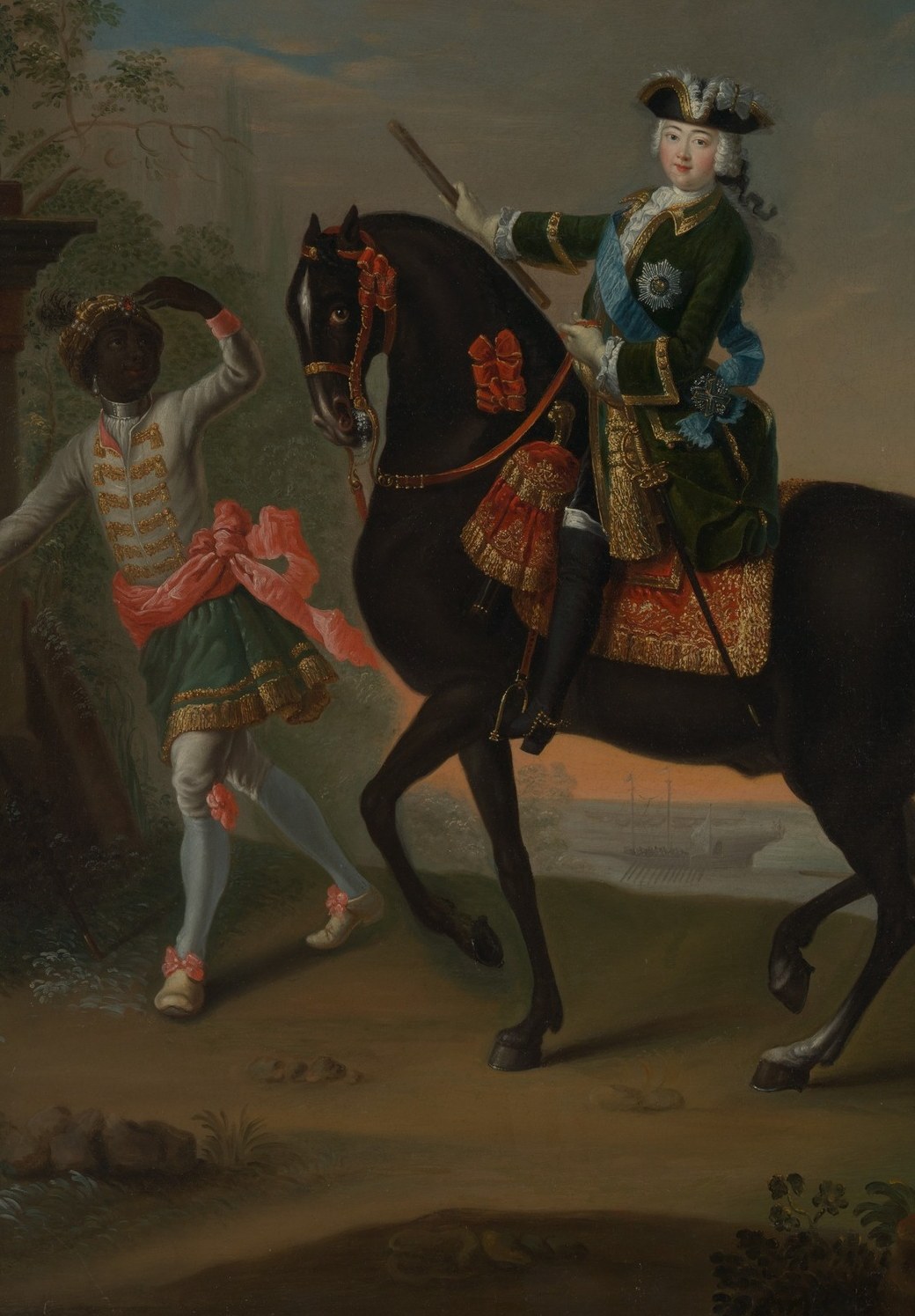
This is the first equestrian portrait ever painted of a Russian empress. 'The Empress Elizabeth of Russia on Horseback, Attended by a Page,' by German painter Georg Cristoph Grooth, dates to 1743 and hangs in the Metropolitan Museum of Art.
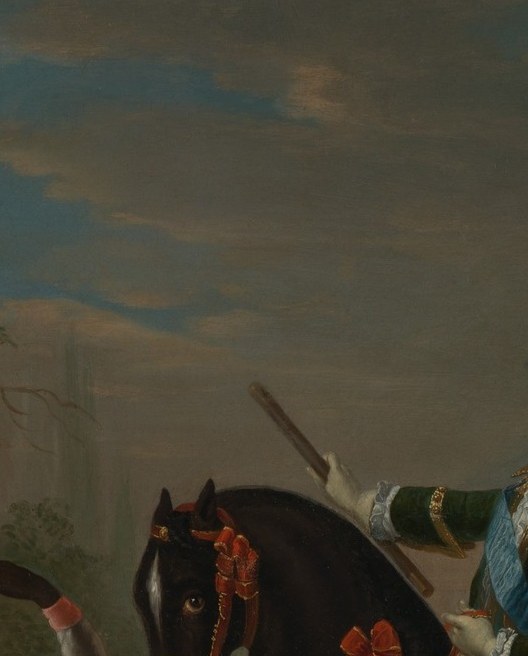
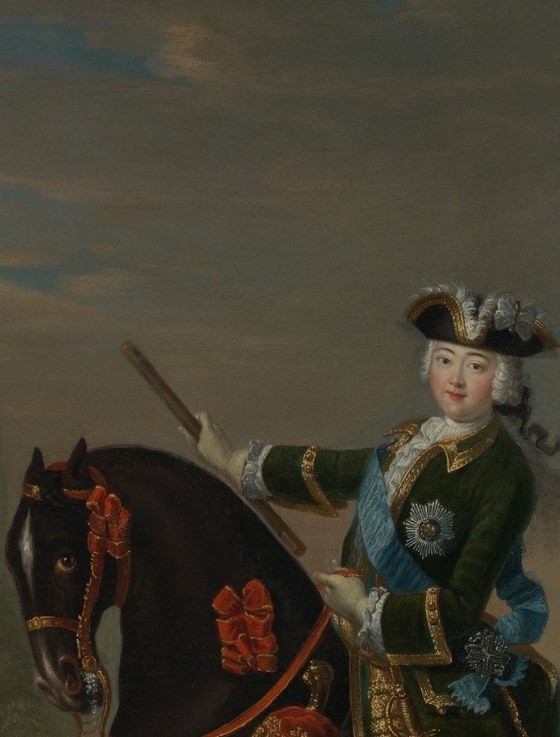
Grooth places Elizabeth Petrovna, daughter of Peter the Great, on a black horse in the uniform of the Preobrazhensky Life Guards. She holds a field marshal's baton. Behind her, ships flying the St. Andrew flag recall Russia's naval victories in the Russo-Swedish War. Every symbol insists: she is her father's military heir, a woman with absolute command.
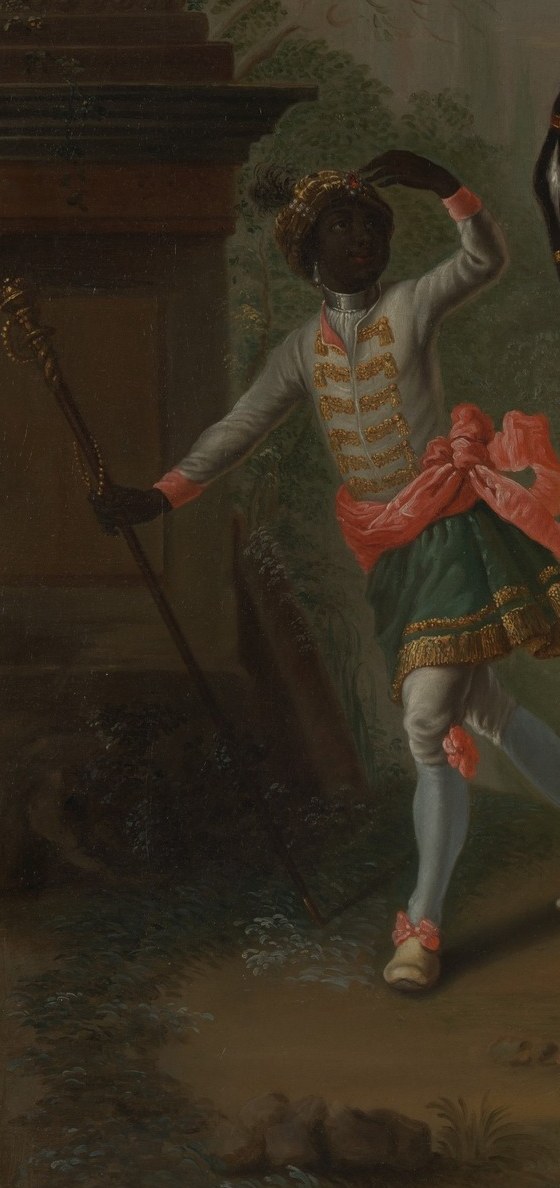
At her side, a Black page kneels in fine livery. The Russian court had employed Black attendants for ceremonial duties since the seventeenth century. They appear in multiple imperial portraits of the period. This child's real name, like most of the others, was not preserved in the painting's title or records.
The painting made Elizabeth's authority visible in a way no earlier portrait of a Russian empress had. It was copied by Grooth's student, reproduced as a Meissen porcelain figure, and held up as the image of her reign. Grooth himself arrived in Saint Petersburg the year he painted it, was named court painter, and died six years later at thirty-three.
Two figures share the frame. One shaped an empire's image. The other was placed there to serve it.
#arthistory #russianart #portraiture
Details

Transcript
She was the first Russian empress ever painted on horseback. She wears the uniform of the Preobrazhensky Life Guards. In her hand: a field marshal's baton. She commands the army. Beside her, a kneeling page. One of the Imperial Court's Black attendants. A child, whose name the painting does not record.