Madonna and Child with Saints Michael and John the Baptist; The Noli Me Tangere; The Conversion of Saint Paul by http://www.wikidata.org/.well-known/genid/7bb9a5ea82a298a6921fb5d646211d6b
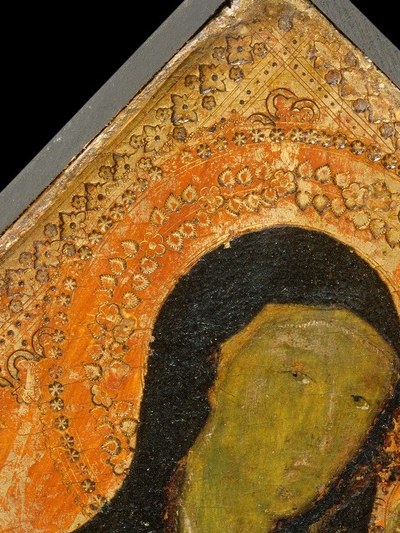
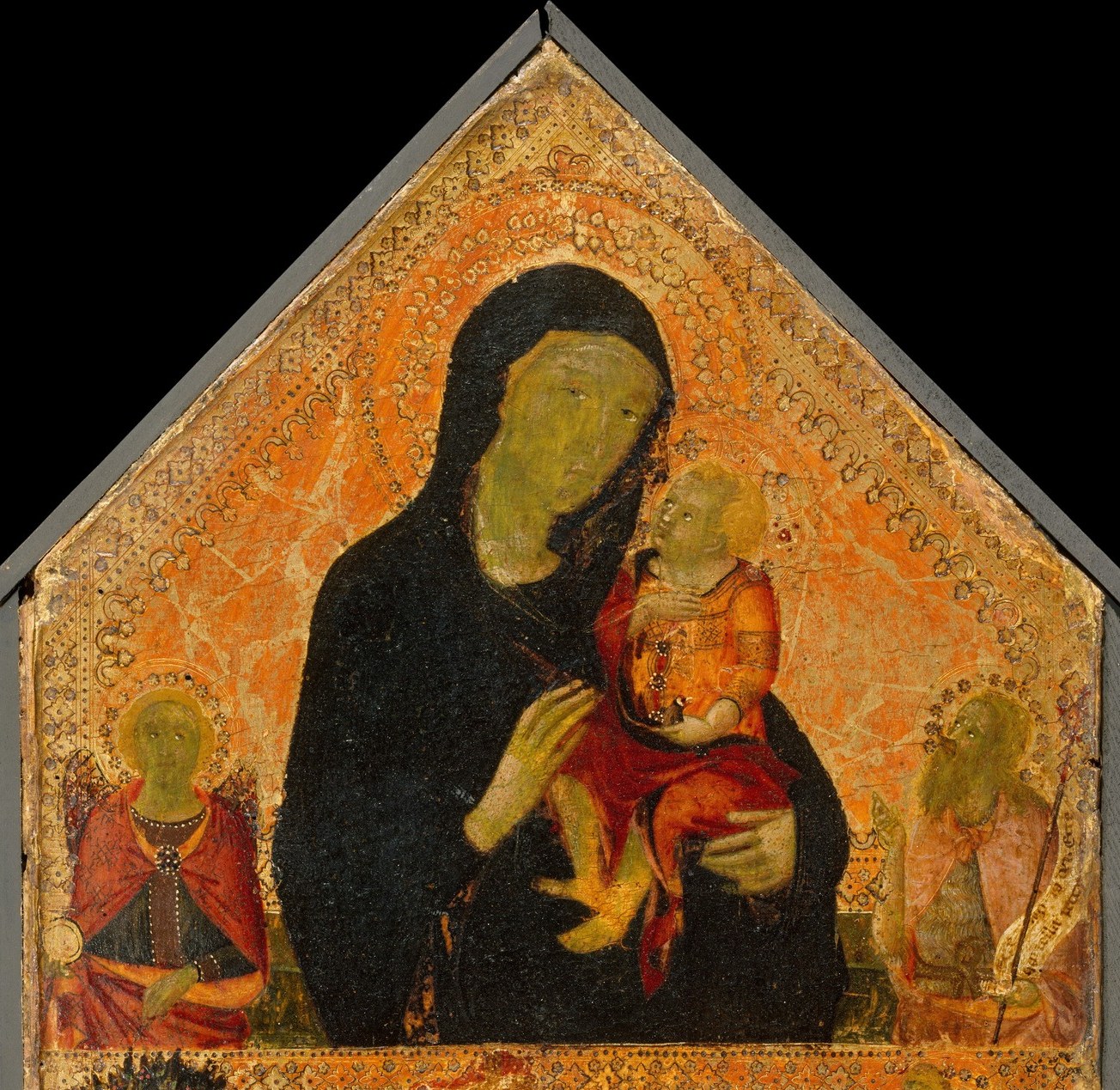
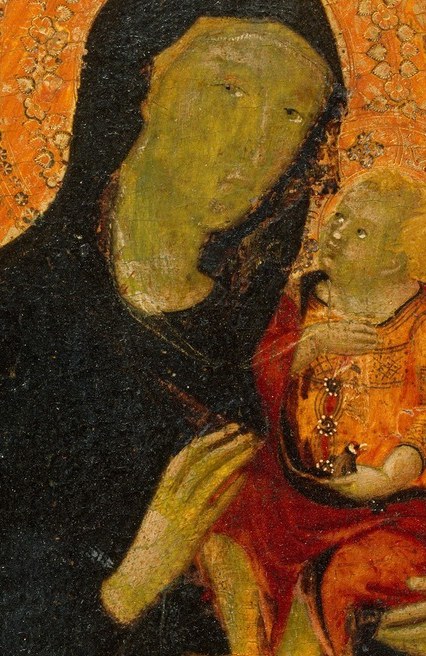
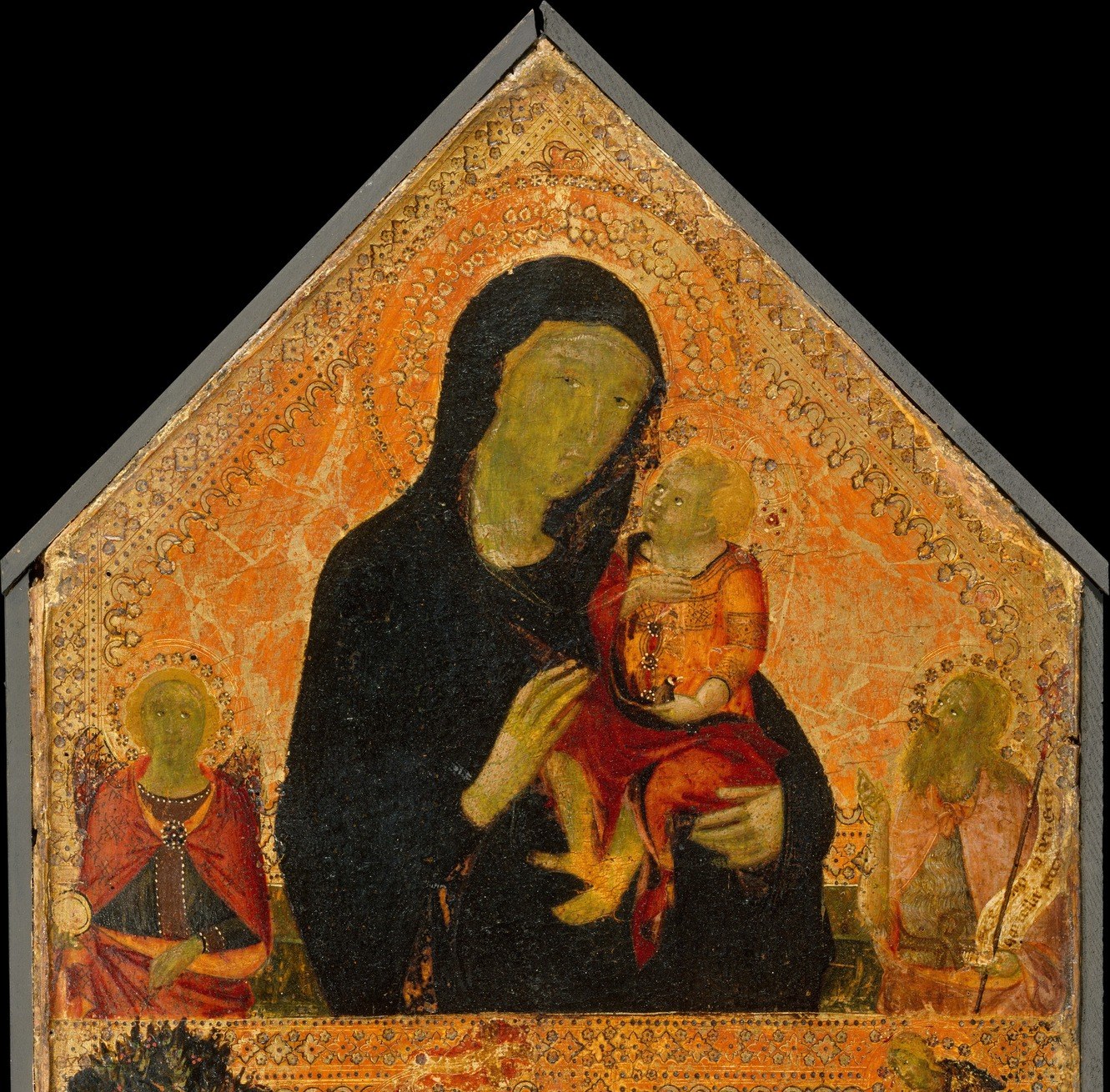
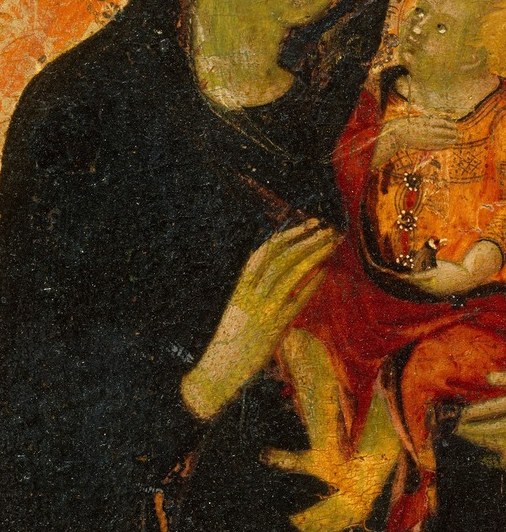
Circle of the Master of the Strauss Madonna painted this altarpiece around 1400 in Siena. It now hangs in the Museum of Fine Arts, Boston. The upper register gives us exactly what a 14th-century congregation expected, the Madonna enthroned, surrounded by gold and saints. But the lower predella panel contains a scene of startling emotional intelligence.
The Noli Me Tangere scene below shows Christ after the Resurrection, turning from Mary Magdalene. Look at her hands. They are not folded in prayer. They are stretched out, reaching after him. The Latin title means 'Do not touch me,' but the Greek verb in the Gospel of John is stronger, it means 'stop holding on' or 'cease clinging.' She has already touched him. This is the moment of letting go.
That this small, tender narrative sits beneath the formal icon of the Queen of Heaven is the painting's theology made visible. The sacred and the human, stacked together. The artist gave the Magdalene the only truly kinetic body in the whole work, everything else is still, frontal, eternal. She alone reaches across the gap.
A 600-year-old tempera panel, and what lingers is an outstretched hand and the space between it and a vanishing Christ.
#arthistory #sienesepainting #sacredart
Details
Transcript
A Madonna, solemn and golden. A standard altarpiece. But the real story is below her feet. A garden. The risen Christ, turned away. And Mary Magdalene, reaching. Prostrate with longing. Christ said, 'Do not touch me.' The Greek verb means 'stop clinging.' She had already held onto him. And then she let go.