Italian Coast Scene with Ruined Tower by Cole, Thomas
View the artwork: Italian Coast Scene with Ruined Tower →
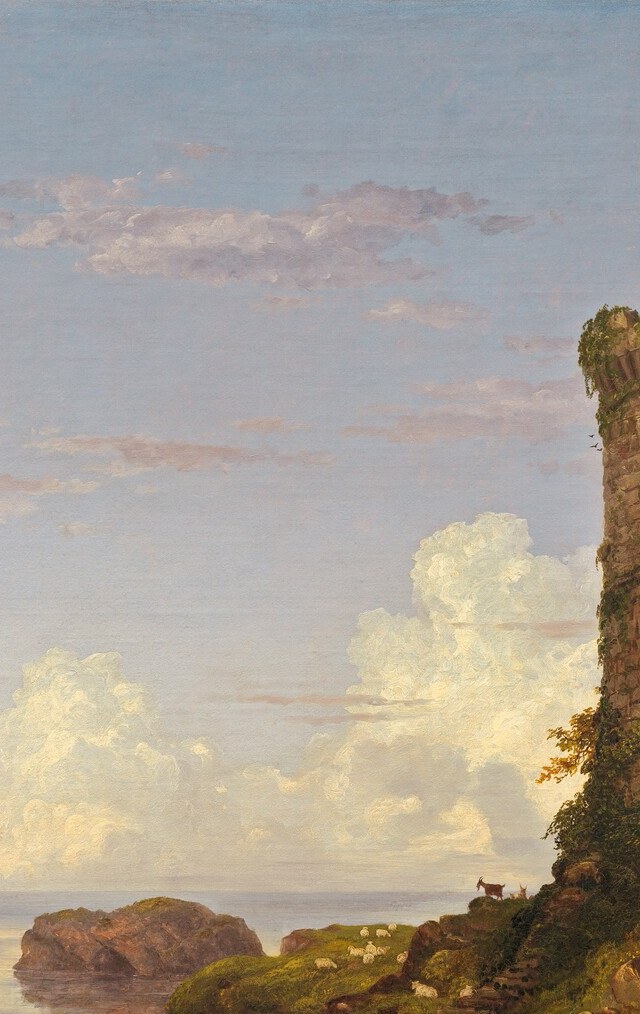
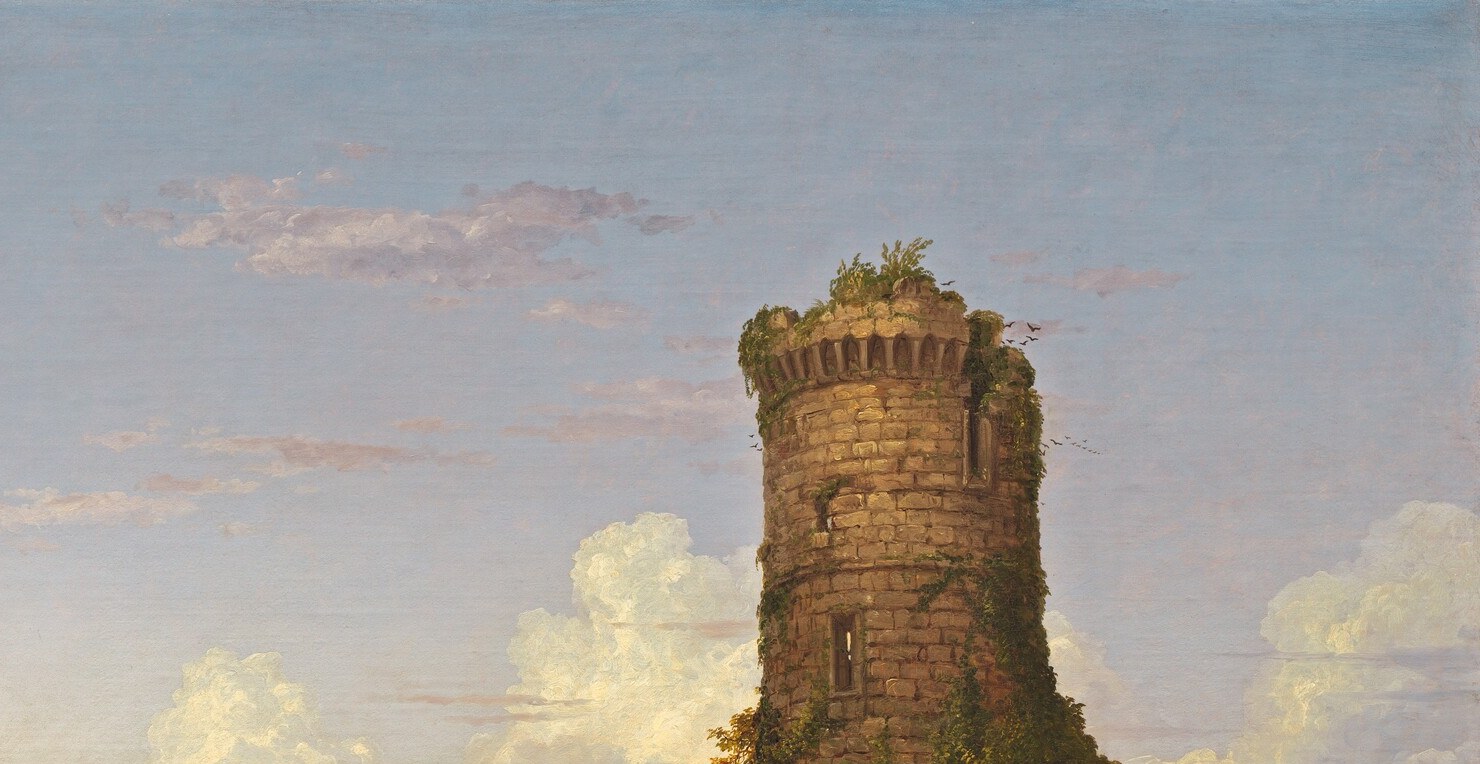
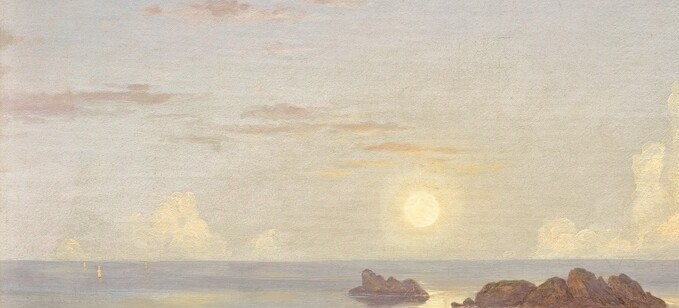
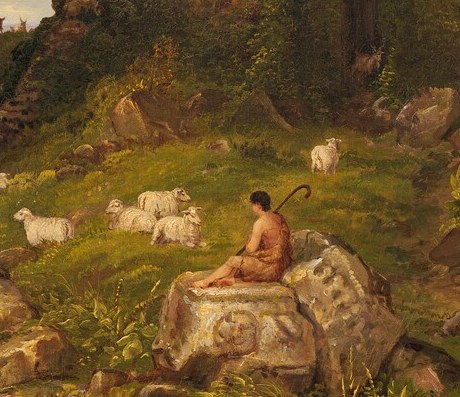
Thomas Cole began this painting in 1838 to illustrate Lord Byron's poem The Corsair. He couldn't do it. He tried shifting to a Coleridge ballad. That didn't work either. He finally abandoned literary sources altogether and painted his own vision: a shepherd on a ruined tower, a distant becalmed ship, a rising moon like silver vapor.
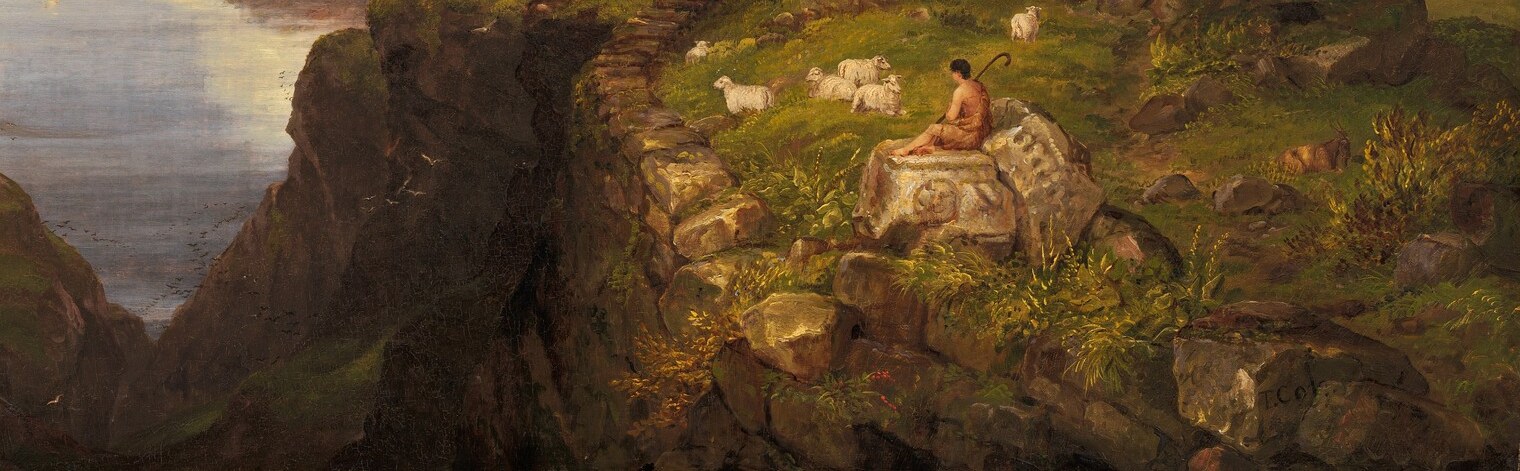
Look at the shepherd. Cole recorded him in his journal as "a lonely shepherd seated on fragments of the tower gazing at a distant becalmed bark." He is not a storybook character. He is the contemplative human soul Cole feared the market would reject. The ship he watches is barely resolved through the haze, freighted with all the Romantic wandering Cole tried to shed.
Cole worried this painting was too quiet to sell. He wrote that purchasers "want quantity, material... things, not thoughts." He signed it anyway, a quiet act of self-assertion in the lower right corner. The canvas may have appeared at Boston's Athenaeum Gallery in 1839, then passed through private Massachusetts and Connecticut families until 1993.
In 1993 it entered the National Gallery of Art in Washington as a gift from The Circle of the National Gallery. The painting Cole feared no one would want is now one of the Hudson River School's defining statements on mutability, and a monument to the risky act of trusting your own eye over a paying customer's.
#arthistory #thomascole #hudsonriverschool
Details
Transcript
Thomas Cole wanted patrons who paid for ideas. In 1838, he began this to illustrate a Byron poem. But he abandoned the commission entirely. He wrote: purchasers want things, not thoughts. He feared no one would buy self-chosen silence. It stayed in two New England families for over 150 years. Today it hangs in the National Gallery of Art.