Lake George by Casilear, John William
View the artwork: Lake George →
John William Casilear's "Lake George" is his last known painting, housed at the National Gallery of Art in Washington, D.C. Painted sometime after 1851, it captures the placid surface of the lake under a gentle, breaking light. It is a work that feels like a quiet exhale at the end of a long life in art.
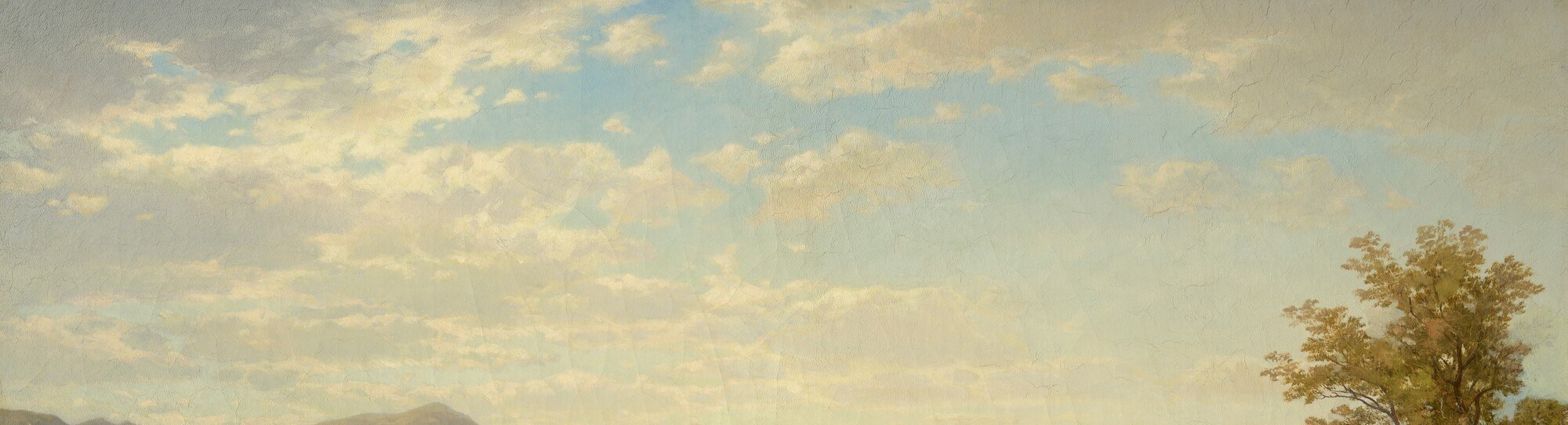
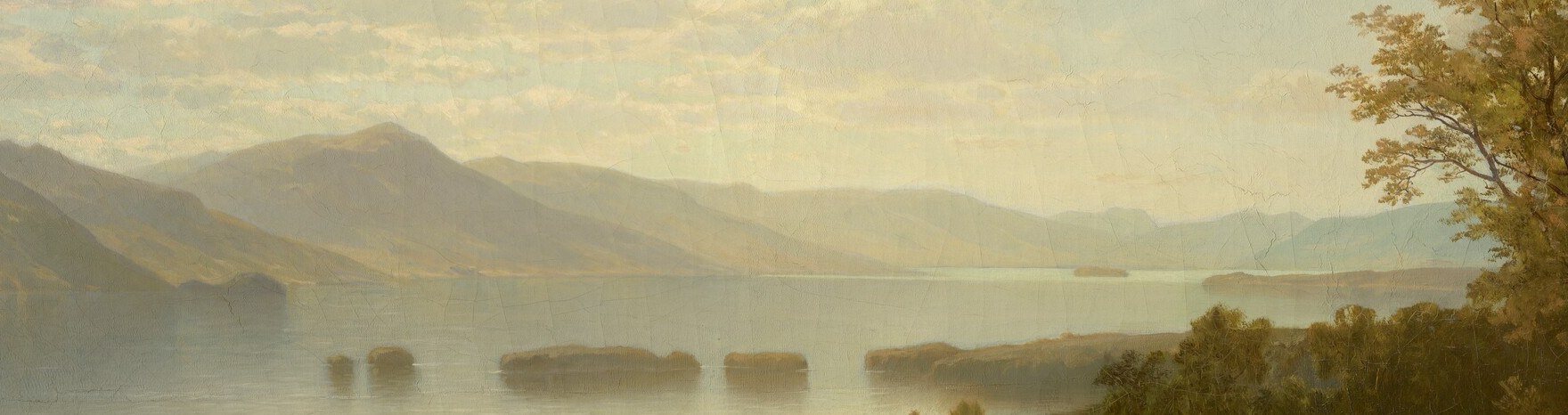
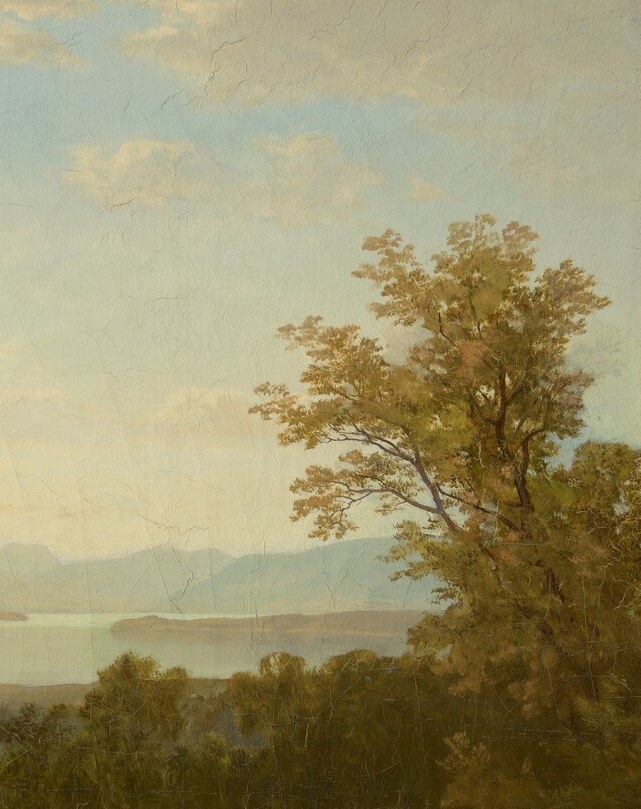
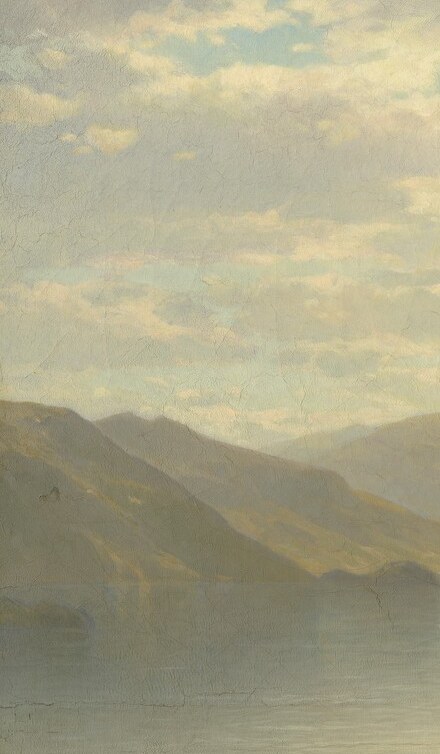
The painting's real magic is in the distance. Look at the clouds at the top of the canvas, their edges are crisp, almost sculpted by the warm golden light. Now shift your eye to the far mountain and the shoreline beneath it. Those forms do not just recede; they dissolve. The land becomes a soft, barely-there haze, melting into the water with no hard line at all.
This is not accident but technique. Casilear used thin, translucent glazes of paint to build an atmospheric veil over the background, a method central to the American Luminist movement. While the sky remains sharp and present, the distant earth fades, mimicking how our eyes perceive great depth in humid air. It is a painterly trick that creates a profound sense of stillness and space.
Standing before this canvas is a lesson in seeing. The same hand that defined a cloud also erased a mountain, and both feel equally true.
#arthistory #americanart #hudsonriverschool
Details

Transcript
First, the clouds. Sharp, golden, and full of light. They are painted with crisp edges you can almost touch. Now drop your eye to the far shore. That mountain and its shoreline dissolve into almost nothing. This is painted with layers of thin, translucent veils of color. It's called aerial perspective, the haze that comes with great distance. Casilear made this his last painting. An old man painting the air itself.