Strawberries and Cream by Peale, Raphaelle
View the artwork: Strawberries and Cream →
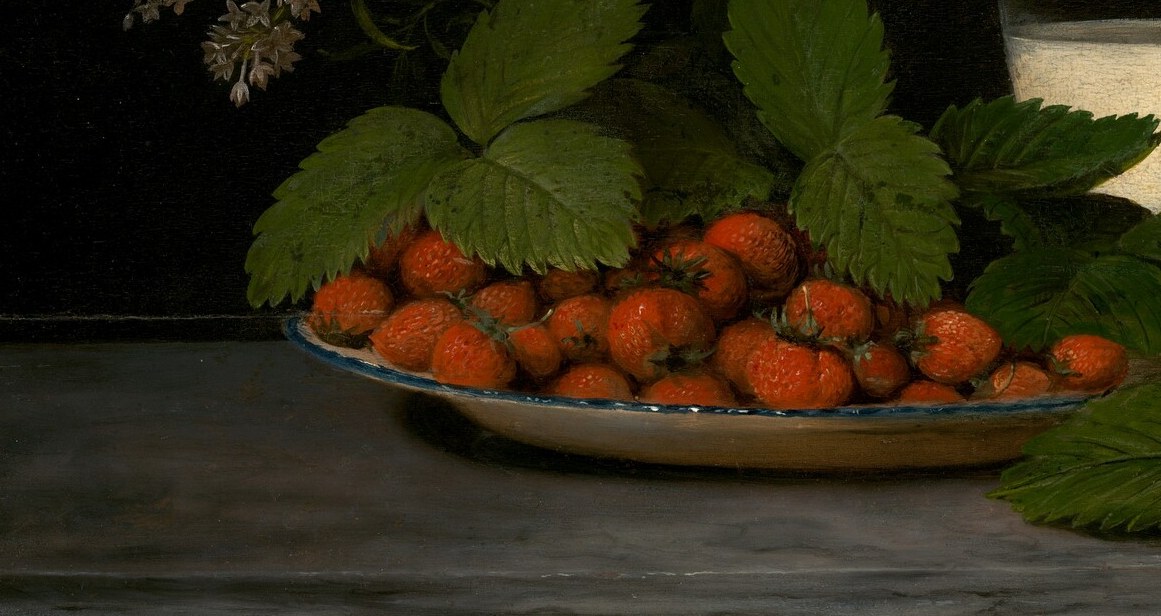
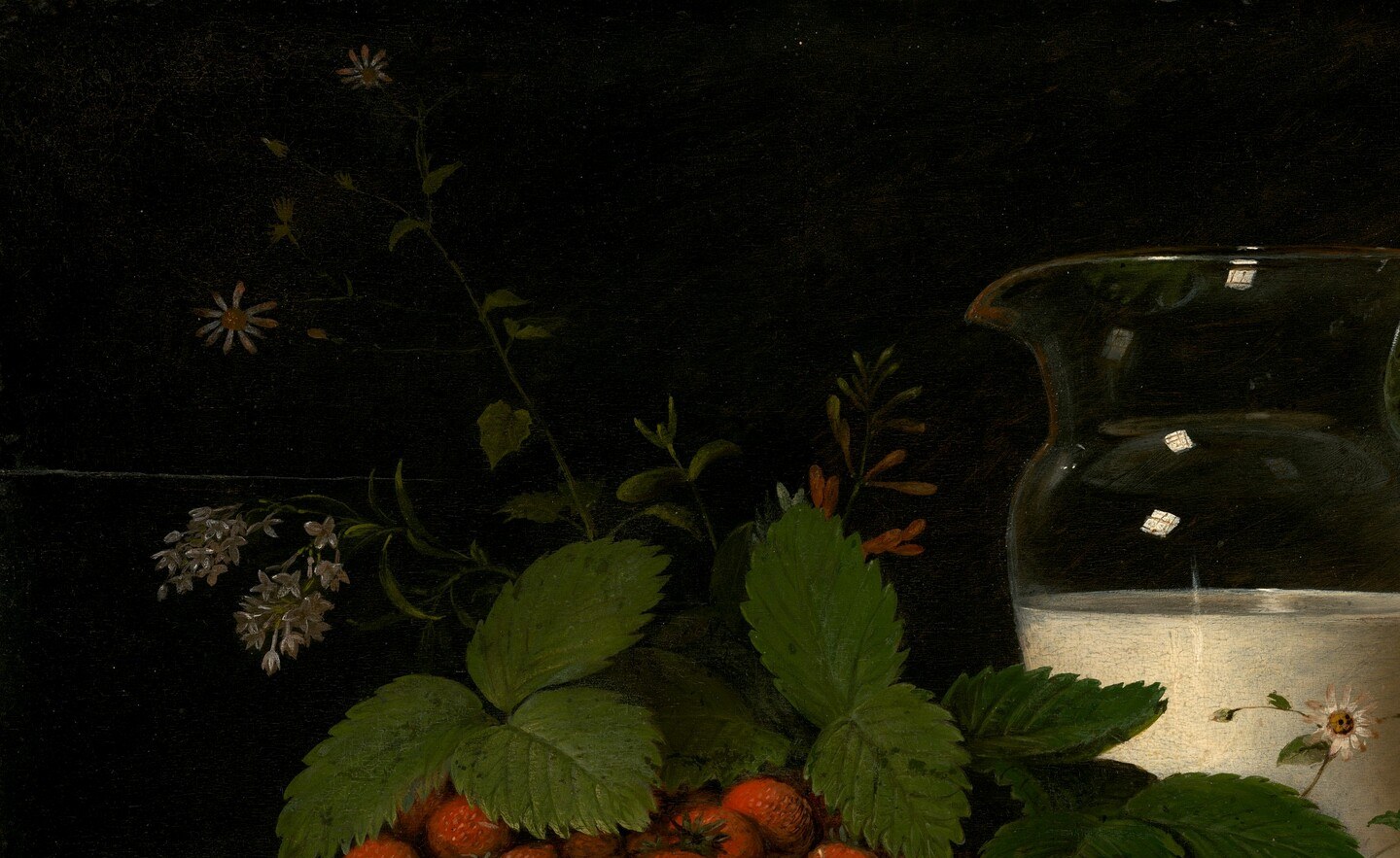
Raphaelle Peale’s 1816 Still Life with Strawberries and Cream is the work of a man who couldn't catch a break. The son of painter and museum-founder Charles Willson Peale, Raphaelle was the most gifted still life painter in early America, and was paid almost nothing for it. This small oil on wood, about the size of a laptop screen, now lives at the Art Institute of Chicago.
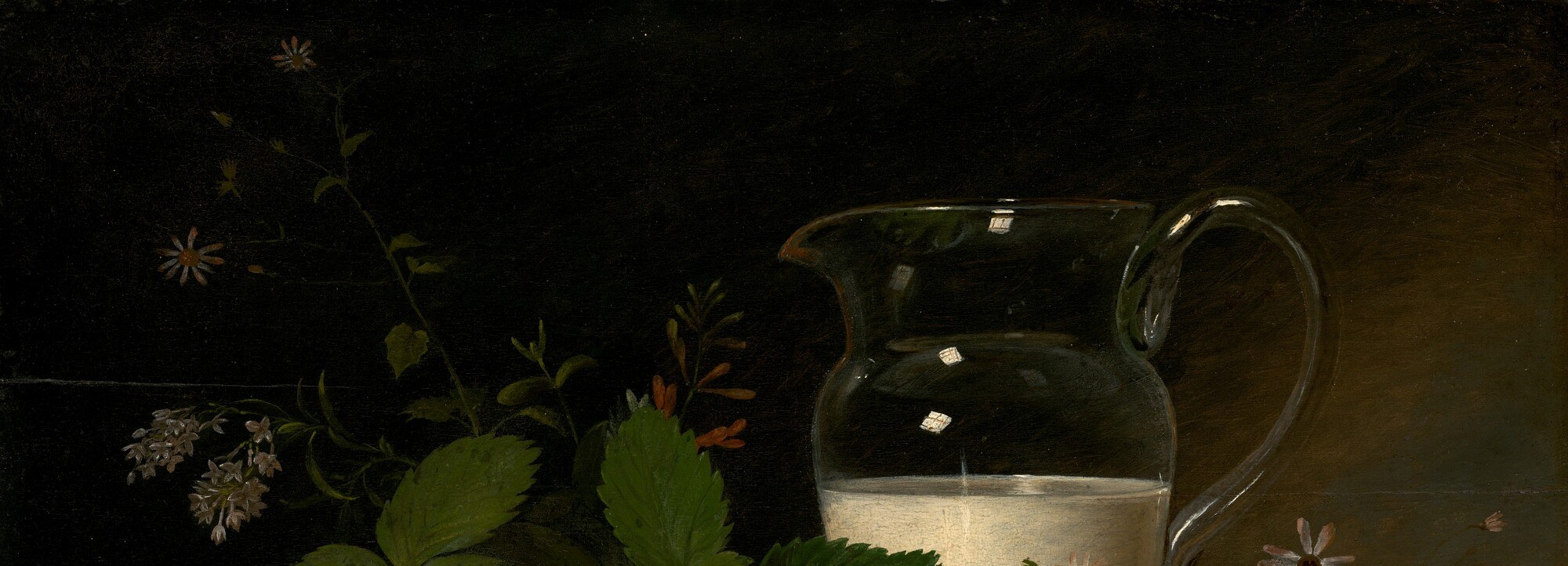
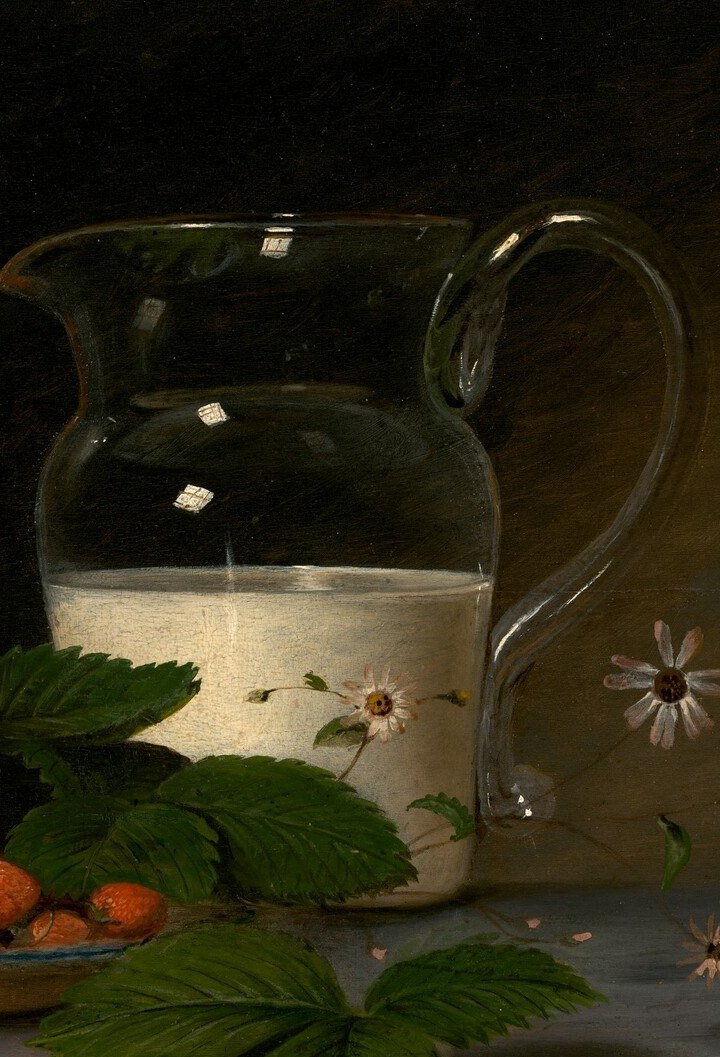
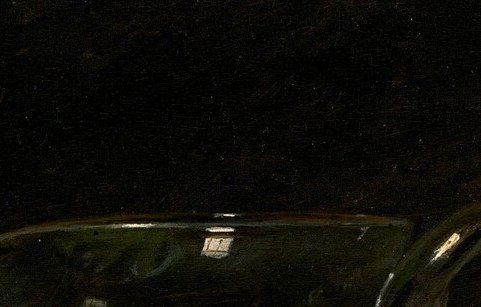
Scan the painting slowly. White strawberry blossoms bloom among the dark leaves, while the ripe fruit sits below them on the plate: the plant's whole life cycle collapses into one arrested moment. Then look for the fly perched near the glass pitcher. Peale painted these trompe l'oeil insects so convincing that viewers reportedly reached out to flick them away. And if your eye travels to the upper right, against the black void, you find a spider web.
Peale showed works like this at the Pennsylvania Academy in the 1810s, but still life was considered the lowest rung of painting. Portraits paid bills; bowls of fruit did not. He struggled with alcoholism and died in 1825 at age fifty-one, impoverished.
The fly and the web aren't accidents. They are vanitas clues, small agents of decay tucked into a scene of summer abundance. The pleasure is real, and it is already beginning to go.
#arthistory #stilllife #americanart
Details
Transcript
A late summer dish. Strawberries, cream, a quiet table. Raphaelle Peale painted this in 1816, in a young Philadelphia still struggling to feed its artists. Look at the white blossoms among the leaves. Blossom and ripe fruit together. The plant's beginning and end shown at once. Now find the painted fly. Peale painted it so real his patrons tried to brush it off the canvas. That was the joke. Now search the dark upper right. Nearly invisible strands of spider web. The fly, the web, the fruit past its peak. Quiet pleasure, quietly being undone.