The Valley of the Seine, from the Hills of Giverny by Robinson, Theodore
View the artwork: The Valley of the Seine, from the Hills of Giverny →
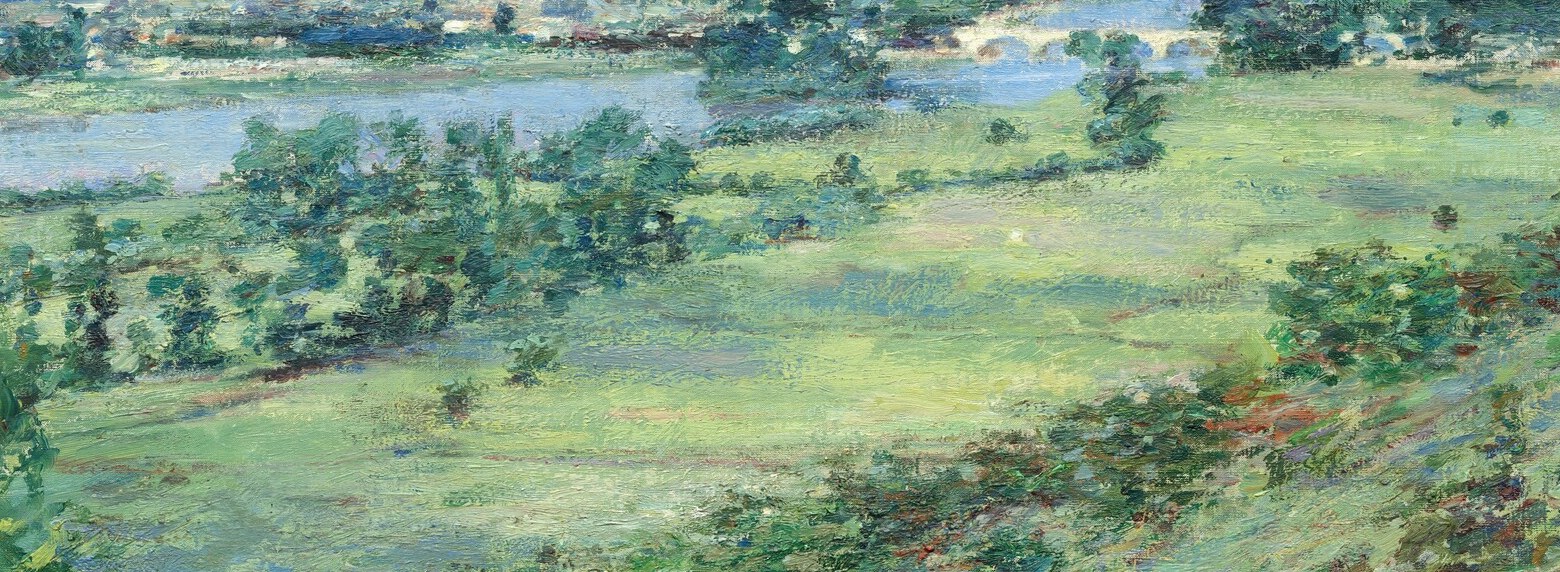
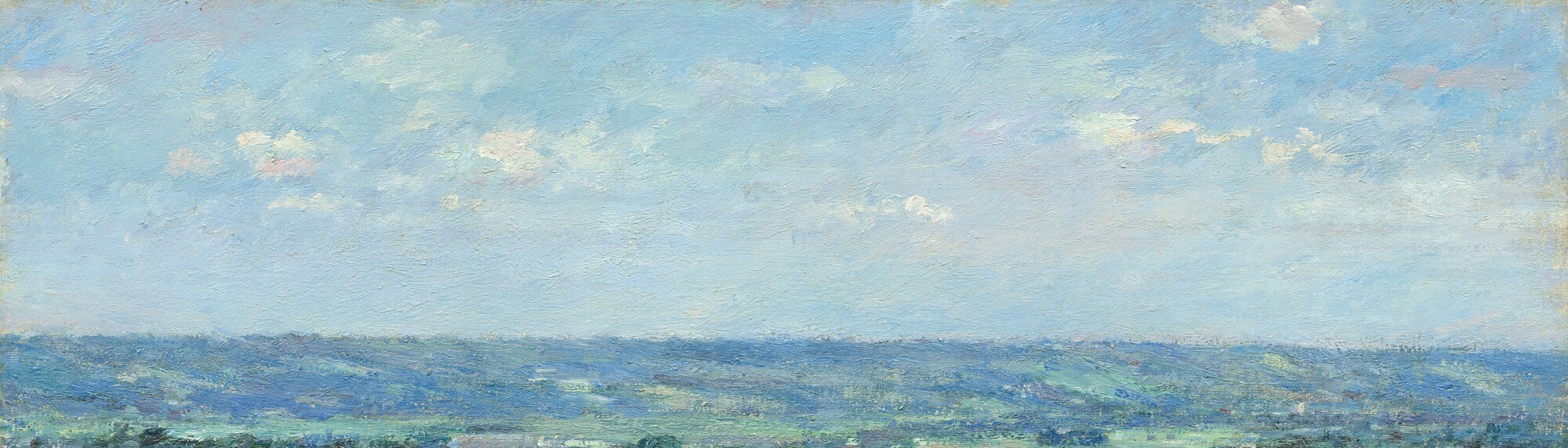
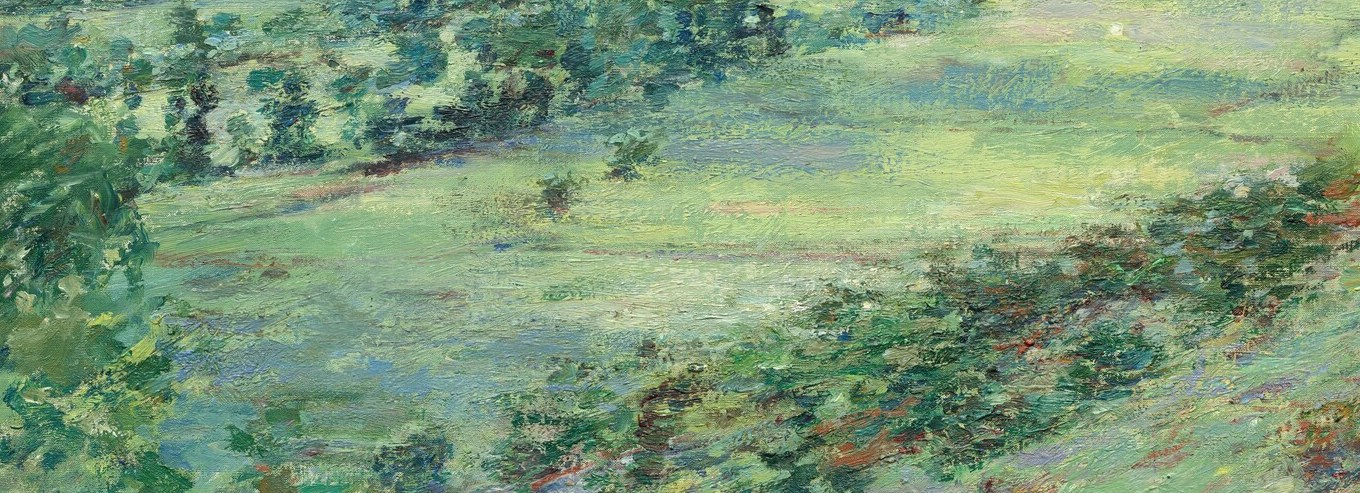
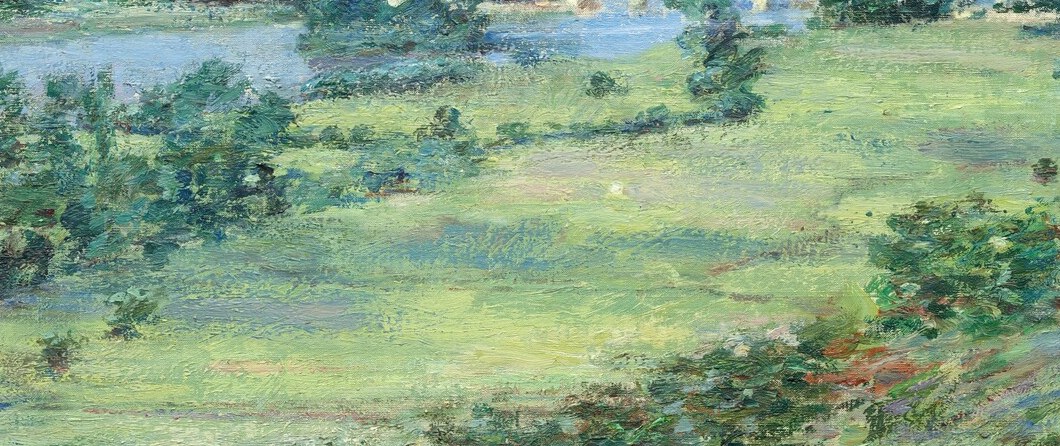
In the summer of 1892, the American painter Theodore Robinson climbed the hills behind Giverny and set his easel down to paint this view. 'The Valley of the Seine, from the Hills of Giverny' is now in the National Gallery of Art, a quiet record of a place that had become the center of the Impressionist world.
Look first at the white rooftops clustered by the river bend. That small Norman village is a real, locatable settlement that lined the Seine in the late 19th century. Follow the river's curve away from it and your eye catches a single pale church steeple on the distant right hill. Robinson anchors the wide, green valley with these human markings, then dissolves the horizon in a silvery haze he learned directly from Monet.
Robinson was one of the few Americans to embed himself in Monet's circle at Giverny, visiting repeatedly between 1887 and 1892. The two painters worked side by side. This canvas is not a copy of Monet's style; it is a document of their shared terrain, the view they both walked through, painted with an American's slightly more structured eye. Robinson contracted bronchitis in these years and died in 1896 at age 43, leaving a small body of luminous French landscapes.
The valley caught on this canvas still exists. The river bends in the same lazy arcs, the hills recede in the same haze, and the church is likely still standing. A painting can be a time machine as much as a picture.
#arthistory #theodorobinson #impressionism
Details

Transcript
The summer of 1892. A hillside above the Seine. An American painter looks down at the river valley. The white rooftops of a Norman village. A single church steeple on the far ridge. Left of the river, a flooded meadow mirrors the sky. This was the view from Giverny, where Claude Monet lived. The painter, Theodore Robinson, spent years beside Monet here. He died four years later, at 43. This valley is his witness.