Saint John on Patmos by Hans Baldung Grien
View the artwork: Saint John on Patmos →
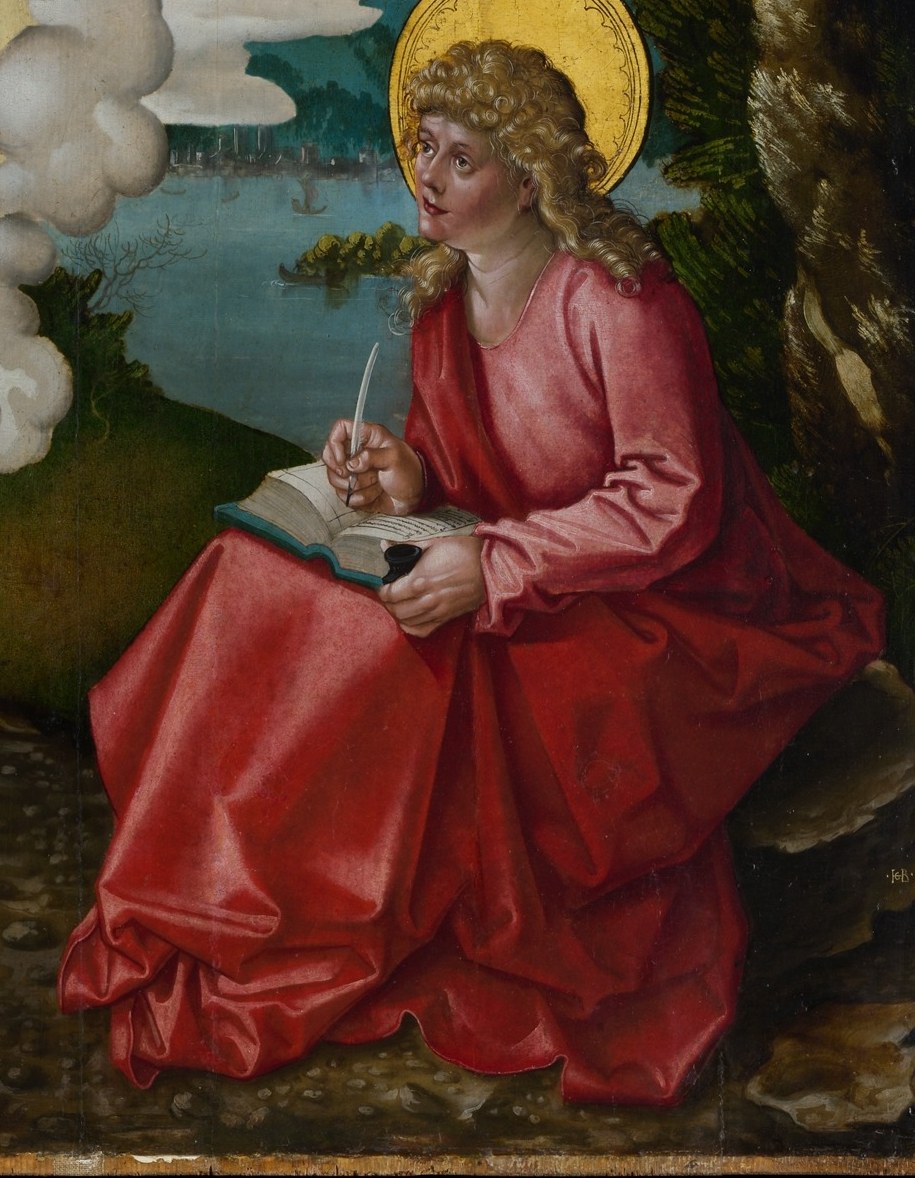
Hans Baldung Grien's "Saint John on Patmos," painted in 1511, is not a peaceful Nativity scene. It is the end of the world, dressed in beautiful blue.
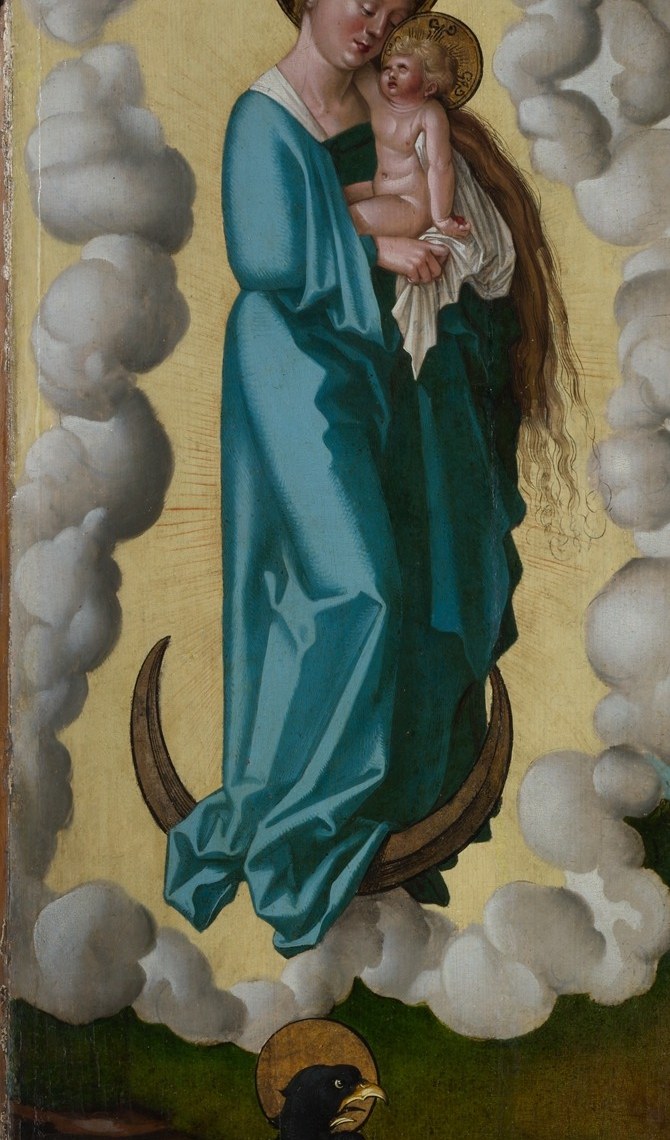
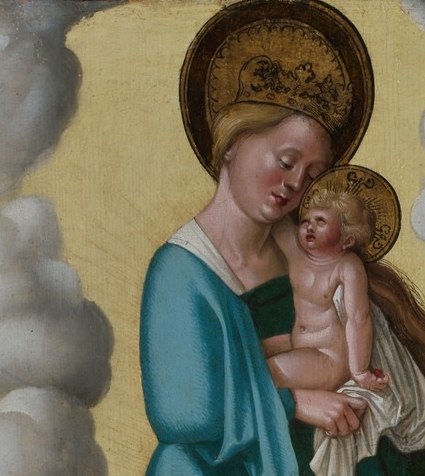
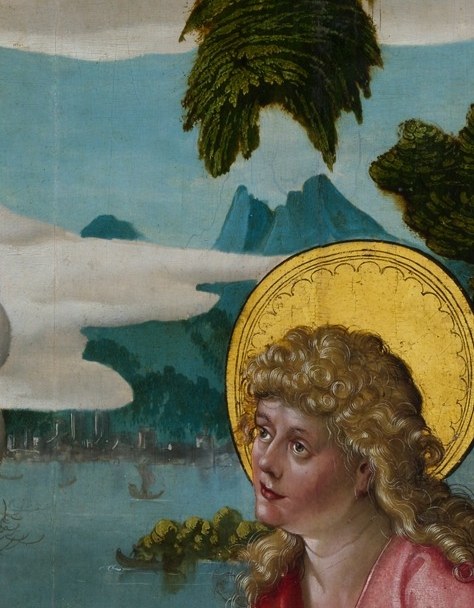
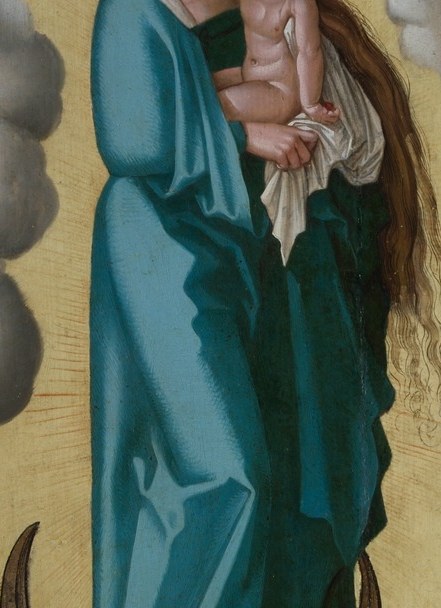
The painting shows Saint John the Evangelist during his exile on the Greek island of Patmos. He holds a quill over an open book, recording a divine vision. That vision appears to his left: a woman suspended in the clouds, crowned with stars and holding an infant. It is a deceptively tender image.
Look at the woman's feet. A thin crescent moon lies beneath them. This is the direct visual quotation of Revelation 12:1: "A woman clothed with the sun, with the moon under her feet, and on her head a crown of twelve stars." The infant in her arms is not the baby Jesus in a stable. It is the child who, in the Biblical text, is destined to rule all nations. Baldung has collapsed the traditional iconography of the Madonna and Child with the apocalyptic Woman of the Apocalypse, fusing the Nativity and the end times into a single, silent apparition.
Baldung was the most gifted student of Albrecht Dürer, and he shared his master's obsessive attention to detail. The eagle at the lower left is John's traditional symbol as an Evangelist. The vivid ultramarine of the woman's robe signals her divine status through the sheer expense of the pigment. Every visual choice carries a theological weight. Next time you see a crescent moon in old art, look closer. It is rarely just the moon.
#arthistory #hansbaldung #renaissancepainting
Details
Transcript
A man, writing. A woman, floating. A painting about a vision. The writer is Saint John, exiled on the island of Patmos. He's recording a divine revelation. The book is the future Book of Revelation. The woman is not Mary. She's a cosmic sign from Revelation 12. The clue is under her feet: a crescent moon. Born in 1484, Baldung was Dürer's most gifted student. He collapsed the Nativity and the Apocalypse into one silent, beautiful image.