Madonna of Humility by http://www.wikidata.org/.well-known/genid/cc44d6f4d37ea336e803f0e1f8f6550a
View the artwork: Madonna of Humility →
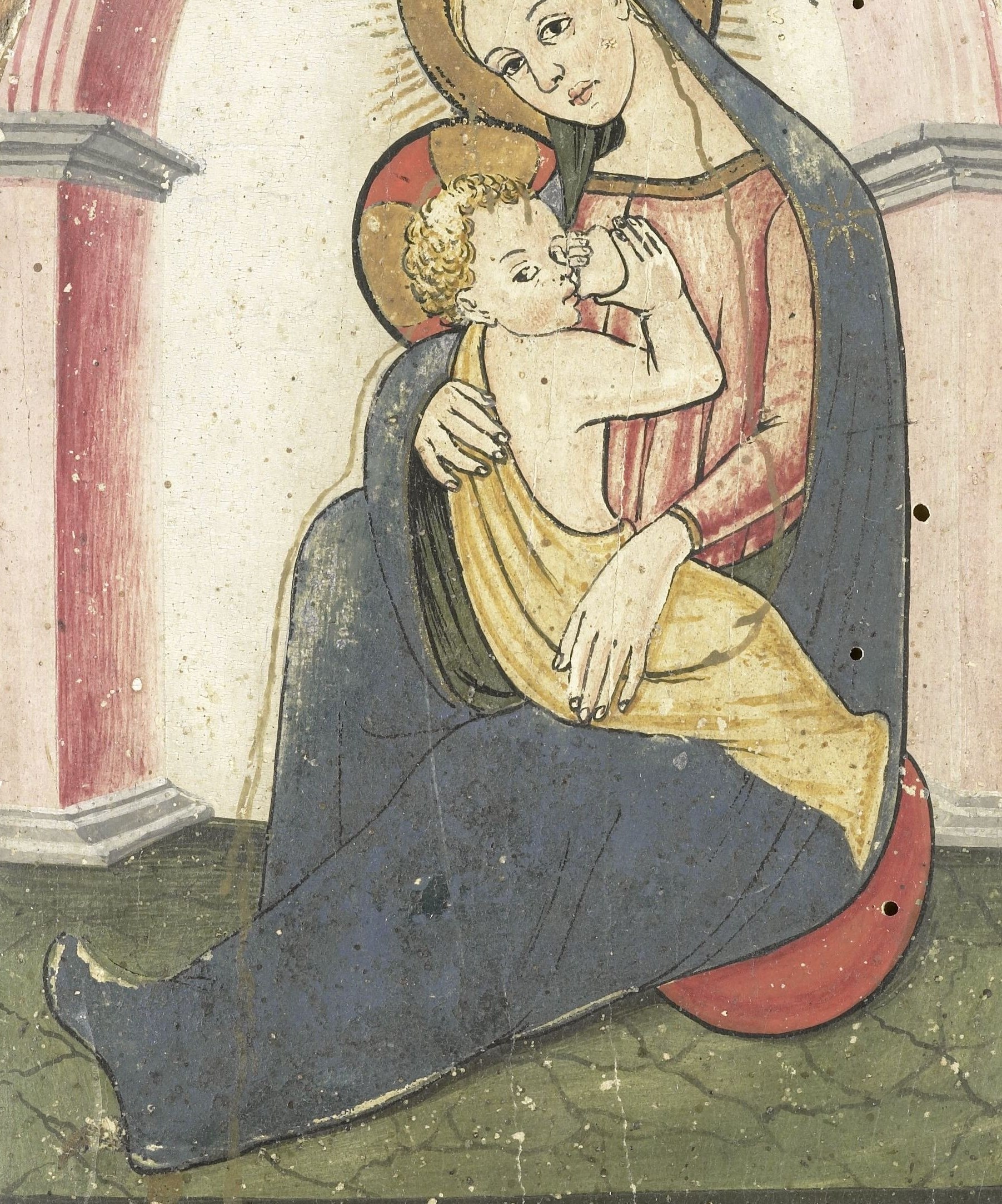
This is "Madonna of Humility," a tempera painting by an unknown master from around 1920, now in a private collection. The title is not just a name, it's a specific medieval iconographic type, and this painting preserves its visual code with unusual clarity.
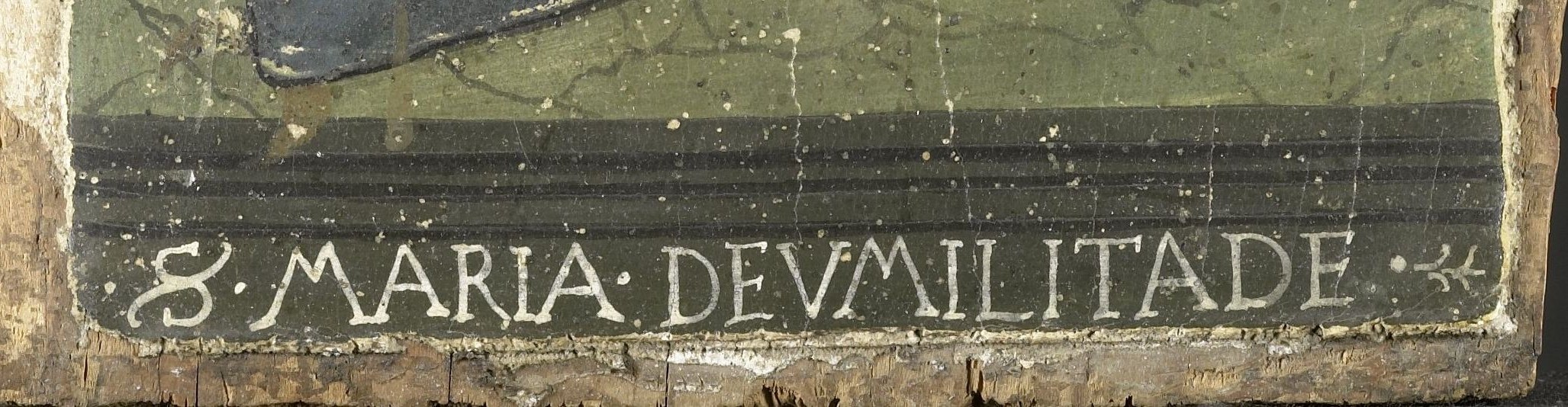
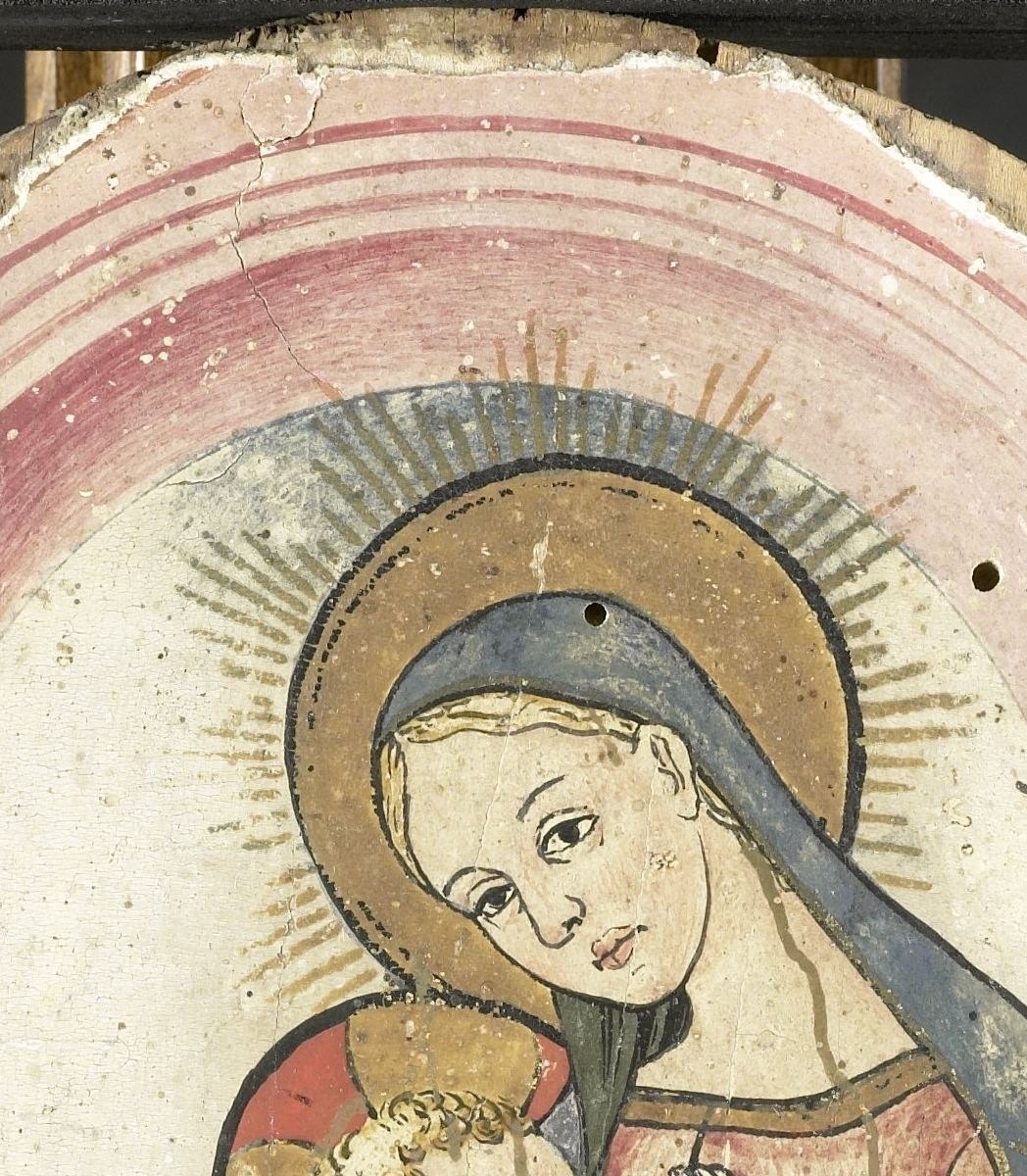
The code is spelled out in objects. First, the ground: Mary sits directly on the earth, not on a throne. That pose is the defining sign of humilitas, humility made visible. Her blue robe reinforces the virtue, while the red dress beneath it signals Christ's future Passion. Even the Latin inscription at the base, declaring "Saint Mary of Humility," is painted directly onto the surface rather than a separate frame, making the theological argument inseparable from the image itself.
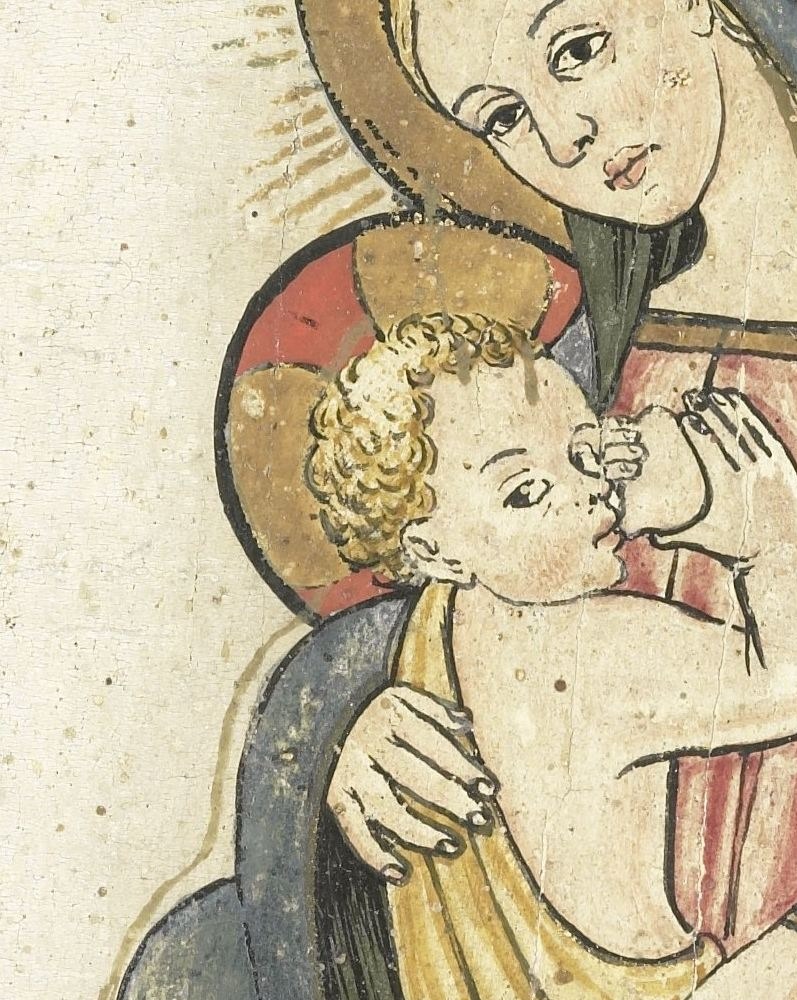
The iconography of the Madonna of Humility emerged in the 14th century as a devotional counterpoint to the regal Queen of Heaven. By seating Mary on the ground, artists made her accessible, a human mother holding a divine child in an ordinary moment. This early 20th-century version revives that medieval vocabulary whole, every color and pose freighted with meaning.
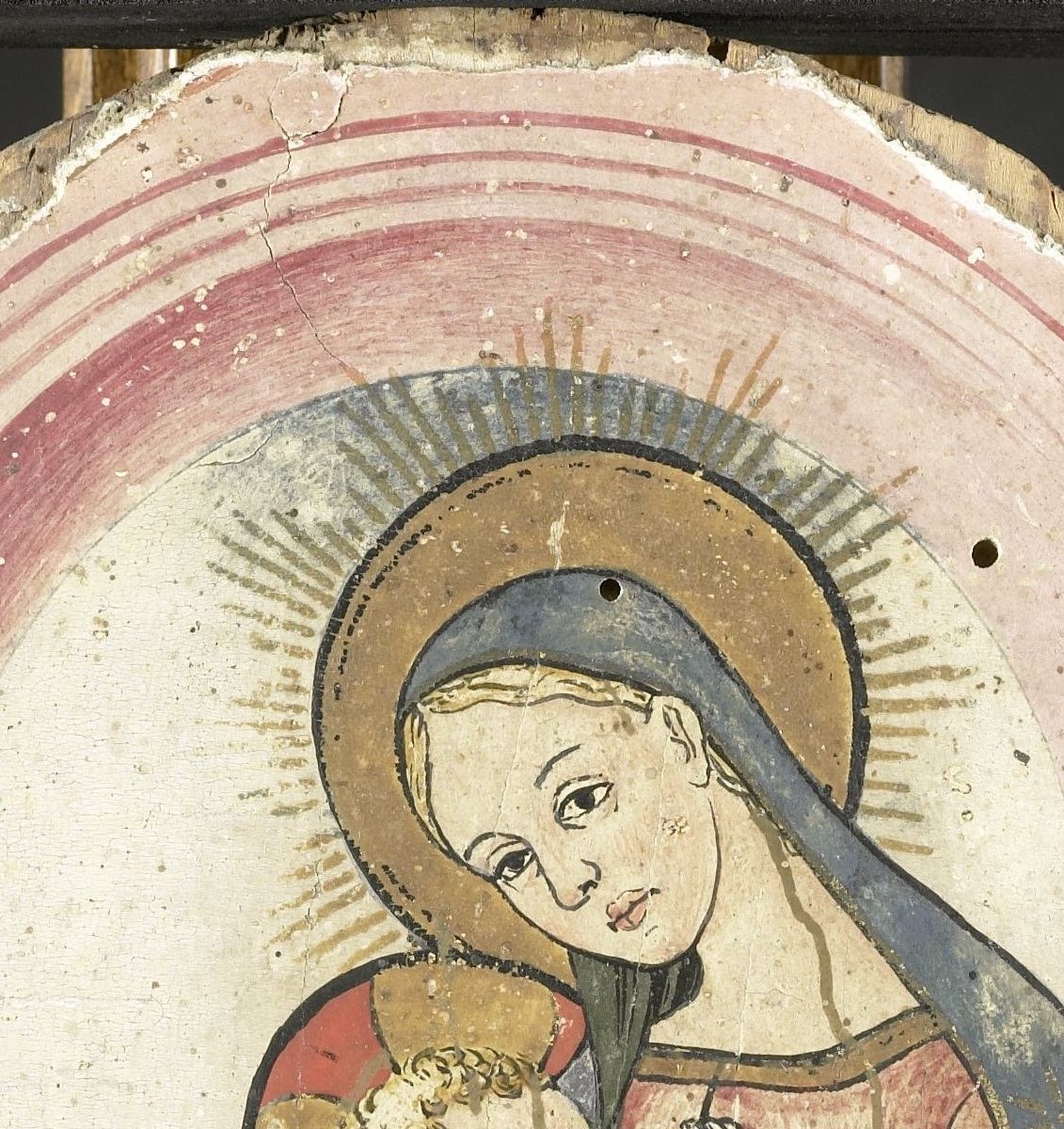
Look at her face. The whole composition points there. It's a quiet, slightly downward gaze that asks for contemplation, not applause.
#arthistory #religiousart #madonnahumility
Details
Transcript
She is not on a throne. She sits on the ground. The pose is called The Madonna of Humility. The red dress under her blue robe signals Christ's future Passion. The golden halo marks her sanctity. Even the inscription is on the painting, not the frame. It spells out the code: Sancta Maria de Humilitate. The whole image argues: divinity enters the world low to the ground.