Saint Cecilia and an Angel by Gentileschi, Orazio
View the artwork: Saint Cecilia and an Angel →
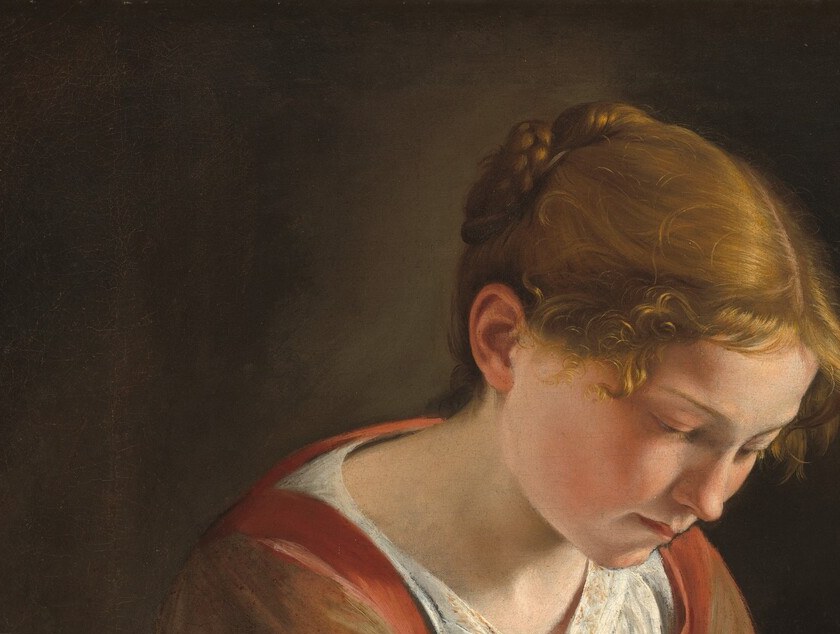
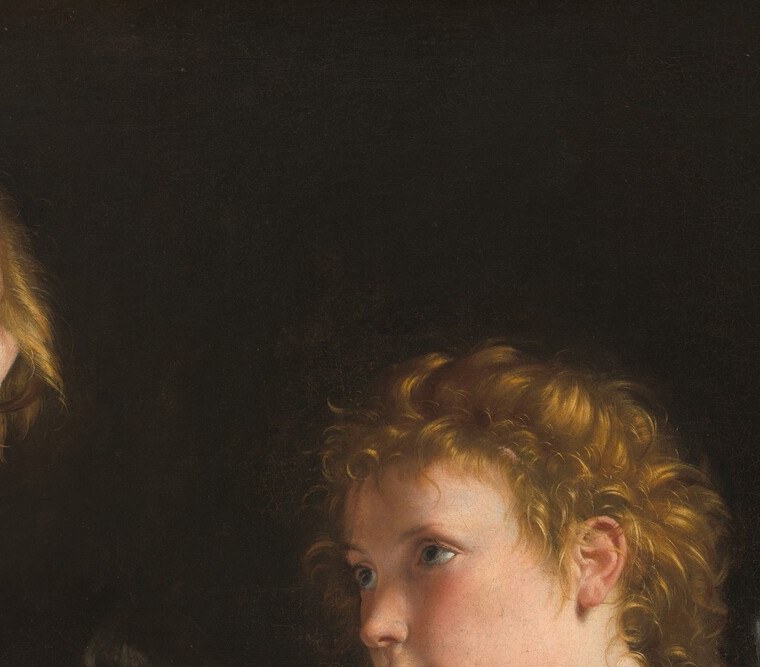
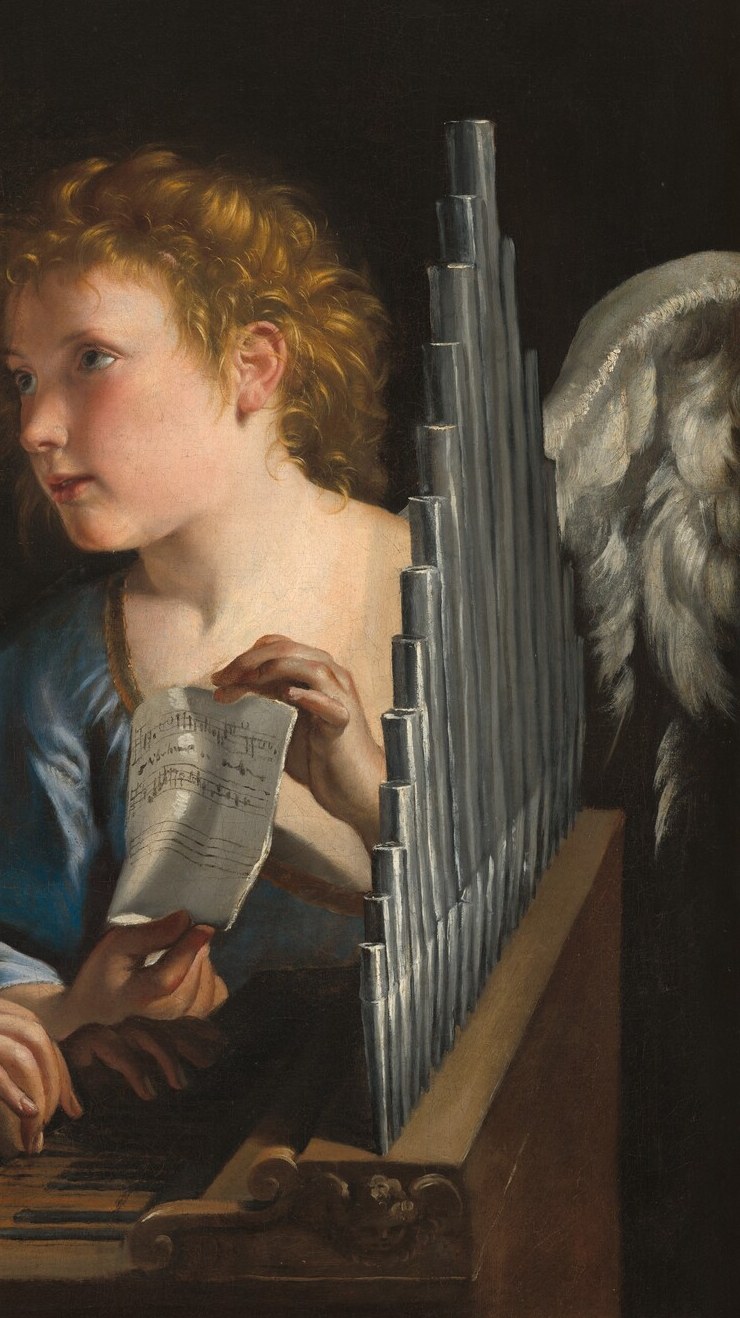
This is "Saint Cecilia and an Angel," a painting with a split personality now in the National Gallery of Art in Washington. Orazio Gentileschi began it around 1617 and painted the heads of both Cecilia and the young angel. Then he walked away, and the canvas sat unfinished for years.
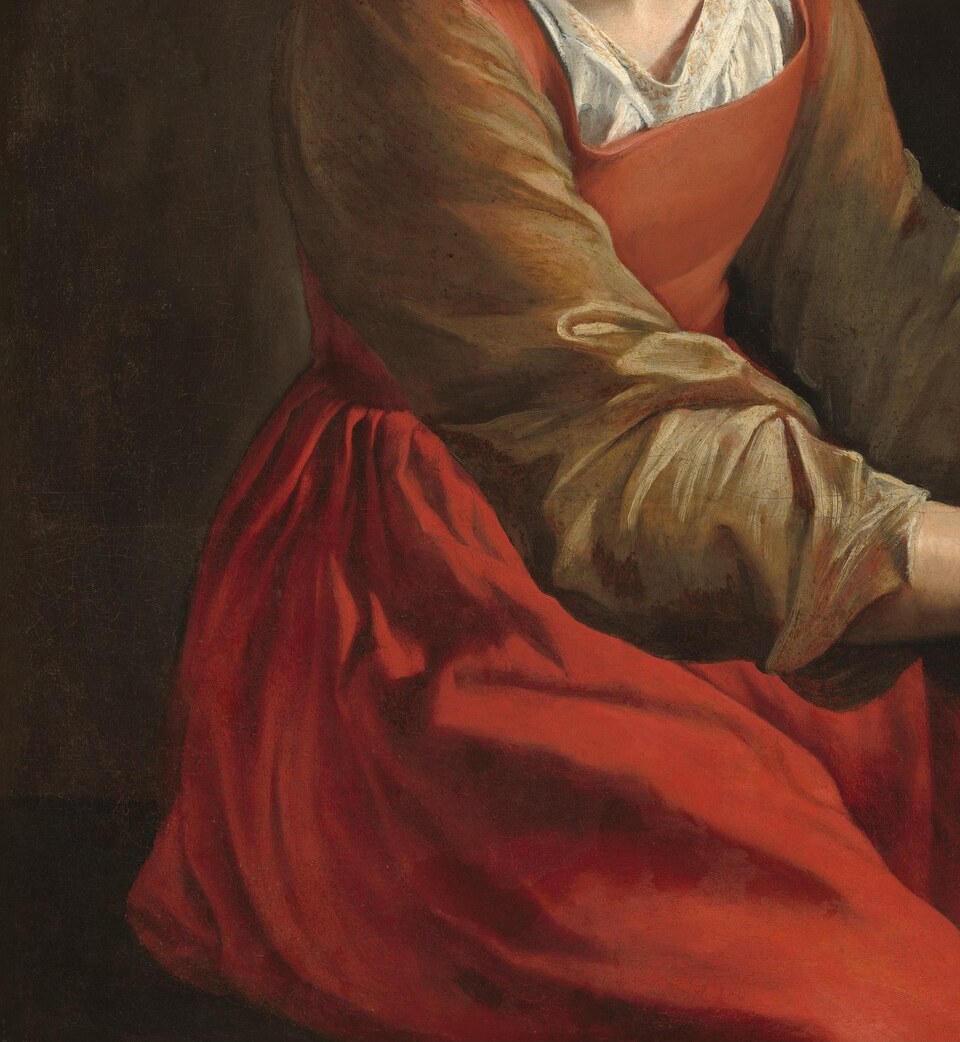
Look for the seam. Where Cecilia's silvery, Caravaggesque face meets the bright orange-red drapery of her dress, you are looking at a physical handoff between two painters. The neck, the collar, the white chemise sleeve, this is the transition zone. Above it, Gentileschi's precise, silvery highlights. Below it, the broader, confident sweeps of Giovanni Lanfranco.
In 1994, art historians Diane De Grazia and Erich Schleier used scanning electron microscopes to analyze paint cross-sections from this canvas. They found that Gentileschi favored a lead-tin yellow pigment, while Lanfranco used a chemically distinct lead-tin-antimony yellow. The science matched the art-historical suspicion, first recorded in a 1741 family inventory that described the painting as "the hand of Lanfranco with the head of Gentileschi."
The two painters could not have been more different. Gentileschi was a leading Caravaggist who would later work for Charles I in London. Lanfranco was a fresco specialist trained by the Carracci. For a brief moment, their brushes shared the same canvas, and their pigments left a confession no eye could see.
#arthistory #baroque #nationalgalleryofart
Details

Transcript
She looks absorbed in sacred music, her gaze soft and downcast. But for years, a secret lay hidden in the paint of this canvas. Her face was painted by Orazio Gentileschi, a Caravaggesque master. He stopped around 1618 and left the rest unfinished. Now look at the seam where her collar meets the red dress. This is where Giovanni Lanfranco took over and completed the body. In 1994, scientists proved it, by analyzing microscopic paint samples. Two pigments, two masters, one saint caught between them.