Virgin and Child with the Pietà and Saints by http://www.wikidata.org/.well-known/genid/f3fe4a8289b60392d9fe22976d4ed226
View the artwork: Virgin and Child with the Pietà and Saints →
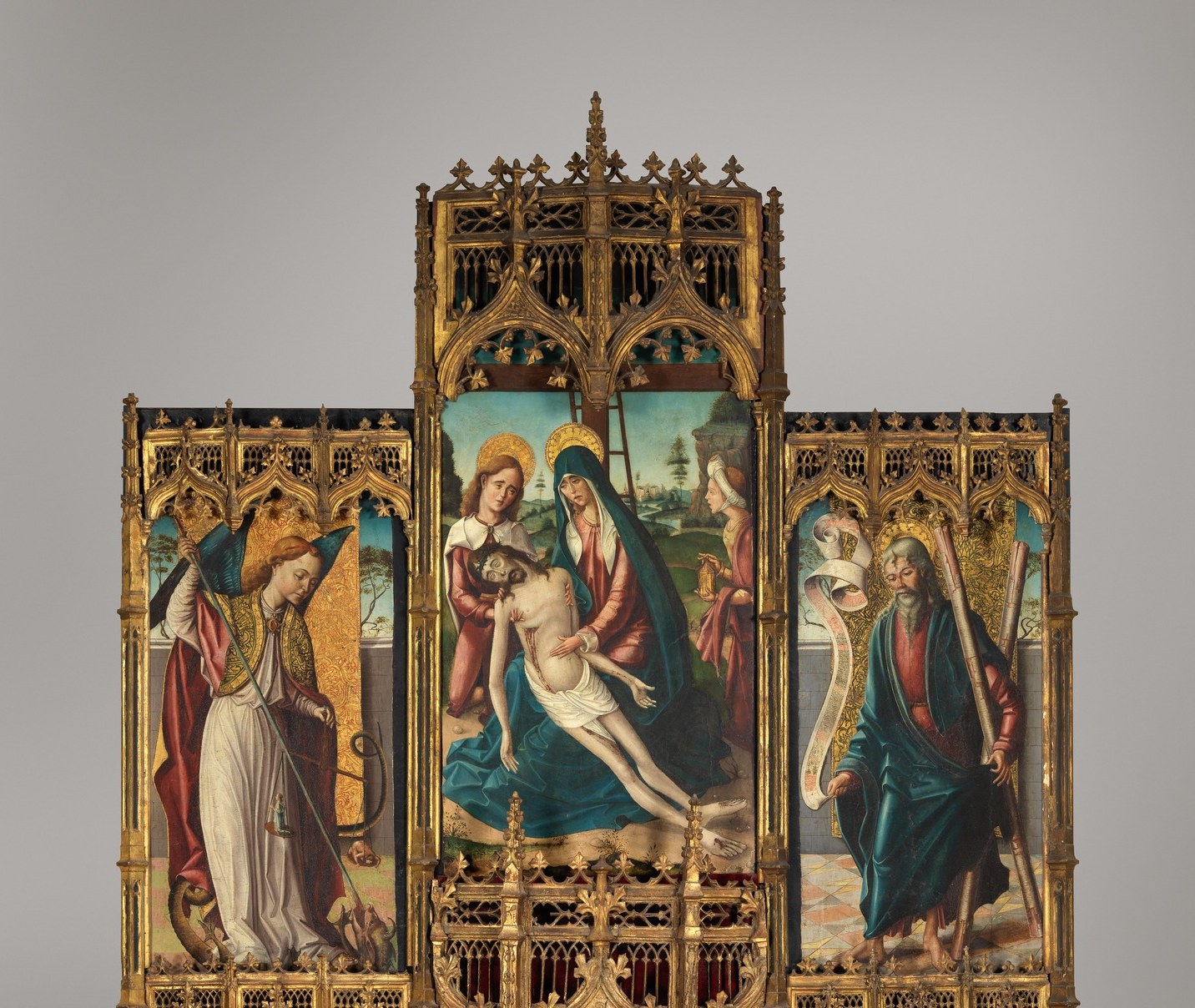
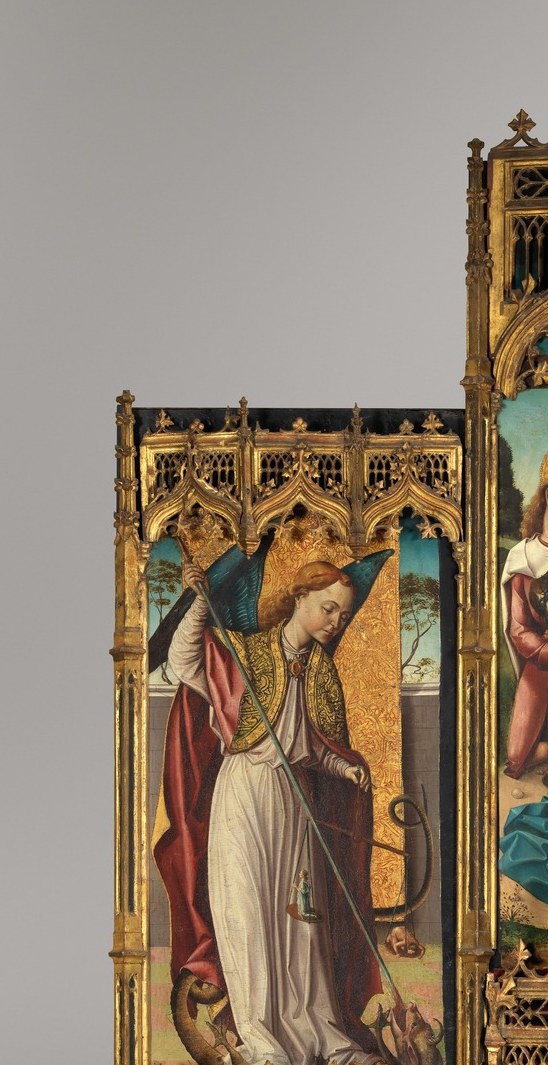
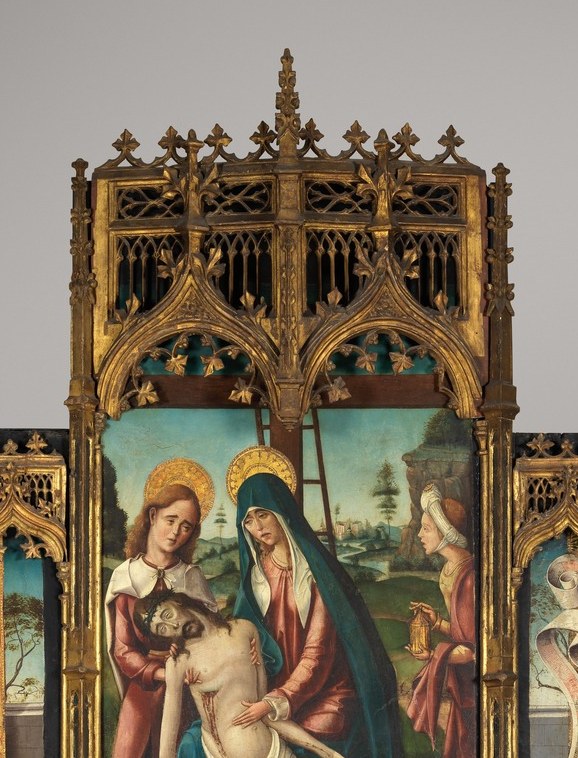
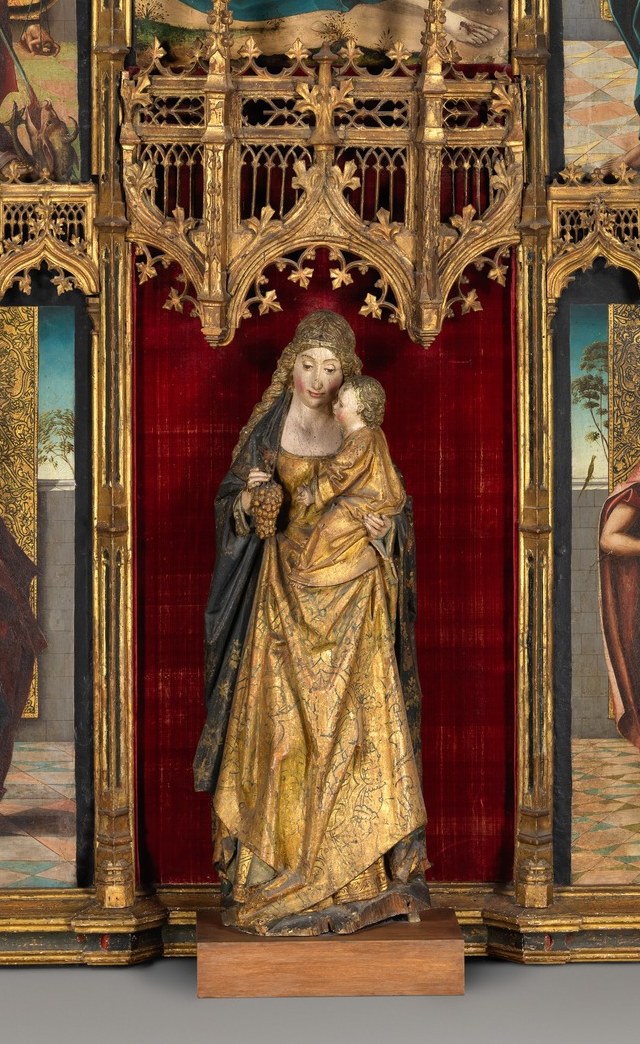
This is the "Virgin and Child with the Pietà and Saints," a five-panel altarpiece made around 1500 by the painter known as the Master of the Saint Bartholomew Altarpiece. What stops the eye first is usually the central Pietà: the Virgin cradling the dead Christ, two angels beside her. But the true feat of this object is quieter and more structural. The painter did not simply paint a sacred scene and frame it. He built a miniature cathedral and then placed the figures inside it.
Look at the gold. The pointed arches, the tracery, the single crowning spire at the top. These are not passive borders separating the panels. They are load-bearing illusions. The gilded wood was carved and painted to read as stone architecture, a Gothic church in miniature. Every vertical pinnacle pulls the eye upward, from the richly dressed saint at the base to the grieving face at the center, until the whole altarpiece feels less like a painting and more like a doorway.
The Master of the Saint Bartholomew Altarpiece was active in Cologne around 1480 to 1510, a period when altarpieces were the most expensive and technically demanding objects an artist could produce. The wooden support, the carved tracery, and the extensive water gilding all required separate specialists working in close coordination, a painter, a carver, a gilder. The painting is now in the collection of the Alte Pinakothek in Munich, where the physical frame still does exactly what it was made to do: catch candlelight and pull a viewer into prayer.
Next time you stand before a gilded altarpiece, ask yourself what holds it together. Sometimes the architecture is doing more than the paint.
#arthistory #gothicart #altarpiece
Details
Transcript
A painting with a frame this elaborate was never meant to be moved. Look past the figures. Look at the architecture. These aren't just borders. They are pointed arches, carved and gilded. The painter built a cathedral out of gold leaf and wood. Every pinnacle and cusp draws your eye upward, panel by panel. Now look at the grieving face at the center. The architecture holds her sorrow like a room holds a prayer.