View of Dordrecht from the North by Goyen, Jan van
View the artwork: View of Dordrecht from the North →
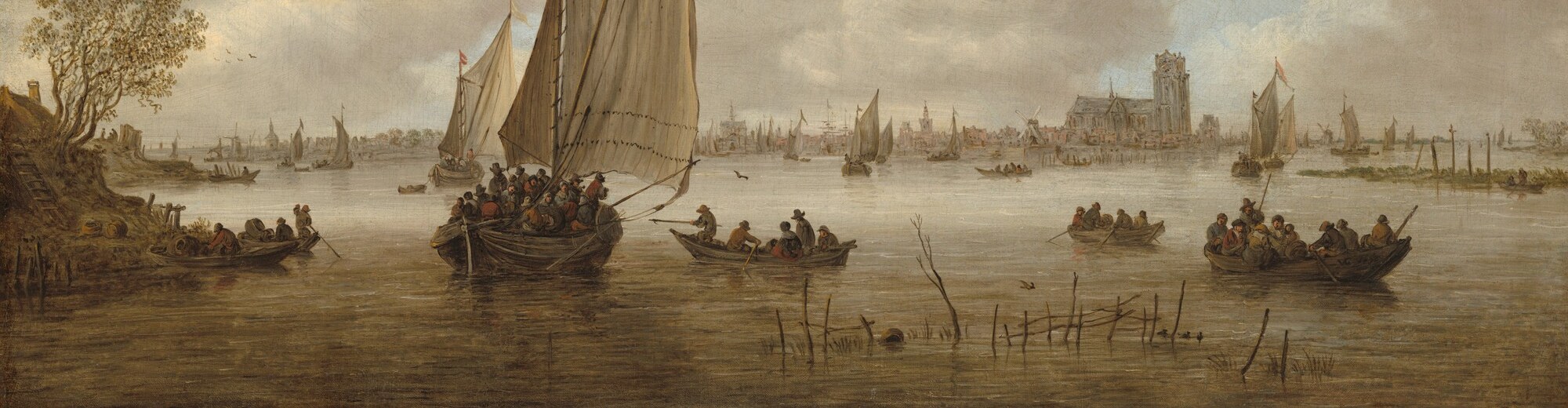
Jan van Goyen's View of Dordrecht from the North (early 1650s) lives at the Rijksmuseum, but the painter died in 1656 owing 18,000 guilders. He was a disastrous speculator who lost fortunes in tulip bulbs and land deals while producing over twelve hundred paintings. The irony is sharp: a bankrupt man painted a view of Dordrecht that now feels priceless.
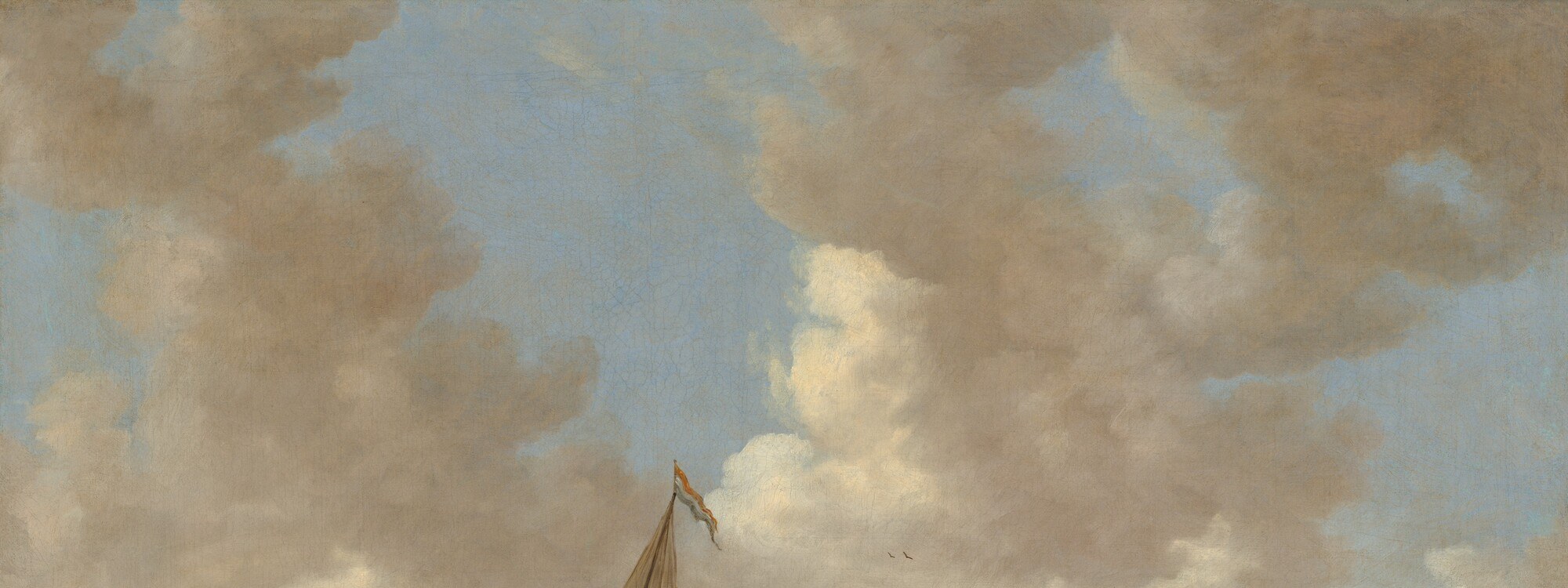
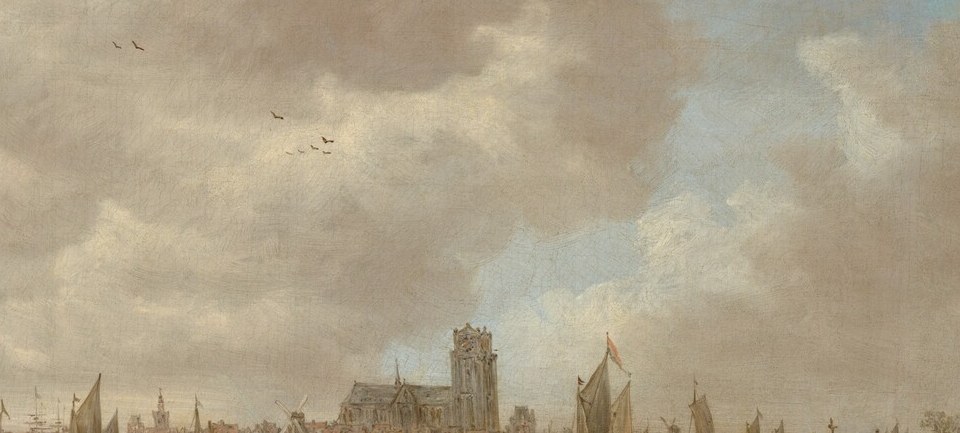
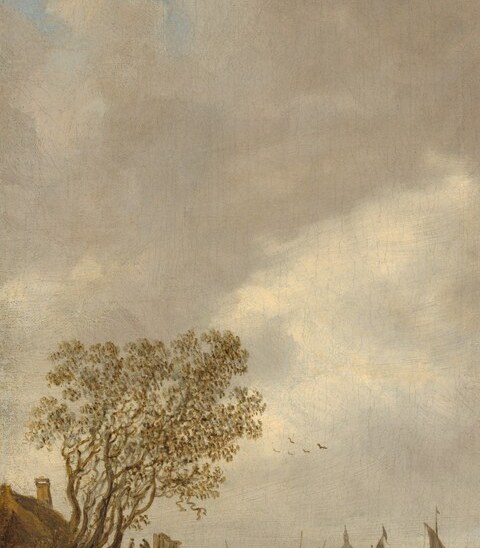
Start with the sky. It consumes more than half the canvas and is the painting's true subject. Just below the towering cumulus, a thin luminous band of ochre light stretches across the horizon. That single strip of warmth creates the atmospheric recession that makes the city feel miles away. The reflection in the water below is a tonal mirror, blending river and cloud into one pale grey plane.
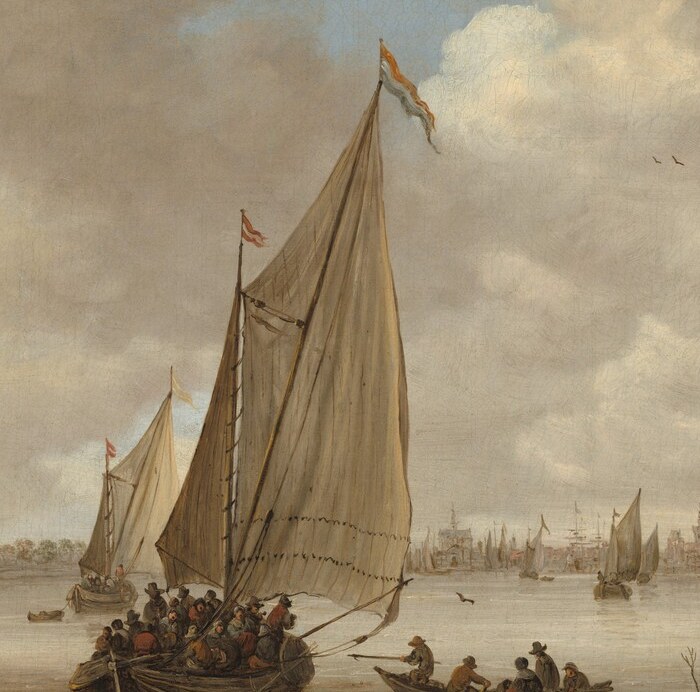
Dordrecht was a wealthy inland port, and van Goyen gives you just enough to read its identity: the unmistakable Grote Kerk tower, a few clustered spires, and the swarm of working vessels that plied the river route. The figures are loosely brushed, barely there, but they confirm a busy, lived-in waterway.
The painting was likely an exercise in tonal landscape, a style van Goyen helped pioneer. He made emptiness feel deliberate and atmospheric, not cheap. A man who could not hold onto money understood precisely how much empty space was worth. What do you see first when you look at it, the church tower, or the light?
#arthistory #jvangoyen #dutchgoldenage
Details
Transcript
This painter died owing 18,000 guilders. He speculated wildly on tulips and land. Lost everything. Yet here, he builds a city out of almost nothing. The Grote Kerk tower anchors the skyline. Sailors navigated by it. He spent half the canvas on a sky that's mostly water. Look at that thin band of ochre light along the horizon. That single warm stripe is what pushes a whole city back into the haze. Van Goyen made the emptiness itself feel expensive.