The Departure for the Hunt by Wouwerman, Philips
View the artwork: The Departure for the Hunt →
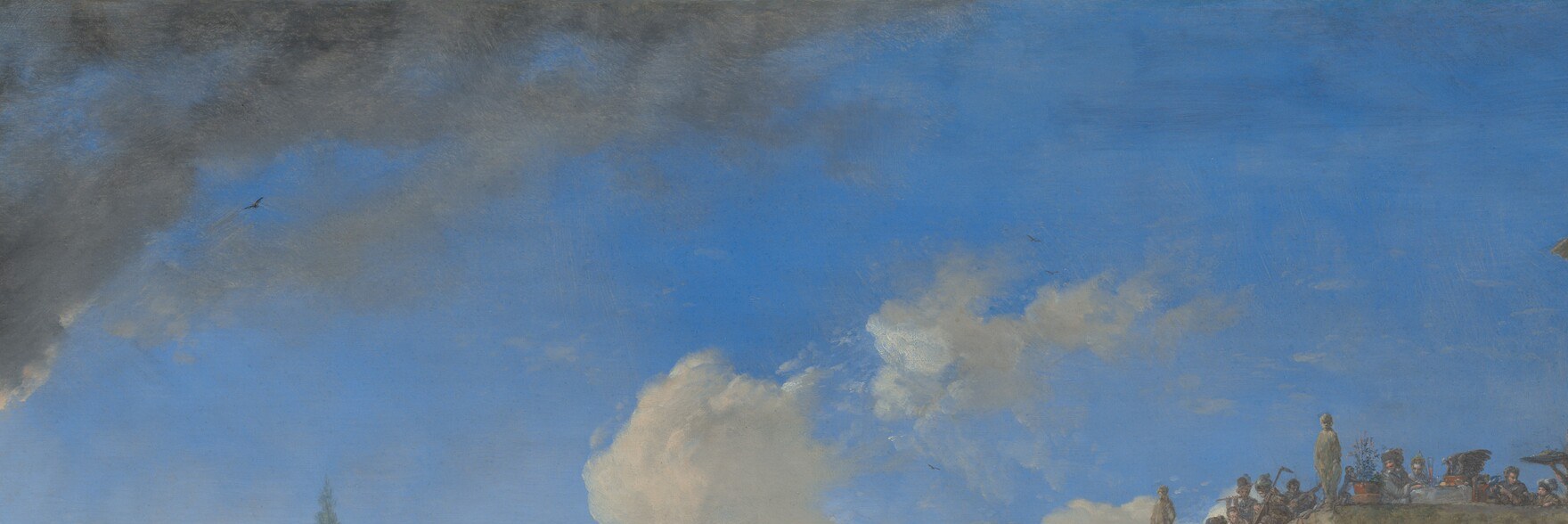
The Departure for the Hunt, painted by Philips Wouwerman around 1665, gives its loudest attention to horses and huntsmen, but it hides its most rewarding secret at the left edge.
Start with the white horse at center: its luminous coat is the painting's anchor, pulling your eye before anything else. Then notice the woman in red, the only truly warm note, standing amid the dark-clad riders. The foreground dog, nose down, grounds the whole scene in ordinary work.
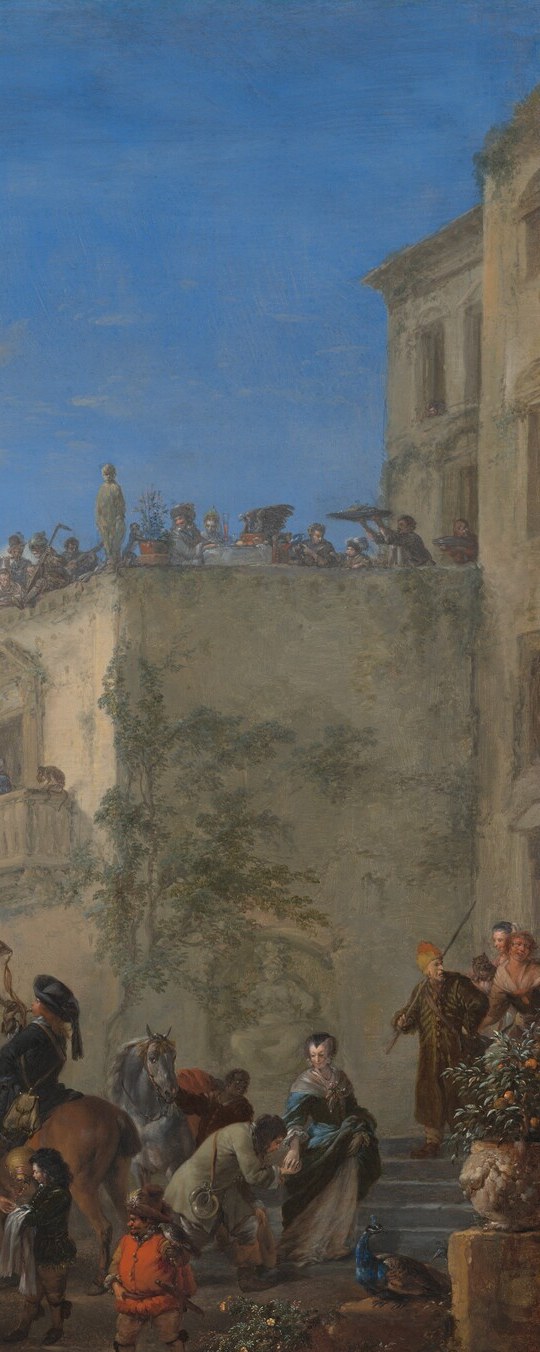
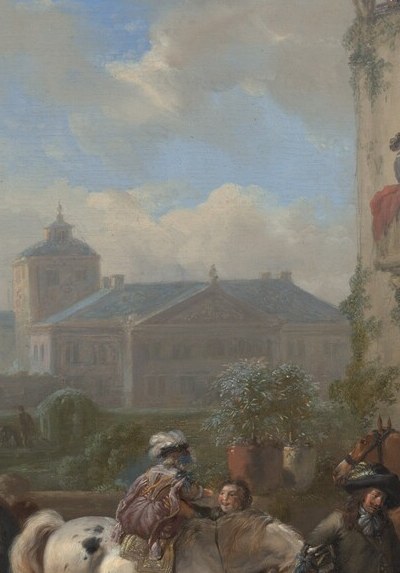
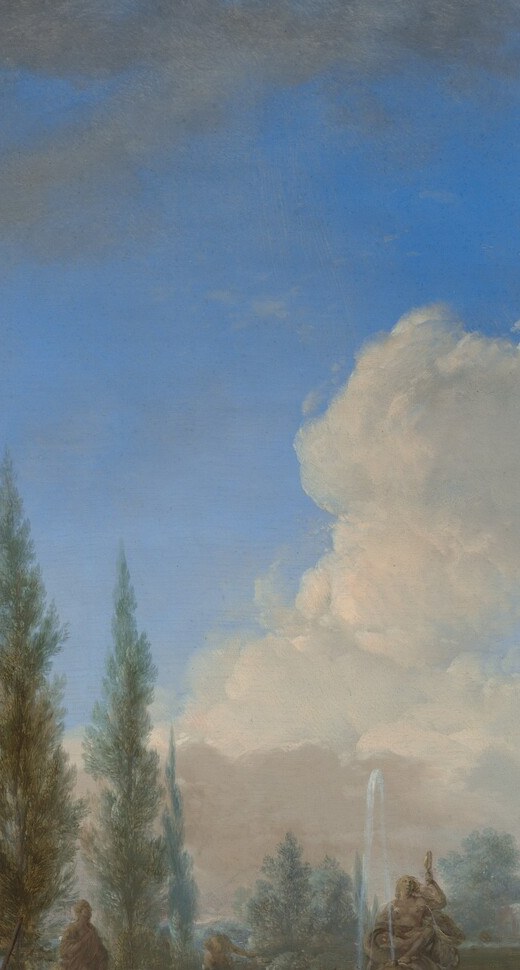
The villa on the right is pure invention. Wouwerman painted for wealthy Dutch merchants who wanted to see themselves in Italian estates they would never visit, so he gave them arcaded architecture and cypress trees. It was a fantasy of status, not a real place.
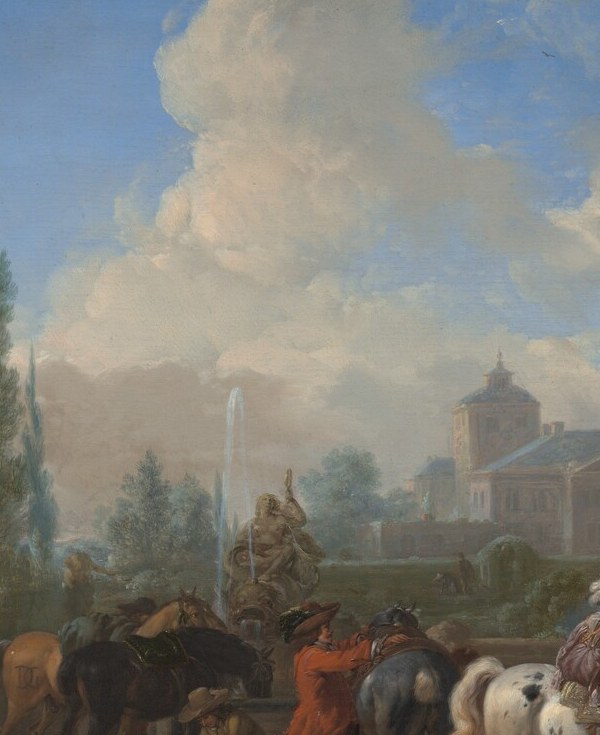
But look left, past the horses, beyond the courtyard. There is a silvery stretch of water and a cluster of distant towers, easy to scroll past. Wouwerman built an entire secondary world back there, quiet, still, and completely separate from the clamor of the hunt. He did it not to show off, but because he could not leave any inch of the panel asleep.
What do you find when you slow down and look at the edges?
#arthistory #dutchgoldenage #philipswouwerman
Details
Transcript
A hunting party prepares to leave an Italian villa. The white horse is the first thing anyone sees. But these huntsmen were painted for rich Dutch merchants. They bought Italian fantasies, not their own flat countryside. Now look past the action, to the left. A world of water and quiet towers sits behind the noise. Wouwerman tucked a whole second landscape inside one panel.