On the Beach, Dieppe by Eugène Louis Boudin
View the artwork: On the Beach, Dieppe →
Eugène Boudin painted On the Beach, Dieppe in 1864. It hangs in the Metropolitan Museum of Art. Boudin was one of the first French landscape painters to work entirely outdoors, en plein air, and his speed was legendary. Baudelaire praised his pastels. Corot called him the King of the Skies.
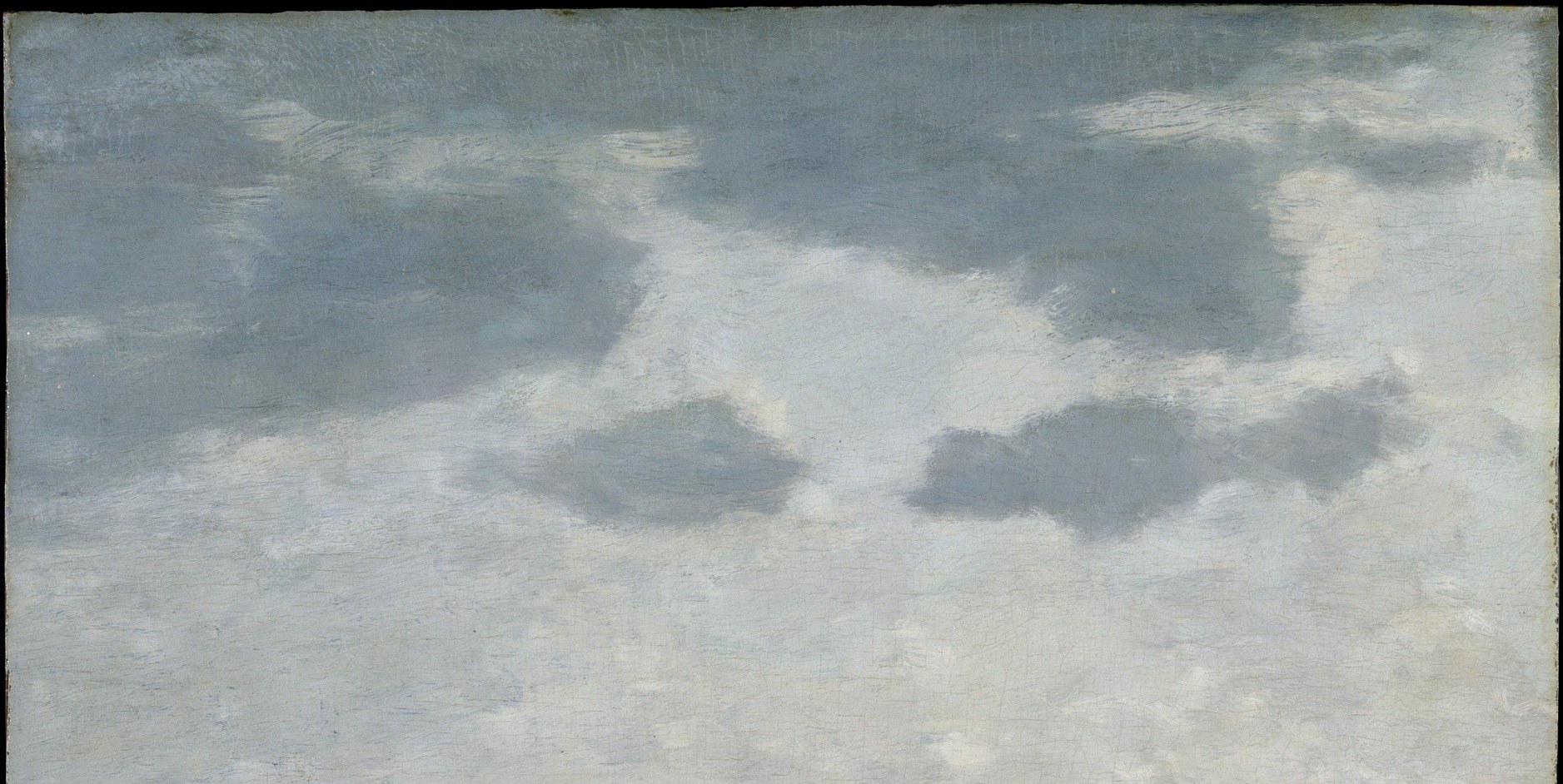
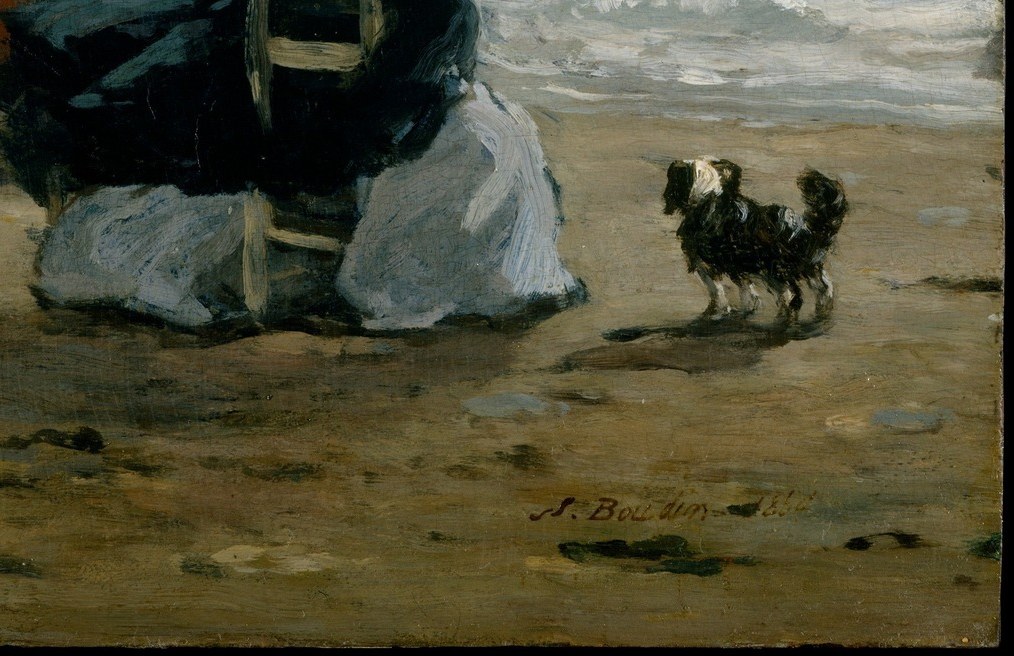
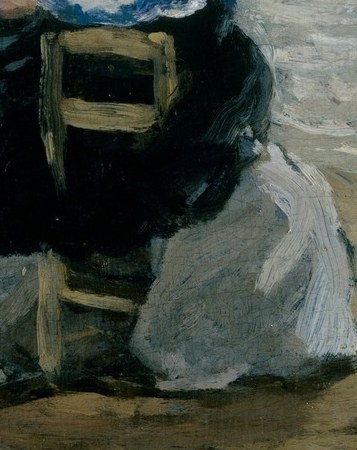
Look at the sandy foreground on the lower right. The paint is laid down in quick, sketchy strokes that read as dry sand and shadow. The sky fills the entire upper third of the painting. Boudin used loose, urgent brushwork to capture the shifting cloud architecture over the Channel. Beneath that sky, the sea is reduced to a thin grey sliver. The real subject is the light and the air.
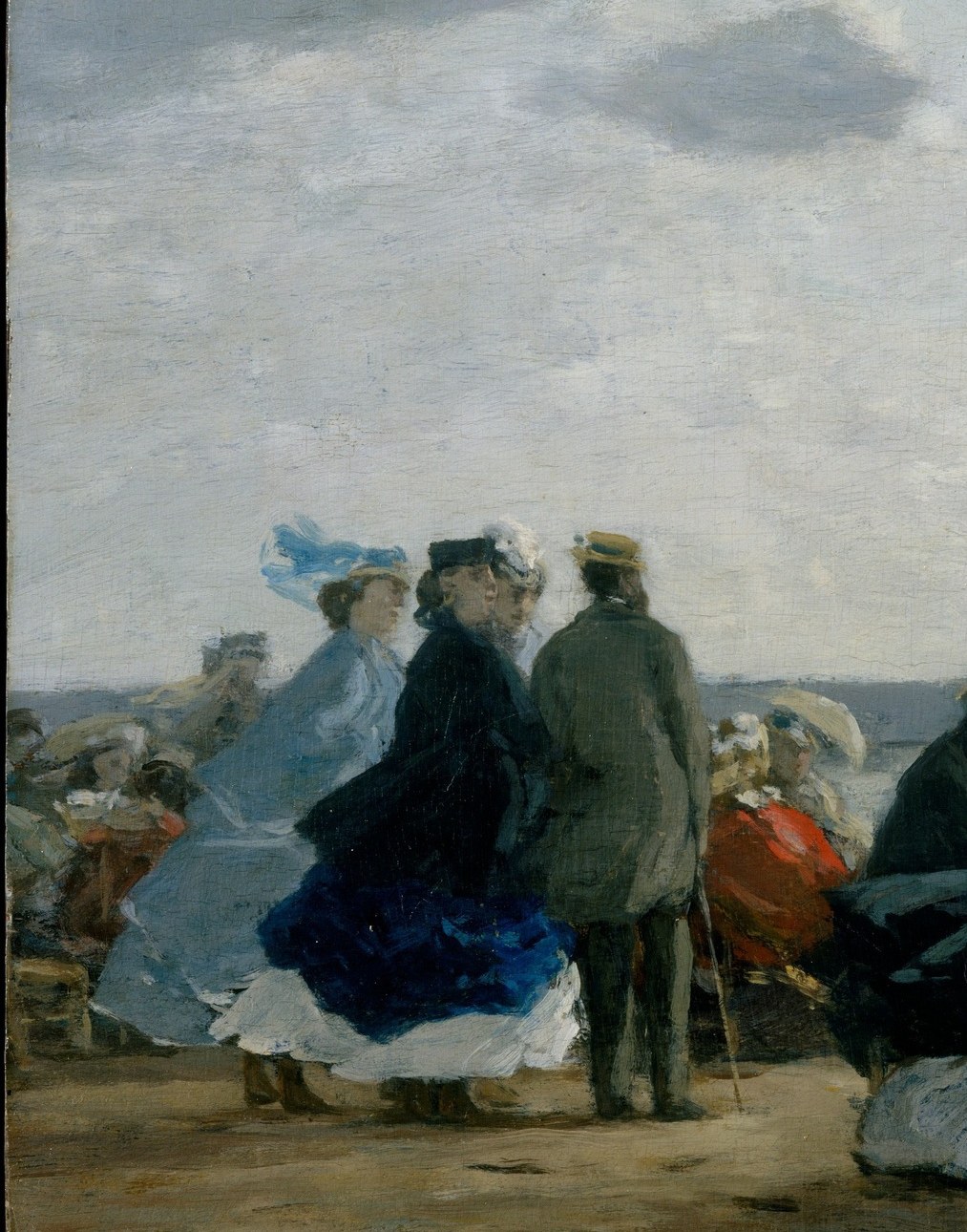
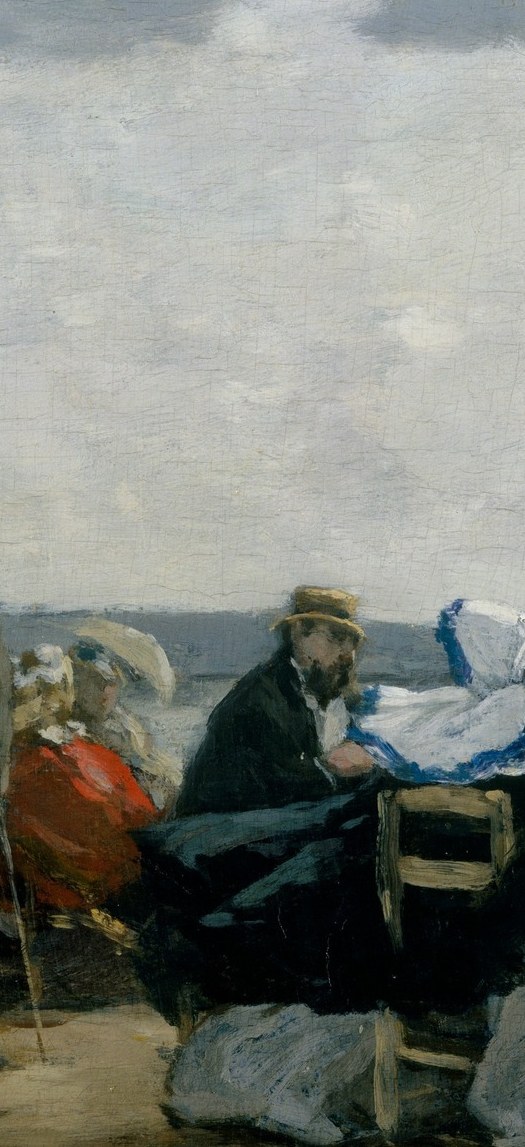
This is a working port town as much as a holiday beach. Across the horizon, faint boat silhouettes remind us that Dieppe was an active maritime center. The cluster of dark clad figures on the left are Parisian day trippers, their turned backs and portable chairs signaling a new bourgeois leisure culture. And then there is the small black dog in the foreground, staring out to sea, a tiny surrogate for the contemplative mood of the whole scene.
Boudin would later become a mentor to a teenage Claude Monet, convincing him to leave the studio and paint outdoors. You can see the seed of Impressionism right here in the wind and the light.
#arthistory #eugeneboudin #impressionism
Details
Transcript
They look like a quiet group at the shore. Dark dresses, chairs, and a small dog facing the water. This painter was the first French artist to work outdoors. The whole surface is made of rapid, sketchy strokes. He taught the young Claude Monet to paint outside. No one painted the sky like him. Corot called him the King.